
AI Jobs in India 2026: Roles, Growth Cities & Skills Needed
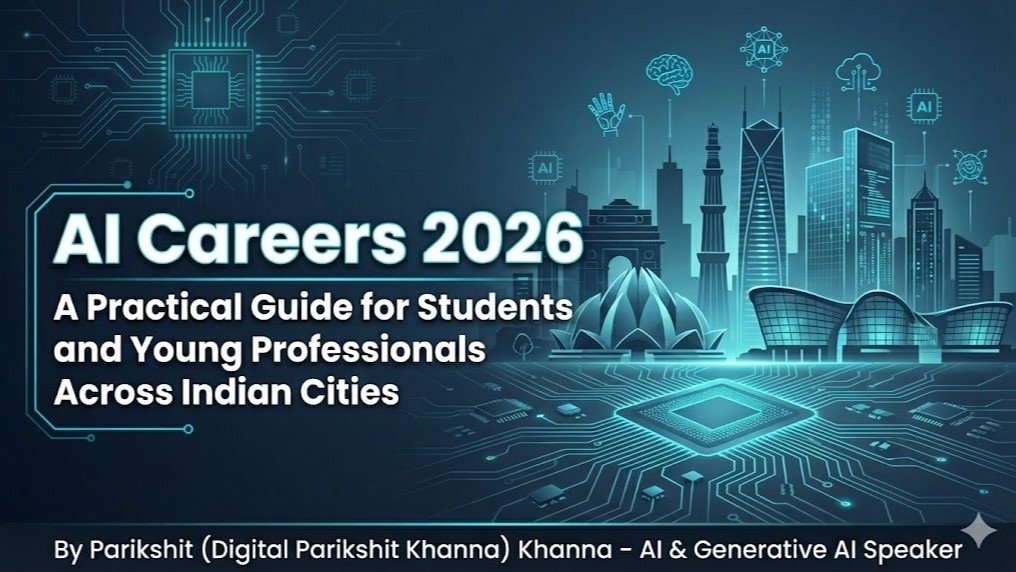
Discover how India's AI engineering sector is surging with a 51% job growth rate by 2026. Explore top roles, emerging tech hubs, and essential skills needed to future-proof your career.
Reading this article: 0s
News in 60 words
~150-word AI digest in one read
Thesis, bullets, quote & takeaway — slogan stays "60 words"
2h ·5 min read· 0 · 0 · 0
Full story
The Indian technology landscape is undergoing a massive structural transformation. With AI engineering roles surging by 51% across the country, professionals are moving away from legacy IT services toward high-value artificial intelligence solutions. This shift is no longer confined to traditional tech behemoths in Bengaluru or Hyderabad. Emerging Tier-2 and Tier-3 urban centers are rapidly catching up, fueled by state government tech policies and a massive pool of young engineering graduates.
Navigating this dynamic job market requires more than just a basic understanding of Python. Employers are actively hunting for specialists who can bridge the gap between theoretical machine learning models and scalable, production-grade enterprise software. Whether you are an experienced software developer looking to pivot or a recent graduate planning your career trajectory, understanding the 2026 AI job market in India is critical for long-term professional security.
The Surge in AI Engineering Roles
India’s tech ecosystem has graduated from back-end support to core product development. Companies across fintech, healthcare, e-commerce, and SaaS are embedding generative AI and machine learning directly into their core offerings. This evolution has created a diverse spectrum of high-paying roles that extend far beyond traditional data science.
Salaries for specialized AI engineers have seen upward revisions, with mid-level professionals commanding packages ranging between ₹18 Lakhs to ₹35 Lakhs per annum. The demand is particularly acute for profiles capable of handling large language models (LLMs), prompt engineering pipelines, and MLOps deployment architectures. Understanding how to optimize AI models for cost-efficiency is now a prized enterprise skill.
Key Roles Shaping the Market
- Generative AI Engineer: Focuses on integrating foundational models like GPT-4, Claude, or open-source equivalents into enterprise workflows using frameworks like LangChain and LlamaIndex.
- MLOps Specialist: Bridges the gap between data science and IT operations, ensuring AI models are reliably built, tested, monitored, and scaled in production environments.
- AI Ethics and Governance Officer: Ensures compliance with emerging Indian data protection regulations, mitigating algorithmic bias and safeguarding user privacy.
- Prompt and Fine-Tuning Engineer: Specializes in customizing pre-trained models on proprietary domain-specific data to maximize accuracy for specialized industry use cases.
Rise of Tier-2 Growth Cities
While Bengaluru, Pune, and Hyderabad remain the traditional epicentres of India's tech sector, real estate costs and talent saturation are driving enterprises outward. Tier-2 cities like Vijayawada, Kochi, Indore, and Coimbatore are emerging as vibrant growth hubs for artificial intelligence startups and captive development centres.
State-level digital initiatives and the expansion of high-speed optical fiber infrastructure have made these cities attractive for remote-first and hybrid AI engineering teams. For professionals living in these regions, the necessity of relocating to metropolitan hubs has significantly decreased. Local engineering colleges are also revamping their curricula to include practical applied AI modules, creating a steady stream of locally available talent.
Why Tier-2 Hubs Are Thriving
- Lower Cost of Living: Professionals enjoy higher disposable incomes and better work-life balance compared to congested metros.
- Government Backing: States are offering lucrative subsidies and tax benefits for tech parks and innovation incubators set up outside Tier-1 cities.
- Talent Retention: Lower attrition rates in regional tech centres make employers more willing to invest in long-term AI upskilling programs for their staff.
Essential Skills to Future-Proof Your Career
Securing a competitive AI role in 2026 requires a blend of foundational programming expertise and modern framework proficiency. Simply completing online certificate courses is no longer sufficient; hiring managers look for verifiable GitHub portfolios and real-world deployment experience.
Professionals must transition from being mere API consumers to deep system architects. This means mastering the mathematical intuition behind machine learning algorithms while staying updated with rapidly evolving open-source developer ecosystems.
Core Technical Requirements
- Advanced Python & PyTorch: Mastery of Python for data manipulation alongside deep learning frameworks like PyTorch or TensorFlow.
- Vector Databases & Retrieval-Augmented Generation (RAG): Proficiency in tools like Pinecone, Milvus, or FAISS to build context-aware AI applications.
- Cloud Infrastructure: Hands-on experience with AWS, Azure, or Google Cloud Platform, specifically their managed AI and Kubernetes services.
- System Design: Ability to design low-latency, scalable microservices capable of handling high-frequency AI inference requests.
Frequently Asked Questions
Do I need a Master's degree or PhD to get an AI job in India?
No. While advanced degrees help for specialized research roles, the industry heavily prioritizes practical coding skills, open-source contributions, and demonstrable project portfolios over formal academic credentials.
How are salaries structured for AI engineers in Tier-2 cities?
Salaries in Tier-2 cities are increasingly matching metropolitan standards, especially for remote roles with global companies or funded Indian startups. While base pay can occasionally be slightly lower, the significantly lower cost of living often results in higher actual savings.
Which non-coding skills are valued in the AI job market?
Problem-solving, domain expertise (such as healthcare or finance), ethical risk assessment, and effective cross-functional communication are critical as AI projects require close collaboration with non-technical business stakeholders.
Conclusion and Actionable Roadmap
The 51% surge in AI engineering jobs across India signals a permanent shift in the employment paradigm. To capitalize on this momentum, start by auditing your current technical skill set against modern requirements. Build two end-to-end generative AI or machine learning projects, deploy them on cloud platforms, and document your learning journey publicly. By combining continuous upskilling with strategic positioning in emerging tech hubs, you can secure a future-proof, high-growth career in India's booming artificial intelligence sector.
Support creators
If you found this guide helpful, consider supporting our independent writers on ContentVerse India with a small tip to keep expert tech journalism alive.
Was this helpful?
Your feedback helps us improve content for everyone.
Liked this piece?
Tip Dhananjay for the work
100% goes to the creator. Send a one-time tip in rupees and back the writing you love.
Dhananjay Singh
0 followers · 0 blogs
Creator on ContentVerse. Building, writing, and shipping in public.
0 followers
Discussion