
BharatGPT vs. Global LLMs: Best AI for Indian Languages
As AI rapidly advances, the debate intensifies: can global LLMs truly cater to India's linguistic diversity, or do indigenous models like BharatGPT hold the key? This article explores the capabilities of both, helping you choose the best AI for Indian languages.
Reading this article: 0s
News in 60 words
~150-word AI digest in one read
Thesis, bullets, quote & takeaway — slogan stays "60 words"
(3mo)4 min read 5 0 0
Full story
The world of Artificial Intelligence is evolving at an unprecedented pace, with Large Language Models (LLMs) leading the charge. From drafting emails to generating code, these intelligent systems are transforming how we work and interact. However, a crucial question arises for a linguistically diverse nation like India: are global LLMs sufficient, or do we need dedicated, homegrown solutions like BharatGPT?
This article dives deep into the capabilities of both global powerhouses and emerging Indian models. We'll explore their strengths, weaknesses, and help you understand which AI might be the best fit for tasks involving India's rich tapestry of languages, especially Hindi.
The Rise of BharatGPT and Indigenous Innovation
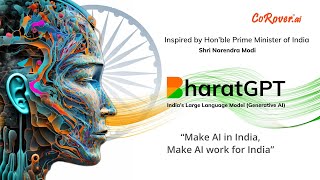
India is a land of over 22 official languages and countless dialects. For AI to truly integrate into the lives of every Indian, it must speak their language, understand their culture, and resonate with local nuances. This is where initiatives like BharatGPT come into play.
BharatGPT aims to develop LLMs specifically trained on vast datasets of Indian languages and cultural contexts. The vision is to create AI that doesn't just translate, but genuinely comprehends the subtleties of Indian communication, from formal Hindi to regional colloquialisms and even Hinglish.
Why Local Context Matters
Global LLMs, while powerful, are primarily trained on English and other major global languages. Their understanding of Indian languages, while improving, can sometimes lack the deep cultural context necessary for accurate and relevant responses. An Indian-centric model can better handle:
- Cultural References: Understanding festivals, traditions, historical events specific to India.
- Idioms and Slang: Interpreting unique Indian phrases and contemporary slang.
- Mixed Language Use: Seamlessly processing code-switching, like Hinglish, which is common in daily Indian conversations.
- Regional Variations: Differentiating between various dialects of a single language, such as different forms of Hindi spoken across states.
Global LLMs: How They Stack Up for Indian Languages
Leading global LLMs like OpenAI's ChatGPT, Google's Gemini, and Meta's Llama models have made significant strides in multilingual support. They can generate text, translate, and answer questions in many Indian languages, including Hindi, Bengali, Tamil, and Telugu, with varying degrees of success.
Strengths of Global LLMs:
- Vast Knowledge Base: Their enormous training data allows them to cover a wide range of general knowledge topics in multiple languages.
- Continuous Improvement: Backed by massive R&D budgets, these models are constantly updated and refined.
- Accessibility and Integration: They are often readily available via APIs and integrated into various platforms, making them easy to use for developers and businesses.
However, their limitations become apparent when deep cultural understanding or nuanced regional communication is required. While they can translate a sentence, capturing the true भाव (essence) or रस (flavour) of Indian expression can still be a challenge.
Choosing the Best LLM for Your Needs
Deciding between BharatGPT (or similar Indian models) and global LLMs depends largely on your specific use case and the depth of linguistic and cultural understanding required.
- For General Translation & Information: Global LLMs like ChatGPT or Gemini are often excellent choices. They can handle most common queries, basic content generation, and broad translations efficiently.
- For Deep Cultural Context & Regional Nuance: If your application requires understanding specific Indian cultural references, local slang, or needs to interact seamlessly in Hinglish, an Indian-focused LLM like BharatGPT might offer superior performance. This could be crucial for customer support, educational content, or creative writing aimed at Indian audiences.
- For Sensitive Applications: In sectors like healthcare, law, or government services, where accuracy, cultural appropriateness, and data privacy (potentially hosted within India) are paramount, indigenous models could provide a more reliable and compliant solution.
Many businesses might find a hybrid approach most effective. Using global LLMs for generic tasks and integrating specialized Indian models for highly localized or sensitive interactions could offer the best of both worlds.
Frequently Asked Questions
Q1: Is BharatGPT available for public use right now?
A1: BharatGPT is an ongoing initiative, and its development involves various stakeholders. While specific models and APIs might be in different stages of public or developer access, the ecosystem is continuously evolving. Keep an eye on announcements from Indian AI research institutions and startups for public availability.
Q2: Can global LLMs understand Hinglish?
A2: Yes, global LLMs have shown increasing capability in understanding and generating Hinglish, especially as more Hinglish data becomes available online. However, their proficiency can vary, and they might still struggle with very specific or novel code-switching patterns compared to models trained explicitly on extensive Hinglish datasets.
The Future is Multilingual and Local
The competition between BharatGPT and global LLMs is not about one replacing the other. Instead, it highlights the critical need for AI to become truly inclusive and accessible to everyone, regardless of their language. As India continues its digital transformation, the demand for AI that speaks the language of its people will only grow. Both global players and indigenous innovators will contribute to a future where AI empowers every Indian, in their own tongue.
Support creators
If you enjoyed this article, consider tipping the writer on ContentVerse!
Was this helpful?
Your feedback helps us improve content for everyone.
Liked this piece?
Tip Vidushi for the work
100% goes to the creator. Send a one-time tip in rupees and back the writing you love.
Vidushi Mathur
2 followers · 20 blogs
Published 18 Jun 2026 · Updated 17 Sept 2026
Reviewed by the ContentVerse India editorial team. Educational pages are not personalised advice.
View full profile2 followers
Discussion