
India's Economic Triumph: Inside the World's Fastest-Growing Major Economy
India has officially been designated the world's fastest-growing major economy by the OECD, a testament to its robust economic policies and dynamic growth trajectory. This article delves into the key factors propelling India's impressive economic expansion and what this global recognition signifies for the nation.
Reading this article: 0s
News in 60 words
~150-word AI digest in one read
Thesis, bullets, quote & takeaway — slogan stays "60 words"
7d ·4 min read· 0 · 0 · 0
Full story
India's economy is buzzing, and for good reason. The recent OECD report officially designating India as the fastest-growing major economy isn't just a headline; it's a significant validation of the nation's economic policies, resilience, and vast potential. For every Indian, from the entrepreneur in Bengaluru to the farmer leveraging digital payments in a remote village, this recognition solidifies a sense of national pride and confidence in our collective future. It signals to the world that India is not just growing, but thriving, becoming an indispensable engine for global economic stability and progress.
The OECD Validation and Global Confidence
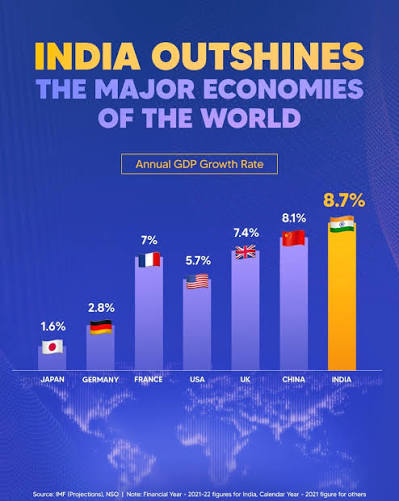
The Organisation for Economic Co-operation and Development (OECD) is a respected intergovernmental economic organisation comprising 38 member countries. Its projections carry significant weight in global financial circles. Their latest report projects India's economy to grow at an impressive 6.6% in FY25, outpacing all other major economies. This isn't merely a statistical achievement; it's a powerful endorsement that boosts investor confidence, attracts Foreign Direct Investment (FDI), and strengthens India's geopolitical standing.
This robust growth trajectory is a testament to India's strategic economic management amidst global headwinds. It highlights the effectiveness of various government initiatives and the inherent strengths of India's diverse economic landscape. The world is increasingly looking towards India as a vital partner in trade, technology, and economic development.
Pillars of Growth: Domestic Demand and Consumption
One of the most formidable strengths of the Indian economy is its vast domestic market. With over 1.4 billion people, rising disposable incomes, and a burgeoning middle class, India's consumption story remains a primary driver of growth. From festive season shopping sprees, where platforms like Flipkart and Amazon India see record sales, to the increasing demand for consumer durables and services, domestic consumption provides a robust buffer against global economic fluctuations.
Cities like Mumbai, Delhi, and Bengaluru consistently demonstrate strong consumer spending, while the aspirations of Tier 2 and Tier 3 cities like Pune, Jaipur, and Lucknow are also fueling significant growth. This widespread demand creates a virtuous cycle, encouraging local manufacturing, job creation, and further economic activity across various sectors.
Digital Transformation and Infrastructure Push
India's digital public infrastructure (DPI) has been a game-changer, revolutionising financial inclusion and economic efficiency. The Unified Payments Interface (UPI) is a prime example, processing billions of transactions monthly, making digital payments accessible even in the remotest corners of the country. This has propelled countless small businesses and vendors into the formal economy, fostering transparency and speed.
Coupled with the Jan Dhan-Aadhaar-Mobile (JAM) trinity, which links bank accounts, biometric identification, and mobile phones, digital infrastructure has significantly reduced leakages and improved service delivery. Simultaneously, the government's ambitious infrastructure push, including projects like the National Infrastructure Pipeline and the development of smart cities, is enhancing connectivity, logistics, and urban living, laying a solid foundation for sustained economic expansion.
"Make in India" and Manufacturing Momentum
The "Make in India" initiative, coupled with various Production Linked Incentive (PLI) schemes, has reinvigorated India's manufacturing sector. These policies aim to boost domestic manufacturing capabilities, reduce import dependence, and make India a global manufacturing hub. Sectors like electronics, automotive, pharmaceuticals, and textiles have seen significant investment and growth.
For instance, the PLI scheme for mobile phone manufacturing has attracted major global players, establishing India as a significant exporter of smartphones. Manufacturing hubs in states like Gujarat, Maharashtra, and Tamil Nadu are witnessing substantial expansion, creating millions of jobs and integrating India more deeply into global supply chains. This focus on value addition and indigenous production is crucial for long-term economic resilience.
Frequently Asked Questions
How does India's growth compare to other major economies?
As per the OECD report, India is projected to grow at 6.6% in FY25, making it the fastest-growing major economy globally. This rate significantly surpasses that of other large economies like China, the US, and the Euro Area, highlighting India's distinct economic momentum and potential.
What are the primary drivers of this rapid economic expansion?
The key drivers include robust domestic demand and private consumption, transformative digital public infrastructure like UPI, significant government investment in physical infrastructure, and policy reforms aimed at boosting manufacturing and ease of doing business through initiatives like "Make in India" and PLI schemes.
Is this economic growth sustainable in the long term?
Yes, the growth appears sustainable due to strong fundamental factors such as a young demographic dividend, continuous policy reforms, increasing digital adoption, and a diversifying economy. While global challenges and domestic issues like inflation and job creation remain, the underlying structural changes and investment in key sectors point towards a resilient and sustained growth trajectory.
Conclusion: Charting a Course for Continued Prosperity
India's designation as the world's fastest-growing major economy is a moment of immense pride and a testament to its collective efforts. The confluence of robust domestic demand, a digitally empowered populace, a revitalised manufacturing sector, and strategic infrastructure development has created a powerful growth engine. While challenges persist, the trajectory is clear: India is on an upward climb, poised to become an even more significant player on the global economic stage. Sustained policy focus, continued investment in human capital, and fostering an environment of innovation will be key to converting this triumph into enduring prosperity for all.
Support creators
Was this helpful?
Your feedback helps us improve content for everyone.
Liked this piece?
Tip Dhananjay for the work
100% goes to the creator. Send a one-time tip in rupees and back the writing you love.
Dhananjay Chauhan
0 followers · 0 blogs
Creator on ContentVerse. Building, writing, and shipping in public.
0 followers
Discussion