
Cost-Optimized System Design: Strategies for Cloud-Native Architectures
Cloud bills can quickly escalate if not managed proactively. Learn how to embed cost optimization into your system design from the ground up, ensuring efficient and economical cloud-native architectures.
Reading this article: 0s
News in 60 words
~150-word AI digest in one read
Thesis, bullets, quote & takeaway — slogan stays "60 words"
(3mo)5 min read 0 0 0
Full story
The promise of the cloud is agility and scalability, but without careful design, it can also lead to unexpectedly high bills. Many Indian businesses, from startups to enterprises, are grappling with the challenge of managing escalating cloud expenditure. The key to sustainable cloud adoption lies in embedding cost optimization into your system design from the very beginning.
This isn't about cutting corners; it's about making smart architectural choices that deliver performance and reliability without breaking the bank. Let's explore how you can design for efficiency and keep your cloud costs in check.
Building Lean: Architectural Choices That Save Big
Your architectural decisions have the most significant impact on your cloud bill. Opting for serverless or managed services can drastically reduce operational overhead and costs, as you only pay for actual usage.
- Embrace Serverless: Services like AWS Lambda, Azure Functions, or Google Cloud Functions execute code only when triggered. This eliminates the need to provision and manage servers, leading to significant savings, especially for event-driven workloads. You pay for compute duration, not idle time.
- Leverage Managed Services: Instead of self-hosting databases (e.g., MySQL on EC2), consider managed database services like Amazon RDS or Azure SQL Database. These services handle patching, backups, and scaling, freeing up your team and often proving more cost-effective in the long run.
- Containerization for Efficiency: Using container orchestration platforms like Kubernetes (EKS, AKS, GKE) allows for higher resource utilization. You can pack more applications onto fewer virtual machines, reducing the underlying compute costs. Just ensure your container images are lean.
Designing for Scalability and Elasticity
Optimized design isn't just about choosing services; it's also about how those services scale. Design your applications to be horizontally scalable and stateless, allowing them to scale out and in quickly in response to demand.
Smart Scaling and Resource Right-Sizing
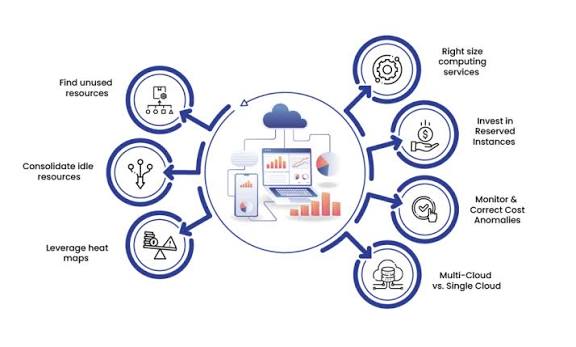
One of the biggest culprits for cloud overspending is over-provisioned or idle resources. Right-sizing and intelligent scaling are crucial for cost optimization.
- Automate Scaling: Implement auto-scaling groups for your compute instances (VMs, containers). This ensures resources are added during peak demand and removed during low demand, preventing over-provisioning and paying for idle capacity.
- Utilize Spot Instances/Preemptible VMs: For fault-tolerant and flexible workloads, spot instances (AWS) or preemptible VMs (GCP) can offer substantial discounts (up to 90%) compared to on-demand pricing. These are ideal for batch processing, rendering, or stateless microservices.
- Right-Size Your Resources: Regularly review the CPU, memory, and storage utilization of your instances. Downsize resources that are consistently underutilized. Cloud providers offer tools to help identify these opportunities.
- Identify and Terminate Idle Resources: Conduct regular audits to find and shut down resources that are no longer needed, such as old development environments, unused databases, or orphaned storage volumes. Even small, forgotten resources add up.
Optimizing Data Storage and Network Costs
Data storage and transfer can become a significant portion of your cloud bill, especially for data-intensive applications. Strategic design can mitigate these costs.
- Tiered Storage: Use appropriate storage classes for your data. For rarely accessed data, move it to cheaper archival storage tiers (e.g., Amazon S3 Glacier, Azure Blob Archive). For frequently accessed data, use standard tiers. Implement lifecycle policies to automate this.
- Data Compression: Compress data before storing it and before transferring it over the network. This reduces both storage footprint and data transfer costs, especially for large datasets.
- Content Delivery Networks (CDNs): For applications serving global or geographically dispersed users, use CDNs like Amazon CloudFront or Cloudflare. CDNs cache content closer to users, reducing latency and egress costs from your primary region.
- Minimize Cross-Region Data Transfer: Data transfer between different cloud regions is often more expensive than within the same region. Design your architecture to keep data processing as close to the data source as possible.
Monitoring, Governance, and a FinOps Mindset
Cost optimization is an ongoing process, not a one-time activity. Establishing a culture of FinOps (Financial Operations) is essential for long-term success.
- Implement Cost Visibility Tools: Utilize native cloud cost management tools (AWS Cost Explorer, Azure Cost Management, GCP Billing Reports) and third-party solutions. Gain granular insights into where your money is going.
- Tagging and Resource Grouping: Enforce a strict tagging strategy for all your cloud resources. Tags allow you to categorize costs by project, team, environment, or application, making it easier to attribute and manage spending.
- Set Budgets and Alerts: Define budgets for different projects or departments and set up alerts to notify relevant teams when spending approaches predefined thresholds. This proactive approach prevents budget overruns.
- Regular Review and Optimization Cycles: Schedule regular reviews of your cloud spending with engineering and finance teams. Identify new optimization opportunities, review existing strategies, and adapt to changing needs.
By embedding these strategies into your system design and fostering a FinOps culture, Indian businesses can achieve significant savings, making their cloud journey more efficient and economically viable. It's about building smarter, not just faster.
FAQ
How often should I review my cloud costs and optimization opportunities?
It's recommended to review your cloud costs at least monthly. For larger organizations or those undergoing rapid development, weekly reviews can be beneficial. Automation tools and alerts can help monitor daily spending, but a deeper dive should be a regular, scheduled activity involving both engineering and finance teams.
Is serverless always the cheapest option for every workload?
While serverless is often highly cost-effective due to its pay-per-use model, it's not a universal solution. For very high-throughput, long-running, or consistent workloads that require predictable performance, a well-optimized containerized application on reserved instances might prove more economical. Always evaluate your specific use case, traffic patterns, and operational overhead before making a decision.
Support creators
Enjoyed this article? Consider tipping the writer on ContentVerse!
Was this helpful?
Your feedback helps us improve content for everyone.
Liked this piece?
Tip Vidushi for the work
100% goes to the creator. Send a one-time tip in rupees and back the writing you love.
Vidushi Mathur
2 followers · 20 blogs
Published 18 Jun 2026 · Updated 23 Jul 2026
Reviewed by the ContentVerse India editorial team. Educational pages are not personalised advice.
View full profile2 followers
Discussion