
Credit Card Rewards in India: How to Optimize Without Overspending
Unlock the full potential of your credit card rewards in India without falling into the debt trap. This guide shows you how to strategically earn cashback, travel points, and more, all while maintaining financial discipline.
Reading this article: 0s
News in 60 words
~150-word AI digest in one read
Thesis, bullets, quote & takeaway — slogan stays "60 words"
(3mo)12 min read 5 0 0
Creator on ContentVerse. Building, writing, and shipping in public.
Full story
Introduction: The Allure of Credit Card Rewards in India
Credit cards in India have evolved far beyond mere payment instruments; they are sophisticated tools that, when used wisely, can unlock a world of benefits. From lucrative cashback offers to exclusive travel perks and shopping discounts, the promise of credit card rewards is undeniably attractive. For many Indian consumers, these rewards represent a tangible way to get more value out of their everyday spending.
However, this allure often comes with a significant caveat: the temptation to overspend. The pursuit of higher reward tiers or the desire to meet minimum spending requirements can inadvertently lead to debt, negating any benefits earned. This article aims to guide you through the intricate landscape of credit card rewards in India, showing you how to optimize your earnings, whether you're chasing cashback or travel points, all while ensuring you maintain strict financial discipline and avoid the pitfalls of overspending.
This is educational content, not financial advice.
Understanding the Landscape of Credit Card Rewards in India
The Indian credit card market is vibrant and competitive, with banks constantly innovating to attract and retain customers. This has led to a diverse range of reward programs, each designed to cater to different spending habits and lifestyles. Understanding these fundamental types is the first step towards optimization.
Types of Rewards:
- Cashback: Perhaps the most straightforward reward, cashback cards offer a percentage of your spending back as a credit on your statement or direct transfer. Rates typically range from 0.5% to 5%, with higher percentages often tied to specific spending categories (e.g., groceries, fuel, online shopping) or partner merchants.
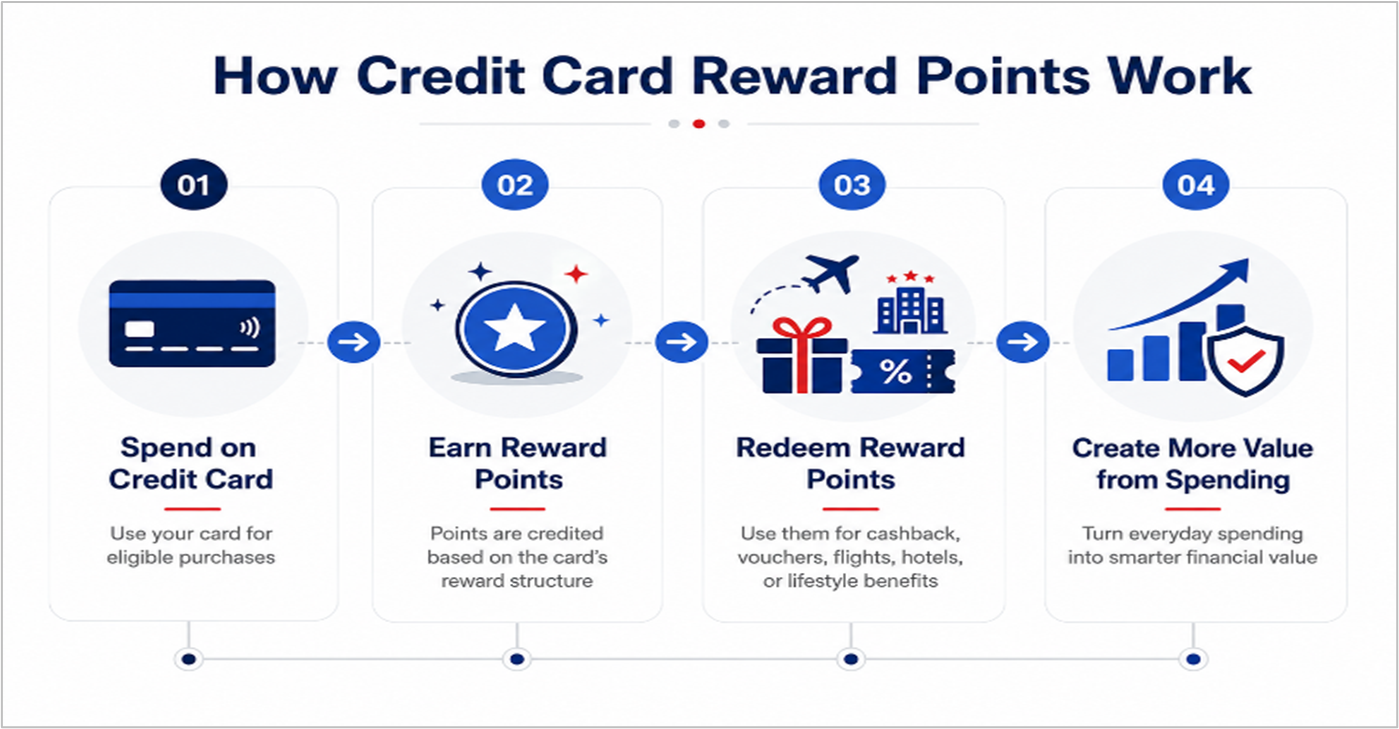
- Reward Points: This is the most common system. For every ₹100 or ₹150 spent, you earn a certain number of points. These points can then be redeemed for various options: merchandise from a catalogue, vouchers for popular brands (Amazon, Flipkart, Myntra), flight tickets, hotel stays, or sometimes converted to cashback, though often at a lower value than direct cashback cards.
- Travel Points/Airmiles: Specifically designed for frequent travellers, these cards allow you to earn airmiles (e.g., on specific airlines like Indigo, Vistara) or points that can be transferred to airline or hotel loyalty programs (e.g., Club Vistara, Marriott Bonvoy). Benefits often include complimentary lounge access at Indian and international airports, priority check-in, and discounted bookings.
- Lifestyle & Shopping Benefits: Many co-branded cards offer exclusive discounts, accelerated reward points, and special access at partner brands (e.g., Swiggy, Zomato, BookMyShow, BigBasket, major retail chains). These are particularly valuable if you are a loyal customer of those brands.
- Fuel Surcharge Waiver: A common perk, especially on entry-level cards, where the 1% fuel surcharge levied at petrol pumps is waived up to a certain monthly limit.
Major players like HDFC Bank, ICICI Bank, SBI Card, Axis Bank, Kotak Mahindra Bank, and Standard Chartered Bank dominate the market, each offering a portfolio of cards tailored for different segments, from entry-level options to premium cards for high-net-worth individuals.
The Golden Rule: Spend Smart, Not More
Before diving into complex optimization strategies, it's crucial to internalize the fundamental principle: credit card rewards are only beneficial if they don't lead to increased spending or, worse, debt. The interest rates on credit card outstanding balances in India are notoriously high, often ranging from 2.5% to 3.5% per month (or 30-42% annually). Any rewards earned will be instantly dwarfed by these charges.
Practical Steps for Responsible Spending:
- Budget Diligently: Create a monthly budget and stick to it. Use your credit card for expenses you would have made anyway with cash or a debit card. This ensures you're leveraging rewards on planned spending, not creating new expenses.
- Track Your Expenses: Regularly monitor your credit card statements and spending. Most banking apps provide real-time tracking, helping you stay aware of your outflow and avoid surprises.
- Pay Bills in Full, On Time: This is non-negotiable. Always pay your entire outstanding balance by the due date. Setting up auto-debit from your bank account is an excellent way to ensure you never miss a payment.
- Avoid Cash Advances: Credit card cash advances come with immediate fees and high interest rates that start accruing from the day of the transaction, not after the billing cycle. Use them only in extreme emergencies.
- Don't Chase Rewards Blindly: If a card offers 5% cashback on a category you rarely spend in, it's not a good fit. Similarly, don't buy something you don't need just to meet a minimum spending requirement for a welcome bonus. The value of the item must outweigh the reward.
By adhering to these principles, you lay the groundwork for truly beneficial credit card reward optimization.
Decoding Different Reward Programs and Their Best Use Cases
Each credit card reward program has its strengths. Understanding which type of card excels in which area is key to maximizing your benefits.
Cashback Cards: The Everyday Saver
Cashback cards are ideal for those who prefer direct, tangible savings on their regular expenses. They are particularly effective for categories with high, consistent spending.
- Best Use: Groceries, utility bill payments (electricity, gas, mobile), fuel, online shopping on general platforms, and dining. Look for cards that offer accelerated cashback on these categories. For instance, some cards might offer 5% cashback on Swiggy and Zomato, or 1% on all other spends.
- Example Strategy: Use a dedicated cashback card for all your recurring bill payments and daily essentials. If a card offers a higher rate on online shopping, use it specifically for your e-commerce purchases.
Travel Cards: For the Wanderlust
If you're a frequent flyer or enjoy hotel stays, travel cards can offer immense value through airmiles, hotel points, lounge access, and travel insurance.
- Best Use: Booking flights, hotel accommodations, international transactions, and availing airport services. Co-branded airline cards (e.g., with Vistara, Indigo) or general travel cards (e.g., with tie-ups to major hotel chains) are excellent choices.
- Example Strategy: Concentrate your high-value spending on a travel card to accumulate airmiles quickly. Utilize complimentary lounge access for a more comfortable airport experience. During promotional periods, transferring points to partner airlines can yield even greater value.
Lifestyle & Shopping Cards: The Brand Loyalist's Friend
These cards cater to specific consumption patterns, often offering enhanced rewards or discounts with particular brands or categories.
- Best Use: If you frequently shop on a particular e-commerce platform (e.g., Amazon, Flipkart) or use specific services (e.g., Swiggy, Zomato, BookMyShow), a co-branded card can offer significant savings and accelerated points.
- Example Strategy: If you're a regular movie-goer, a card offering 'buy one get one free' movie tickets can be highly valuable. For online shoppers, a card providing extra discounts or accelerated points on your preferred platform can quickly add up.
Fuel Cards: Essential for Commuters
While the fuel surcharge waiver is common, some cards specifically designed for fuel offer additional benefits.
- Best Use: Filling up your vehicle. These cards typically waive the 1% fuel surcharge up to a certain monthly transaction limit (e.g., ₹4,000-₹5,000) and sometimes offer accelerated reward points on fuel spends.
- Example Strategy: Designate a specific card for all your fuel purchases to ensure you benefit from the surcharge waiver and any extra points.
By aligning your card choice with your predominant spending categories, you ensure that every rupee spent works harder for you.
Strategic Optimization Techniques for Maximum Value
Beyond simply choosing the right card, several advanced strategies can help you squeeze every drop of value from your credit card rewards.
1. Category-Specific Spending (The Multi-Card Strategy)
For many, a single credit card won't offer the best rewards across all spending categories. The truly savvy user often employs a multi-card strategy:
- Card A (Cashback): For groceries, utility bills, and general online shopping.
- Card B (Travel): For flight bookings, hotel stays, and international transactions.
- Card C (Co-branded): For specific e-commerce platforms or dining partners where you get accelerated rewards.
The key is to have a clear understanding of which card to use for which purchase. This requires a bit of discipline but can significantly boost your overall reward earnings. However, remember the golden rule: only take on multiple cards if you can manage them responsibly and pay all bills on time.
2. Maximizing Welcome Bonuses
Many premium and even mid-tier cards offer substantial welcome bonuses (e.g., thousands of reward points, free flight tickets, high cashback) upon meeting a certain spending threshold within the first few months. These bonuses can be incredibly lucrative.
- Strategy: Plan your major purchases (e.g., electronics, home appliances, insurance premiums) around the time you apply for a new card to easily meet the spending requirement. Always read the terms and conditions carefully to understand the exact requirements and exclusions.
3. Annual Fee vs. Rewards: A Cost-Benefit Analysis
Many rewarding cards come with an annual fee, ranging from a few hundred rupees to several thousands. Don't shy away from a card with an annual fee if its benefits clearly outweigh the cost.
- Strategy: Calculate the value of the rewards and benefits you expect to receive (e.g., lounge access, free movie tickets, accelerated points on high spending categories) and compare it to the annual fee. Many cards also offer fee waivers upon reaching a certain annual spending milestone. If you consistently meet this, the effective annual fee becomes zero.
4. Smart Redemption Strategies
Earning points is only half the battle; redeeming them wisely is equally important.
- High-Value Redemptions: Generally, converting reward points to airmiles or hotel loyalty points offers the highest redemption value, especially during transfer bonuses. Look for opportunities to redeem points for high-value vouchers or specific products rather than generic catalogue items.
- Avoid Low-Value Redemptions: Converting points to cashback often yields a lower value (e.g., 4 points = ₹1). Similarly, avoid redeeming for items you don't genuinely need just because they are available in the catalogue.
- Time Your Redemptions: Some loyalty programs have dynamic pricing for flights or hotels. Redeeming during off-peak seasons or when there are special promotions can stretch your points further.
5. Leveraging Partner Offers and Promotions
Banks frequently partner with merchants to offer accelerated rewards or instant discounts. Keep an eye on these offers, especially during festive seasons (Diwali, Eid, Christmas) or major sales events.
- Strategy: Check your bank's website or app regularly for ongoing promotions. If you plan to make a significant purchase, see if your card offers extra benefits with a particular retailer.
By combining these strategies, you can transform your credit card from a simple payment tool into a powerful financial asset.
Avoiding Common Pitfalls: The Road to Responsible Reward Earning
The pursuit of credit card rewards can be exhilarating, but it's fraught with potential dangers. Being aware of these pitfalls is crucial for long-term financial health.
1. The Debt Trap: The Ultimate Reward Killer
This is the most significant risk. Carrying an outstanding balance on your credit card for rewards is financially disastrous. The high interest rates (30-42% annually) will quickly negate any cashback or points earned. Always prioritize paying your bill in full and on time.
2. Overspending for Rewards
Don't buy things you don't need or spend more than you can afford just to earn extra points or hit a spending milestone. A ₹500 cashback on a ₹10,000 purchase you didn't need is not a saving; it's a ₹9,500 expense.
3. Ignoring Terms and Conditions
Credit card agreements are often complex, but understanding them is vital. Pay attention to:
- Reward Exclusions: Certain types of transactions (e.g., fuel, cash advances, EMI conversions, wallet loads) might not earn rewards.
- Reward Caps: Many cards have monthly or annual caps on the maximum rewards you can earn in specific categories.
- Point Expiry: Reward points often have an expiry date. Keep track of this to avoid losing valuable points.
- Annual Fee Waivers: Understand the spending threshold required to get your annual fee waived.
4. Losing Track of Multiple Cards
While a multi-card strategy can be effective, it requires meticulous management. If you have multiple cards, ensure you know the billing cycles, due dates, and reward structures for each. Missing a payment on even one card can impact your credit score.
5. Forex Markups on International Spends
While some premium travel cards offer low or zero forex markup, most Indian credit cards charge a foreign exchange markup of 2-3.5% on international transactions. If you're using a regular card abroad, this fee can outweigh any travel points earned. Consider a dedicated forex card or a credit card with low forex markup for international travel.
By consciously avoiding these common mistakes, you can ensure your credit card rewards strategy remains profitable and sustainable.
Building a Sustainable Multi-Card Strategy for the Indian Consumer
For many Indian consumers, having a single credit card is often not enough to fully optimize rewards across diverse spending categories. A well-thought-out multi-card strategy can be incredibly powerful, but it requires careful planning and disciplined execution.
When Does a Multi-Card Strategy Make Sense?
- Diverse Spending Habits: If your spending is spread across multiple categories (e.g., significant travel, regular online shopping, daily groceries, and fuel), a single card rarely offers the best rewards for all.
- Specific High-Value Categories: You might have one card for 5% cashback on utilities, another for accelerated points on dining, and a third for airport lounge access.
- Leveraging Welcome Bonuses Regularly: If you are disciplined and can meet spending thresholds, rotating new cards every 12-18 months to capture welcome bonuses can be highly rewarding.
How to Build Your Portfolio:
- Anchor Card (Everyday Spend): Choose a primary card that offers decent rewards (cashback or general points) on your largest, most consistent spending categories. This is your go-to card for most transactions.
- Category-Specific Cards: Identify your next biggest spending areas. Do you travel a lot? Get a travel card. Are you loyal to a specific e-commerce platform? Get a co-branded card for that. Do you spend heavily on fuel? Get a fuel card.
- Premium Perks Card (Optional): If you can justify the annual fee through benefits like unlimited lounge access, concierge services, or high-value travel credits, a premium card can be a valuable addition.
Managing Multiple Cards:
- Consolidate Bills: If possible, link all your credit card payments to a single bank account and set up auto-pay for the full amount.
- Use Banking Apps: Leverage mobile banking apps to track spending across all your cards in one place.
- Review Annually: At least once a year, review your card portfolio. Are you still getting value from each card? Are there new cards on the market that better suit your current spending? Don't hesitate to cancel cards that no longer serve you, especially if you can't get the annual fee waived.
Remember, the goal is optimization, not accumulation. Each card in your wallet should have a clear purpose and contribute to your overall financial well-being without adding unnecessary complexity or risk.
Future Trends in Indian Credit Card Rewards
The Indian financial landscape is rapidly evolving, driven by digital transformation and changing consumer behaviour. Credit card rewards programs are likely to adapt in several key ways:
- Hyper-Personalization: Expect more tailored reward offers based on your individual spending patterns, leveraging AI and data analytics. Banks will likely offer dynamic bonuses on categories where you spend most.
- Integration with Digital Payments: As UPI and mobile wallets become even more pervasive, credit cards may offer enhanced rewards for transactions made through these digital channels, or integrate more seamlessly with payment apps.
- Sustainability and Social Impact: We might see the rise of
Was this helpful?
Your feedback helps us improve content for everyone.
Liked this piece?
Tip Dhananjay for the work
100% goes to the creator. Send a one-time tip in rupees and back the writing you love.
Dhananjay Singh
3 followers · 84 blogs
Published 17 Jun 2026 · Updated 11 Aug 2026
Creator on ContentVerse. Building, writing, and shipping in public.
Reviewed by the ContentVerse India editorial team. Educational pages are not personalised advice.
View full profile3 followers
Discussion