
Online Gaming Laws in India: What Players & Developers Need to Know
India's online gaming landscape is rapidly evolving with significant regulatory changes impacting both players and developers. Understanding the nuances of new IT Rules, GST amendments, and self-regulatory mechanisms is crucial for navigating this dynamic environment.
Reading this article: 0s
News in 60 words
~150-word AI digest in one read
Thesis, bullets, quote & takeaway — slogan stays "60 words"
7d ·7 min read· 0 · 0 · 0
Full story
The Rapidly Evolving Landscape of Online Gaming in India
India's online gaming sector is experiencing an unprecedented boom, attracting millions of players and significant investment. From fantasy sports leagues like Dream11 to card games like RummyCircle and casual mobile games, the digital playground is vast. However, this rapid expansion has also brought increased scrutiny, leading to a dynamic and often complex regulatory environment.
Recent amendments to the IT Rules, 2021, and the landmark decision by the GST Council to levy a 28% tax have fundamentally reshaped the legal framework. For both avid players in cities like Bengaluru and Mumbai, and innovative developers across the country, understanding these evolving laws is no longer optional—it's essential for continued participation and growth. This article delves into the critical aspects of India's online gaming laws, providing clarity on what you need to know.
Decoding the IT Rules, 2023: A New Era of Regulation
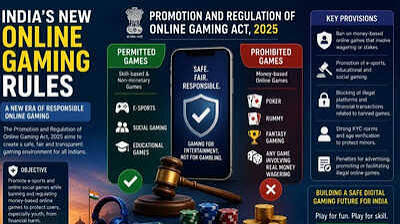
The Ministry of Electronics and Information Technology (MeitY) introduced significant amendments to the Information Technology (Intermediary Guidelines and Digital Media Ethics Code) Rules, 2021, in April 2023. These amendments specifically target online gaming, aiming to create a safer and more transparent ecosystem. The core idea is to regulate 'online games' played for a wager, rather than outright bans.
A key feature of these new rules is the establishment of Self-Regulatory Bodies (SRBs). These SRBs are tasked with certifying online games as “permissible” based on criteria like not involving betting or wagering on outcomes, and ensuring player protection. Games certified by an SRB can operate legally in India, providing a clear pathway for developers.
Games of Skill vs. Games of Chance: The Crucial Distinction
The legal bedrock of online gaming in India rests heavily on the distinction between “games of skill” and “games of chance.” While games of chance (like traditional gambling or pure roulette) are largely prohibited under various state gambling laws, games predominantly involving skill are generally permitted. This distinction has been upheld by the Supreme Court of India in several landmark judgments concerning Rummy and Fantasy Sports.
- Games of Skill: These games require players to apply their knowledge, experience, attention, and training to achieve success. Examples include fantasy cricket (where players pick teams based on player performance), chess, poker (often considered skill-based in specific formats), and Rummy. Success here is not solely dependent on luck.
- Games of Chance: These games rely primarily on luck or random outcomes. Examples include traditional casino games like slot machines, roulette, and often, certain forms of betting where the player has no influence over the outcome.
The new IT Rules aim to regulate games involving 'wagers' or 'deposits' without explicitly defining skill or chance, instead relying on SRBs to determine permissibility. This shifts the focus to responsible gaming and player protection, regardless of the skill vs. chance debate for certified games.
The 28% GST Impact: A Game Changer for the Industry
One of the most significant recent developments is the GST Council's decision in July 2023 (and subsequent legislative changes) to impose a uniform 28% Goods and Services Tax on the full value of bets placed in online gaming, casinos, and horse racing. This applies to the amount paid by the player to the gaming platform, not just the platform's commission or GGR (Gross Gaming Revenue).
This move has substantial implications:
- For Operators: It drastically increases the tax burden, potentially impacting profitability and business models. Many platforms previously paid 18% GST on their Gross Gaming Revenue. The new rule applies to the “face value” or “entry fee,” regardless of the outcome.
- For Players: While directly paid by operators, this tax hike could indirectly affect players through higher entry fees, reduced prize pools, or changes in bonus structures. For example, if you deposit ₹100 into a game, the platform now has to account for 28% GST on that ₹100, impacting how much is left for the prize pool or platform revenue.
- Retrospective Application: The government also clarified that the 28% GST would apply retrospectively from October 2023, causing significant financial stress for some companies facing past tax demands.
This tax regime aims to bring online gaming on par with other “sin goods” like gambling and lotteries, sparking considerable debate within the industry.
Key Compliance Measures for Developers and Operators
For online gaming platforms looking to operate legally and sustainably in India, adherence to the new regulations is paramount.
- Registration with SRBs: Platforms offering online real money games must register with one or more Self-Regulatory Bodies (SRBs) designated by MeitY. These SRBs will certify if a game is permissible.
- KYC (Know Your Customer): Robust KYC procedures are mandatory to verify player identities, prevent fraud, and ensure that minors do not participate in real money games. This often involves Aadhaar-based verification or other government-issued IDs.
- Responsible Gaming Measures: Platforms must implement strict measures to protect players. These include:
- Setting deposit limits (daily, weekly, monthly).
- Providing options for self-exclusion for players who wish to take a break.
- Displaying clear warnings about financial risks and addiction.
- Prohibiting advertising that portrays online gaming as an income source or a solution to financial problems.
- Data Protection: Adherence to India's data protection laws (like the Digital Personal Data Protection Act, 2023, once fully implemented) is crucial for safeguarding player information.
- Transparent Terms & Conditions: Clear and accessible terms of service, privacy policies, and refund policies are required.
What Players Need to Be Aware Of
As a player, navigating the online gaming landscape requires awareness and responsibility.
- Choose Legitimate Platforms: Always play on platforms certified by an SRB. Look for clear indicators of compliance and responsible gaming practices. This protects you from fraudulent operators and ensures a fair playing environment.
- Understand Taxation on Winnings: Winnings from online games are subject to income tax. A 30% TDS (Tax Deducted at Source) is applicable on net winnings above a certain threshold (e.g., ₹100 in some cases, or ₹10,000 for others depending on the specific game and platform's policy). Ensure you understand how your winnings will be taxed and reported.
- Utilize Responsible Gaming Tools: Take advantage of deposit limits, self-exclusion options, and other tools offered by platforms. Gaming should be for entertainment, not a financial burden.
- Read Terms and Conditions: Before depositing money or playing, thoroughly read the platform's terms and conditions, especially regarding withdrawals, bonuses, and grievance redressal mechanisms.
FAQs about Online Gaming Laws in India
What is the role of Self-Regulatory Bodies (SRBs) in online gaming?
SRBs are industry-led organizations recognized by the Ministry of Electronics and Information Technology (MeitY). Their primary role is to certify online games as “permissible” based on strict criteria, ensuring they do not involve betting or wagering on outcomes and adhere to player protection standards. They act as a crucial gatekeeper for legal online gaming operations in India.
How does the 28% GST impact my winnings?
The 28% GST is levied on the full value of the deposit or entry fee you pay to the online gaming platform, not directly on your winnings. However, this increased tax burden on operators might indirectly affect players through potentially higher entry fees, reduced prize pools, or changes in promotional offers. Your actual winnings, once disbursed, are subject to a separate 30% income tax (TDS) if they exceed specified thresholds.
Is all online gaming legal in India?
No, not all online gaming is legal. The legality hinges on the distinction between “games of skill” (generally permitted) and “games of chance” (largely prohibited). Furthermore, even skill-based games must now be certified by an approved Self-Regulatory Body (SRB) under the IT Rules, 2023, to be considered permissible. Games involving betting or wagering on outcomes, unless specifically certified as permissible, remain illegal.
Conclusion: Navigating a Dynamic Future
India's online gaming industry is at a pivotal juncture. The recent regulatory shifts, particularly the IT Rules amendments and the 28% GST, signal a clear intent from the government to bring structure, responsibility, and taxation to this rapidly expanding sector. While these changes present challenges, they also aim to foster a safer and more transparent environment for millions of Indian players and thousands of developers.
For both stakeholders, continuous vigilance, adaptability, and adherence to the evolving legal framework are key to thriving in this dynamic landscape. As the industry matures, a balanced approach combining innovation with robust regulation will be crucial for its sustained growth and success.
Support creators
If you found this article helpful, consider tipping the writer on ContentVerse.
Was this helpful?
Your feedback helps us improve content for everyone.
Liked this piece?
Tip Dhananjay for the work
100% goes to the creator. Send a one-time tip in rupees and back the writing you love.
Dhananjay Chauhan
0 followers · 0 blogs
Creator on ContentVerse. Building, writing, and shipping in public.
0 followers
Discussion