
QDENGA: India's First Dengue Vaccine – All Your Questions Answered
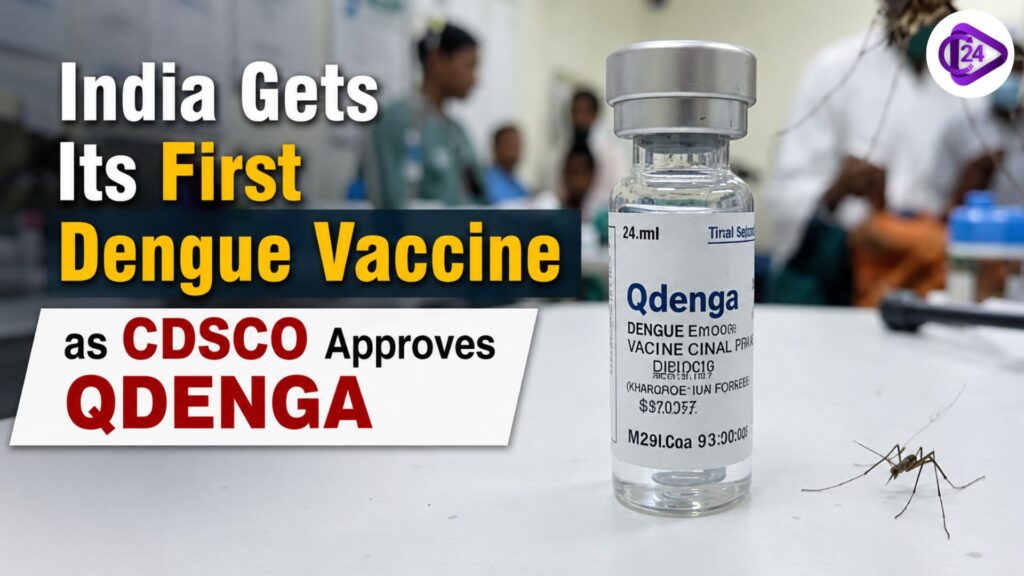
India has marked a significant public health milestone with the approval of QDENGA, its first dengue vaccine. This article delves into what QDENGA is, who can receive it, its efficacy, and its potential impact on the fight against dengue fever across the nation.
Reading this article: 0s
News in 60 words
~150-word AI digest in one read
Thesis, bullets, quote & takeaway — slogan stays "60 words"
7d ·5 min read· 0 · 0 · 0
Full story
Dengue fever, a mosquito-borne viral disease, has long been a relentless public health challenge in India. Affecting millions annually, it strains healthcare systems and causes significant morbidity and mortality, particularly during monsoon seasons. Cities like Delhi, Mumbai, Bengaluru, and Chennai regularly report high caseloads, leading to widespread concern.
However, a new ray of hope has emerged with the Drugs Controller General of India (DCGI) approving QDENGA (TAK-003), developed by Takeda Pharmaceutical Company Limited. This marks a pivotal moment, as QDENGA becomes India's first approved vaccine specifically designed to combat dengue. This approval promises to revolutionize our approach to preventing this debilitating disease, offering a proactive shield against its widespread impact.
Understanding QDENGA: India's New Shield Against Dengue
QDENGA is a live-attenuated tetravalent vaccine, meaning it contains weakened forms of all four serotypes of the dengue virus (DENV-1, DENV-2, DENV-3, and DENV-4). Its purpose is to stimulate the immune system to produce antibodies against these serotypes, providing protection should a person be exposed to the actual virus. This innovative vaccine is based on a DENV-2 backbone, which has been genetically engineered to carry the genes for the other three serotypes.
Unlike previous dengue vaccine candidates that faced challenges with varying efficacy against different serotypes or concerns in seronegative individuals, QDENGA has demonstrated a robust safety and efficacy profile in global clinical trials. Its approval in India is a testament to years of research and development aimed at providing a comprehensive solution to dengue prevention.
Who Can Get Vaccinated with QDENGA?
QDENGA is approved for use in individuals aged 4 to 60 years. A crucial advantage of QDENGA is that it does not require pre-vaccination screening for prior dengue infection. This simplifies its administration significantly, making it more accessible and practical for widespread public health programs.
Previously, another dengue vaccine (Dengvaxia) faced restrictions, primarily recommended only for individuals with a confirmed prior dengue infection due to potential risks in those who had never been exposed. QDENGA overcomes this hurdle, offering a broader applicability across the eligible age group, regardless of their past infection status.
Vaccination involves a two-dose schedule, with the second dose administered three months after the first. This regimen is designed to provide sustained protection against all four dengue serotypes.
Efficacy and Safety Profile of QDENGA
Clinical trials, including the extensive TIDES (Tetravalent Immunization against Dengue Efficacy Study) trial, have shown promising results for QDENGA. The vaccine demonstrated an overall efficacy of approximately 80% in preventing virologically confirmed dengue disease at 12 months after the second dose.
Importantly, QDENGA showed sustained efficacy against all four dengue serotypes, and it significantly reduced hospitalizations and severe dengue cases. This broad protection is critical given that individuals can be infected by any of the four serotypes, and a second infection by a different serotype often leads to more severe disease.
Common side effects observed during trials were generally mild to moderate and transient. These included injection site pain, headache, muscle pain (myalgia), malaise, and low-grade fever. Severe adverse events were rare, and the vaccine has a favorable safety profile. As with any vaccine, individuals with compromised immune systems or those with severe allergies to vaccine components should consult a doctor.
Availability and Cost in India
While the DCGI approval is a significant step, the exact timeline for QDENGA's widespread availability across India is yet to be fully determined. Initially, it is expected to be available through private healthcare channels, including hospitals and clinics in major cities like Hyderabad, Pune, and Kolkata, where dengue prevalence is high.
The cost of the vaccine will be a key factor in its accessibility. While official pricing is not yet released, based on global benchmarks and the cost of other new vaccines in India, each dose of QDENGA could be expected to be in the range of ₹2,500 to ₹4,000. For the full two-dose course, this would imply an investment of ₹5,000 to ₹8,000. Over time, as production scales and potentially government procurement agreements are made, prices may become more affordable, possibly through public health programs.
The Broader Impact on India's Dengue Fight
QDENGA's approval is a game-changer for India's public health strategy against dengue. For decades, prevention has primarily relied on vector control measures like eliminating mosquito breeding sites, using repellents, and fogging operations. While these remain crucial, a vaccine adds a powerful new layer of defense.
Its introduction is expected to reduce the incidence of dengue cases, alleviate the burden on hospitals, and save lives. This will have a ripple effect, freeing up healthcare resources and reducing the economic strain caused by dengue outbreaks on families and the national economy. The vaccine complements ongoing efforts by local municipal corporations and health departments in cities like Ahmedabad and Lucknow, enhancing community-level protection.
Frequently Asked Questions (FAQs)
Is QDENGA effective against all dengue strains?
Yes, QDENGA is a tetravalent vaccine, designed to provide protection against all four serotypes of the dengue virus (DENV-1, DENV-2, DENV-3, and DENV-4). Clinical trials have demonstrated its efficacy across these serotypes.
What is the recommended dosage schedule for QDENGA?
QDENGA is administered as a two-dose primary vaccination series. The second dose is given three months after the first dose. It's crucial to complete both doses for optimal protection.
Can I get QDENGA if I've never had dengue before?
Yes, a significant advantage of QDENGA is that it can be administered to individuals aged 4-60 years regardless of their prior dengue infection status. Pre-screening for past infection is not required, making it suitable for both dengue-naïve and previously infected individuals within the approved age range.
A New Era in Dengue Prevention
The approval of QDENGA marks a monumental step forward in India's ongoing battle against dengue. While mosquito control and public awareness remain vital, the vaccine offers a much-needed proactive measure, promising to significantly reduce disease burden and improve public health outcomes. As it becomes more widely available, QDENGA will empower individuals and communities to better protect themselves against this persistent threat, ushering in a new era of hope in dengue prevention.
Support creators
Was this helpful?
Your feedback helps us improve content for everyone.
Liked this piece?
Tip Dhananjay for the work
100% goes to the creator. Send a one-time tip in rupees and back the writing you love.
Dhananjay Chauhan
0 followers · 0 blogs
Creator on ContentVerse. Building, writing, and shipping in public.
0 followers
Discussion