
How India's Proposed Health Insurance Reforms Could Lower Your Medical Bills
India's regulator IRDAI and the government are pushing landmark healthcare insurance reforms aimed at tackling steep medical inflation. Discover how new rules on cashless claims, reduced waiting periods, and standardized billing could cut your out-of-pocket expenses.
Reading this article: 0s
News in 60 words
~150-word AI digest in one read
Thesis, bullets, quote & takeaway — slogan stays "60 words"
3h ·5 min read· 0 · 0 · 0
Full story
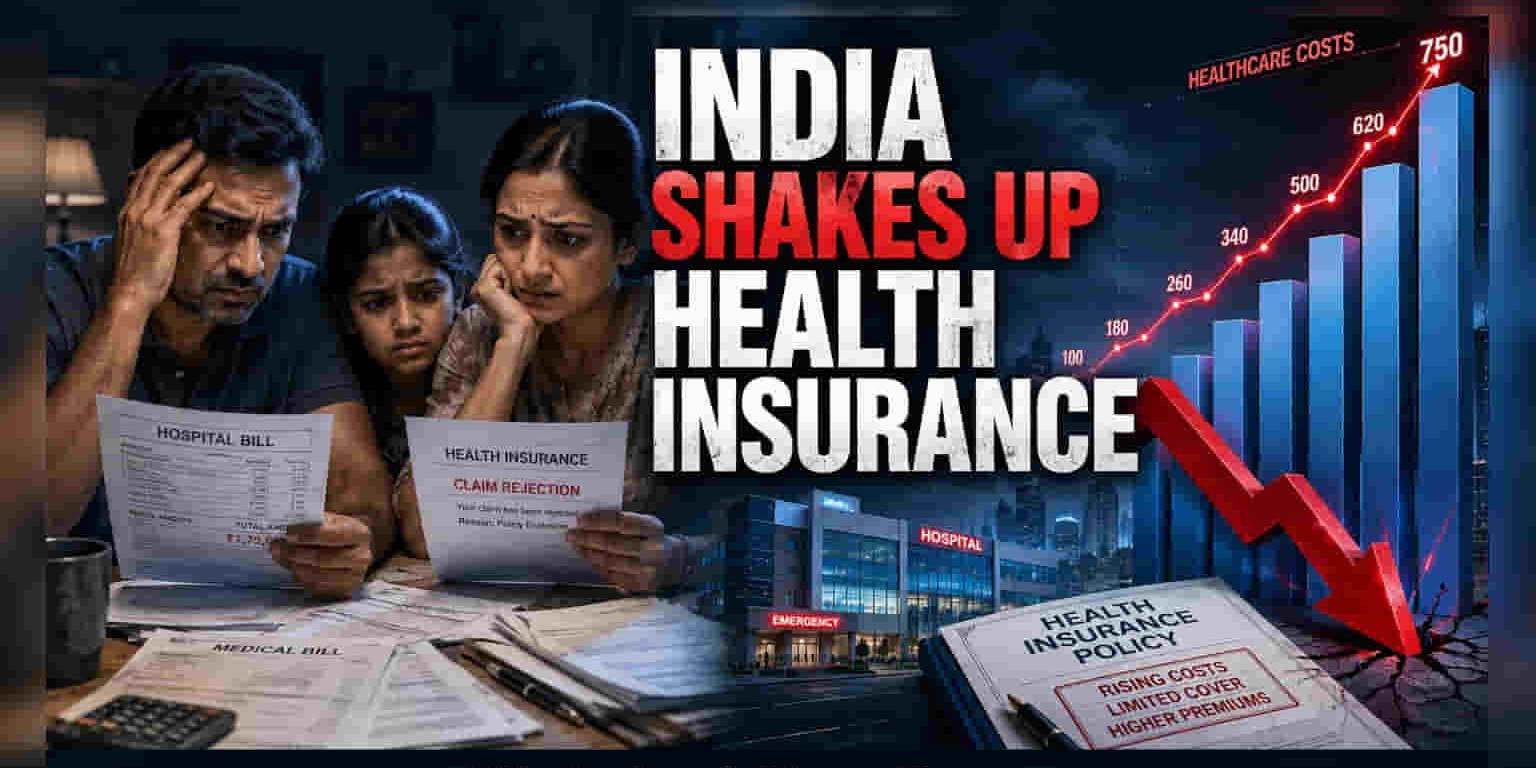
A single hospital admission in urban India can wipe out years of household savings. With medical inflation in India running at an alarming 14% annually—one of the highest rates in Asia—a standard surgery in cities like Mumbai, Bengaluru, or Delhi-NCR can easily cost between ₹2,00,000 and ₹5,00,000. For millions of middle-class families, out-of-pocket expenditure (OOPE) still accounts for nearly 47% of total healthcare spending.
To address this burden, the Insurance Regulatory and Development Authority of India (IRDAI), along with the Ministry of Health, has introduced sweeping health insurance reforms. These policy updates aim to make health coverage transparent, accessible, and fast. Here is an in-depth breakdown of these proposed and implemented changes and how they will directly protect your wallet.
1. The 'Cashless Everywhere' Mandate
Historically, policyholders could only access cashless hospitalization at network hospitals pre-approved by their insurer. If you were admitted to a non-network facility during an emergency, you had to pay the entire bill out of pocket and submit stack loads of paper bills for reimbursement—a process taking weeks or months.
Under the General Insurance Council’s 'Cashless Everywhere' initiative, policyholders can now access cashless facilities at almost any registered hospital across India, subject to basic criteria.
Key Benefits of Cashless Everywhere:
- Zero Immediate Outflow: Eliminates the need to arrange ₹1,00,000 to ₹3,00,000 cash on short notice during medical emergencies.
- Simplified Process: You notify your insurer 48 hours before an elective procedure or within 48 hours of an emergency admission.
- Better Hospital Network Integration: Over 40,000 hospitals are gradually being connected under standardized cashless protocols.
2. Reduced Waiting Periods for Pre-Existing Conditions
One of the biggest pain points for policyholders has been the lengthy waiting periods for Pre-Existing Diseases (PED), such as diabetes, hypertension, and asthma. Insurers previously mandated a waiting period of up to four years before covering expenses related to these pre-existing conditions.
IRDAI’s revised master circular has capped the maximum PED waiting period from 48 months to 36 months (3 years). Once this period lapses, the insurance company cannot deny a claim citing pre-existing health issues.
Furthermore, the moratorium period—the tenure after which an insurer cannot contest a claim on grounds of non-disclosure except for proven fraud—has been reduced from 8 years to 5 years. This provides significant peace of mind for policyholders maintaining long-term health policies.
3. Faster Claim Approvals and Strict Penalties for Delays
Delayed discharge approvals are a major headache for patients in Indian hospitals. It is common for families to wait 6 to 10 hours in hospital lobbies just to receive final claim clearance from Third Party Administrators (TPAs).
To resolve this friction, regulatory updates require insurers to adhere to strict timelines:
- 1-Hour Turnaround: Insurers must approve cashless pre-authorization requests within one hour of receiving them from the hospital.
- Final Discharge Clearance: Insurers must grant final cashless discharge approval within three hours of receiving the final bill from the hospital.
- Delay Penalties: If a delay occurs beyond these windows, any additional hospital charges incurred during the extra stay period must be borne directly by the insurance company, not the policyholder.
4. Standardization of Hospital Charges and Room Rent Capping
A major cause of inflated medical bills in private hospitals is dynamic pricing based on room categories. Choosing a deluxe room often leads to proportionate price hikes for doctor consultation fees, nursing fees, and surgical procedure charges.
Government authorities and regulatory bodies are actively pushing for standardized cost guidelines for common surgical procedures (such as cataract operations, knee replacements, and appendectomies). Additionally, new regulations mandate clearer policy definitions regarding room rent capping, preventing insurers from deducting hidden proportionate charges during claim settlement.
5. GST Rationalization on Health Insurance Premiums
Currently, health insurance premiums in India attract an 18% Goods and Services Tax (GST). For a family floater policy costing ₹30,000 annually, GST adds ₹5,400 to the total cost. This high tax burden deters many lower-middle-income households from renewing their coverage.
The GST Council is actively deliberating recommendations to either exempt senior citizens from GST on health premiums or reduce the overall tax rate from 18% to 5% for standard family floater policies. If passed, this single tax reform could make comprehensive healthcare coverage instantly more affordable for millions of Indian households.
How to Maximize Your Benefits Under New Reforms
To ensure you benefit directly from these regulatory changes, consider taking these practical steps:
- Link Your ABHA ID: Create and link your Ayushman Bharat Health Account (ABHA) digital ID with your insurance policy for seamless, paperless verification.
- Review Exclusions Period: Check your policy schedule to ensure your insurer has updated your PED waiting period to 3 years.
- Keep Emergency Contacts Handy: Save your insurer’s TPA desk contact and hospital cashless desk details on your smartphone apps like PhonePe or Paytm Insurance Manager.
- Opt for Direct Insurers: Choose insurers with high In-House Claim Settlement Ratios rather than third-party administrators for faster approval turnarounds.
Frequently Asked Questions (FAQs)
What is the 'Cashless Everywhere' policy in India?
It is an initiative that allows health insurance policyholders to receive cashless treatment at non-network hospitals, provided the hospital meets standard quality guidelines and notification timelines are met.
What is the maximum waiting period for pre-existing diseases now?
As per recent IRDAI guidelines, the maximum permissible waiting period for pre-existing diseases (PED) has been reduced from 4 years (48 months) to 3 years (36 months).
Can my health insurance claim be rejected after 5 years of continuous policy renewal?
After 5 years of continuous policy renewal (reduced from 8 years), the moratorium period kicks in. Insurers cannot reject claims after this duration except in cases of proven deliberate fraud.
Conclusion
India’s evolving health insurance landscape is shifting decisively toward protecting policyholders from runaway hospital bills. By enforcing faster claim turnarounds, lowering waiting periods, expanding cashless availability, and targeting standardized medical costs, these regulatory measures offer genuine financial security. Take time today to review your existing health cover and ensure your family is prepared to take full advantage of these historic reform measures.
This is educational content, not financial advice.
Support creators
If you found this guide helpful, consider tipping the author on ContentVerse India to support independent financial and healthcare journalism.
Was this helpful?
Your feedback helps us improve content for everyone.
Liked this piece?
Tip Dhananjay for the work
100% goes to the creator. Send a one-time tip in rupees and back the writing you love.
Dhananjay Singh
0 followers · 0 blogs
Creator on ContentVerse. Building, writing, and shipping in public.
0 followers



Discussion