
Indian Football Team's World Cup 2030 Qualifiers: What Next for Chhetri & Co.?
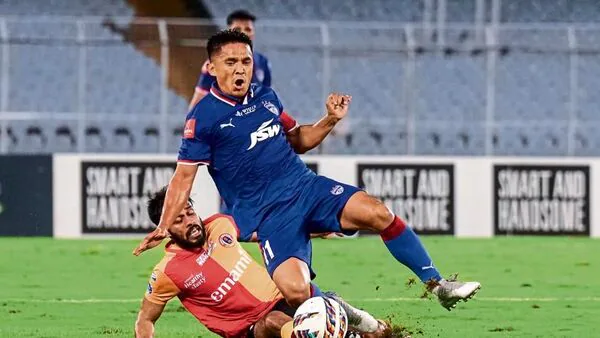
The dream of India playing in a FIFA World Cup continues to inspire millions. With Sunil Chhetri's international retirement, the focus intensifies on the path to the 2030 qualifiers.
Reading this article: 0s
News in 60 words
~150-word AI digest in one read
Thesis, bullets, quote & takeaway — slogan stays "60 words"
(3mo)4 min read 7 1 0
Creator on ContentVerse. Building, writing, and shipping in public.
Full story
The dream of India playing in a FIFA World Cup has long been a fervent wish for millions. While the recent 2026 World Cup qualifiers brought both hope and heartbreak, the focus now shifts to the future, particularly the 2030 edition. With the legendary Sunil Chhetri recently announcing his retirement from international football, what does this pivotal moment mean for the Blue Tigers' aspirations on the global stage?
The Recent Qualifiers: Lessons Learned
India's journey in the second round of the 2026 FIFA World Cup qualifiers was a rollercoaster. Despite moments of brilliance, particularly the crucial win against Kuwait, the team ultimately fell short of advancing to the third round. The narrow loss to Qatar in a match riddled with controversy highlighted the fine margins at this level.
This campaign served as a stark reminder of the challenges ahead. While the team showed flashes of potential, consistency, tactical discipline, and clinical finishing remain areas for significant improvement. These are the building blocks that must be strengthened if India is to realistically eye a World Cup berth.
The Chhetri Era Ends: A Void to Fill
Sunil Chhetri's retirement marks the end of an unparalleled era for Indian football. As the third-highest active international goalscorer globally, his influence extended far beyond goals; he was a leader, an inspiration, and the face of the sport in India for nearly two decades. His departure leaves an immense void, not just in terms of goal-scoring prowess but also in leadership and experience.
The challenge now is two-fold: finding players who can consistently score goals at the international level and cultivating new leaders within the squad. Young talents like Lallianzuala Chhangte, Mahesh Singh Naorem, and Vikram Partap Singh have shown glimpses of their potential. However, the onus is on the coaching staff and the AIFF to nurture these players, providing them with the necessary exposure and development pathways to step into such large shoes.
Building for 2030: A Holistic Approach
Achieving a World Cup dream by 2030 requires more than just a talented squad; it demands a comprehensive, long-term vision. This starts at the grassroots. Investing heavily in youth academies, providing quality coaching at all levels, and creating a robust talent identification system across the country are paramount. The All India Football Federation (AIFF) must prioritize these foundational aspects.
Furthermore, the Indian Super League (ISL) and I-League play a crucial role. They need to continue evolving, offering competitive environments and regular playing time for Indian players. Increasing the number of matches, improving pitch conditions, and ensuring high-quality foreign coaches can significantly elevate the standard of domestic football, which directly impacts the national team's performance.
Strengthening the Squad: Beyond Chhetri
While Chhetri's departure is significant, it also presents an opportunity for other players to step up and forge their own legacies. The national team needs to expand its talent pool, identifying players not just for their technical skills but also for their mental fortitude and tactical understanding. Regular international friendlies against higher-ranked opponents are essential to expose players to different styles of play and high-pressure situations.
Focus should also be on improving defensive solidity and midfield control, areas where India has sometimes struggled. Developing versatile players who can adapt to various formations and tactical demands will be key. The coaching staff, led by Igor Stimac for now, must experiment and find the right combinations to build a resilient and attacking unit capable of competing with Asia's best.
FAQs
Will India qualify for the 2030 FIFA World Cup?
Qualifying for the 2030 FIFA World Cup remains an ambitious goal for India. While the recent expansion of the World Cup to 48 teams increases Asia's slots, significant improvements in player development, league standards, and international competitiveness are required for India to realistically contend for a spot. It will take a sustained, collective effort over the next few years.
Who are the potential successors to Sunil Chhetri?
While no single player can immediately replace Sunil Chhetri's impact, several young Indian forwards and attacking midfielders are showing promise. Lallianzuala Chhangte, Mahesh Singh Naorem, and Vikram Partap Singh are among those who are expected to carry a significant portion of the goal-scoring and creative burden for the national team in the coming years.
Conclusion
The road to the FIFA World Cup 2030 is long and arduous, especially after the recent qualifiers and Sunil Chhetri's retirement. However, it's also a path filled with immense potential. By focusing on grassroots development, strengthening domestic leagues, nurturing young talent, and providing consistent international exposure, India can build a formidable team. The dream of seeing the Blue Tigers on the global stage is alive, and with collective effort and strategic planning, it's a dream that Indian football can strive to turn into reality.
Support creators
If you enjoyed this article, consider tipping the writer on ContentVerse.
Was this helpful?
Your feedback helps us improve content for everyone.
Liked this piece?
Tip Dhananjay for the work
100% goes to the creator. Send a one-time tip in rupees and back the writing you love.
Dhananjay Singh
3 followers · 110 blogs
Published 25 Jun 2026 · Updated 16 Sept 2026
Creator on ContentVerse. Building, writing, and shipping in public.
Reviewed by the ContentVerse India editorial team. Educational pages are not personalised advice.
View full profile3 followers
Discussion