
How the Indian Premier League Turned Cricket Into India's Biggest Entertainment Industry
From Lalit Modi's 2008 gamble to multi-crore player auctions and packed stadiums, a look at how the IPL grew into a summer obsession that runs the country.
Reading this article: 0s
News in 60 words
~150-word AI digest in one read
Thesis, bullets, quote & takeaway — slogan stays "60 words"
(4mo)5 min read 6 0 0
Full story
The Start of a Mad Experiment in 2008
Indian cricket changed forever on a warm evening in April 2008. Months after MS Dhoni lifted the inaugural T20 World Cup trophy in South Africa, the Board of Control for Cricket in India launched something entirely untested: city-based franchise cricket. Backed by Lalit Modi, the Indian Premier League smashed traditional cricket conservatism. Old-school purists scoffed at the idea of Bollywood stars owning teams, cheerleaders dancing on boundaries, and players auctioned off like prized racehorses.
Yet, the gamble worked instantly. The BCCI auctioned eight founding franchises to a mix of industrial tycoons and film icons like Shah Rukh Khan. What followed was a complete rewriting of how domestic sport operated. Instead of playing for state associations in sleepy red-ball matches, cricketers from domestic backwaters were suddenly sharing dressing rooms with Ricky Ponting, Shane Warne, and Sachin Tendulkar. The tournament stopped being just a cricket competition and morphed into India's unofficial summer festival.
How the Tournament Works
Today, the league features ten franchises playing a double round-robin format during the league stage. Every team plays every other team twice—once at home and once away. With the tournament packed into roughly two months every year, the schedule is relentless. Teams crisscross the country, dealing with brutal April and May heat in cities like Chennai, Delhi, and Bengaluru.
Once the league stage wraps up, the top four teams move into the playoffs, which are engineered for maximum television drama:
- Qualifier 1: The top two teams play each other. The winner goes straight to the final.
- Eliminator: The third and fourth-placed teams fight to stay alive.
- Qualifier 2: The loser of Qualifier 1 plays the winner of the Eliminator for the remaining spot in the final.
- Final: The two surviving teams battle for the trophy.
This playoff structure means even a shaky start in the first half of the season doesn't automatically knock a strong team out, keeping the points table volatile right until the final week of league matches.
The Fanatics and the Franchises
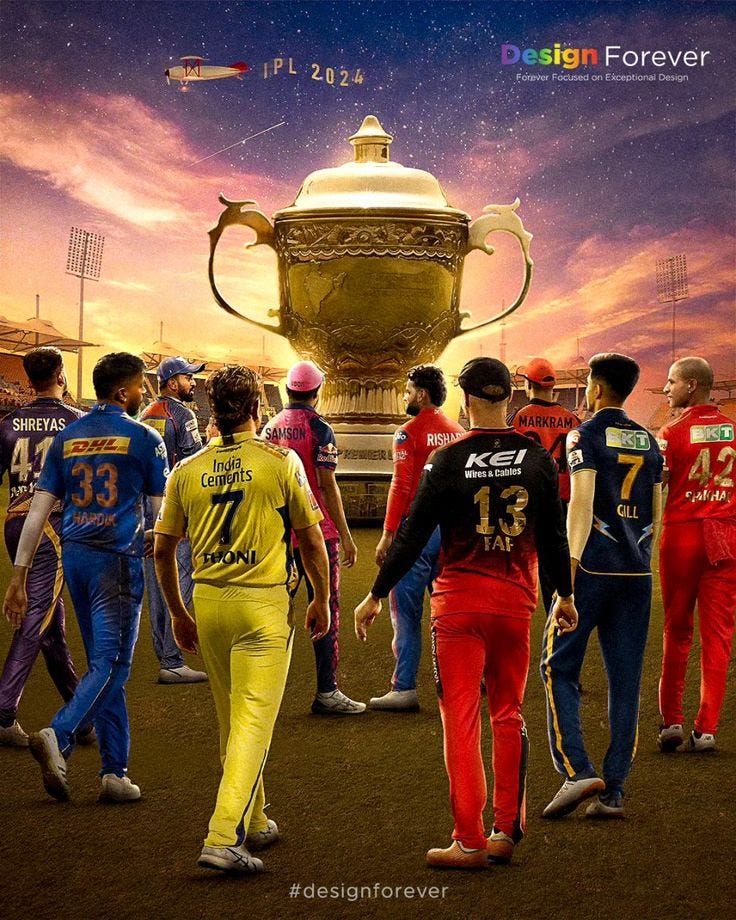
Loyalty in the IPL runs deeper than most traditional club sports. Walk down Marine Drive in Mumbai during May, and you will see a sea of blue Mumbai Indians jerseys. Step into Chepauk in Chennai, and the entire stadium turns yellow, chanting Dhoni's name with a deafening roar.
Teams like Mumbai Indians and Chennai Super Kings have built dynasties with five titles each, relying on sharp auction strategies and stable leadership cores. Meanwhile, Royal Challengers Bengaluru commands a massive, almost religious following despite never winning an actual trophy. That fandom survives purely on the sheer charisma of players like Virat Kohli and the memory of iconic knocks by AB de Villiers. When these teams play, offices clear out early, restaurants set up giant projector screens, and local traffic in major metros drops noticeably during evening matches.
The Drama of the Auction Block
No other cricket league in the world stops the working day quite like the player auction. Every year or two, franchise owners, head coaches, and analysts sit in luxury hotel ballrooms with laptops and massive binders, bidding crores of rupees for players.
Operating under a strict salary cap, team management must balance star power with domestic depth. For an uncapped player grinding away in the Ranji Trophy, a single good domestic season followed by an IPL auction bidding war can change a family's financial future overnight. Suddenly, a fast bowler from a small town in Uttar Pradesh or Jammu & Kashmir is holding a jersey with a multi-crore price tag. For international stars, these contracts represent the most lucrative paydays in the sport, making the auction an absolute high-stakes thriller.
A Global Training Ground for Young Indian Talent
The real genius of the league has been its ability to bridge the gap between domestic grit and international pressure. When a young twenty-year-old steps out to bowl the final over against an overseas powerhouse like Jos Buttler or Andre Russell in front of 80,000 screaming fans at the Narendra Modi Stadium in Ahmedabad, fear either breaks them or makes them.
Players like Jasprit Bumrah, Hardik Pandya, and Rishabh Pant did not become match-winners in international Test matches by accident; they earned their tactical sharpness under the bright lights of the IPL. Sharing a dugout with seasoned international veterans teaches youngsters how to handle failure, manage injuries, and read match situations long before they wear the India blue cap.
The Business Engine and Media Rights
Behind the sixes and glowing stadiums sits a massive corporate machine. The IPL generates staggering revenue through media rights deals with broadcasters like Star Sports and digital streaming giants like JioCinema, where matches are streamed free to hundreds of millions of mobile phones across the country.
Title sponsors pay astronomical sums to slap their brands across every available surface—from the umpire's caps to the strategic timeout clocks. Franchise valuations have soared into the hundreds of millions of dollars, turning cricket teams into standalone corporate assets. This financial strength allows the league to pay players handsomely, maintain world-class broadcast production standards, and invest heavily in stadium infrastructure.
FAQ
How many teams currently play in the IPL?
Currently, there are ten active franchises participating in the tournament, following the addition of the Gujarat Titans and Lucknow Super Giants.
How does the IPL auction work?
Franchises bid against each other for domestic and international players from a pre-registered pool, operating under a set salary cap to ensure squad balance and financial fairness.
Where can I watch IPL matches in India?
Matches are broadcast on television via Star Sports channels and streamed digitally on the JioCinema app.
Catch a live match at any home stadium or tune into a packed sports bar on a Sunday evening, and you realize the IPL is no longer just a cricket tournament—it is the pulse of modern Indian summer entertainment.
Was this helpful?
Your feedback helps us improve content for everyone.
Liked this piece?
Tip Shrihari for the work
100% goes to the creator. Send a one-time tip in rupees and back the writing you love.
Shrihari Deshmukh
0 followers · 1 blogs
Published 4 Jun 2026 · Updated 8 Oct 2026
Reviewed by the ContentVerse India editorial team. Educational pages are not personalised advice.
View full profile0 followers
Discussion