
India's T20 Cricket Strategy: Adapting to New Formats and Player Roles for Future Tournaments
India's T20 cricket strategy is undergoing a crucial evolution, driven by the format's aggressive demands and the need for specialized player roles. This article explores how India can refine its approach to dominate future global tournaments.
Reading this article: 0s
News in 60 words
~150-word AI digest in one read
Thesis, bullets, quote & takeaway — slogan stays "60 words"
(1mo)6 min read 2 0 0
Creator on ContentVerse. Building, writing, and shipping in public.
Full story
The Urgent Evolution of India's T20 Cricket Strategy
T20 cricket has taken India by storm, transforming from a novel format into the nation's most beloved and commercially significant sporting spectacle. Yet, despite the immense talent pool and the success of the Indian Premier League (IPL), India’s performance in recent ICC T20 tournaments has highlighted a critical need for strategic introspection and adaptation. The global landscape of T20 cricket is constantly evolving, demanding a bolder, more specialized approach to player roles and tactical execution.
This isn't merely about individual brilliance anymore; it's about forging a collective, aggressive blueprint that can withstand pressure and consistently deliver under diverse conditions. From the bustling stadiums of Mumbai to the spin-friendly tracks of Chennai, India needs a strategy that is both resilient and dynamic. The time has come to dissect India’s T20 game plan and chart a course for future dominance.
The Evolving Batting Philosophy: Aggression from Ball One
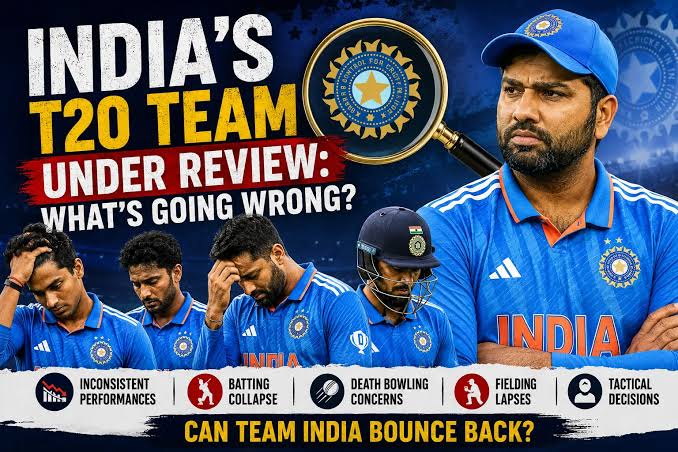
Gone are the days when T20 innings could afford a cautious start, building a platform before accelerating. Modern T20 demands a relentless assault from the very first over, putting opposition bowlers under immediate pressure. India’s traditional approach, often leaning on anchor batsmen to play through the innings, has frequently been critiqued for its lack of early impetus in crucial matches.
The new mantra must be fearless hitting, even if it entails a higher risk of losing early wickets. Players capable of high strike rates during the powerplay are invaluable. We’ve seen the impact of batsmen like Suryakumar Yadav, whose audacious strokeplay epitomizes this aggressive mindset, and Hardik Pandya, who seamlessly shifts gears. Building a deep batting line-up where every player, from openers to number seven, can contribute rapid runs is paramount. This allows for sustained aggression without solely relying on a few key individuals.
Bowling Dynamics: Specialisation and Adaptability Across Phases
T20 bowling is less about economy rates and more about strategic wicket-taking and effective phase management. A successful T20 bowling attack needs specialists for different stages of the innings.
Powerplay Specialists
The first six overs require bowlers who can swing the new ball, generate pace, and pick up crucial early wickets. India needs to identify and nurture fast bowlers who possess this dual ability to both contain and attack upfront.
Middle Overs Mastery
During the middle overs, wrist spinners and deceptive slower-ball practitioners become vital. They are tasked with breaking partnerships and stifling scoring rates when batsmen are looking to consolidate. Ravindra Jadeja and Axar Patel provide control and wicket-taking ability, while a potent wrist spinner can be a game-changer.
Death Over Excellence
The death overs are where matches are often won or lost. Bowlers must possess a wide array of skills, including pinpoint yorkers, effective slower bouncers, and wide yorkers. Jasprit Bumrah stands out globally for his mastery in this phase. Developing a pool of death-over specialists is non-negotiable for India's future T20 success. Diverse options, including left-arm pacers, add an extra dimension to the attack.
The Indispensable All-Rounders and Finishers
The true game-changers in T20 cricket are often the all-rounders – players who can contribute significantly with both bat and ball. They provide crucial balance to the team, offering flexibility in selection and tactical options for the captain. Hardik Pandya is a prime example of an all-rounder whose presence elevates the entire team's dynamics.
Beyond all-rounders, the role of a dedicated "finisher" has become critical. These are batsmen who can consistently score 40-50 runs in the last few overs, turning a par score into a winning one or chasing down daunting totals. Identifying and developing players who thrive under such immense pressure, capable of striking boundaries at will, is a key strategic imperative for India.
Tactical Acumen: Captaincy, Data, and Field Placement
Captaincy in T20 cricket is a highly dynamic and demanding role. Quick decision-making, an astute understanding of match-ups, and precise field placements are vital components of a successful T20 strategy. Indian captains must be proactive, willing to take calculated risks, and adapt their plans rapidly to changing match situations.
The role of data analytics cannot be overstated. Teams now leverage vast amounts of data for pre-match planning, identifying opposition weaknesses, preferred hitting zones, and bowling tendencies. In-game, this data informs field changes and bowling rotations. Aggressive field placements, especially in the powerplay, are crucial for hunting wickets and creating pressure. Furthermore, adapting to the diverse conditions across India – from the slow, turning tracks of Chennai to the bouncier pitches of Mumbai and the slower surfaces of Delhi – requires strategic foresight and flexibility.
Nurturing the Future: The IPL and Domestic Pathways
India's strength lies in its vast talent pool, and the Indian Premier League (IPL) serves as an unparalleled platform for identifying and honing T20 talent. Youngsters get invaluable exposure to high-pressure situations, playing alongside and against international stars. The IPL has been instrumental in shaping the careers of many current Indian T20 stalwarts.
Equally important are domestic T20 tournaments like the Syed Mushtaq Ali Trophy. These competitions provide a robust proving ground for consistent performers, allowing them to showcase their skills and push for national selection. Investing in specialized T20 skill development at state academies, focusing on power-hitting, death bowling, and athletic fielding, is crucial. Building a strong bench strength ensures continuity, mitigates injury risks, and reduces over-reliance on a select few players, preparing India for any scenario.
FAQs
Q1: How has the IPL influenced India's T20 strategy?
The IPL has profoundly influenced India's T20 strategy by exposing a vast pool of talent to high-pressure T20 cricket. It has accelerated the development of specialist T20 players, fostered an aggressive batting mindset, and provided a proving ground for death bowlers and finishers. The league's emphasis on data analytics and tactical innovation has also permeated national team strategies.
Q2: What is the biggest challenge for India in adapting its T20 strategy?
The biggest challenge for India is consistently implementing an aggressive, fearless approach in high-stakes ICC tournament matches. Overcoming the mental block of playing cautiously and fully committing to the modern T20 template of relentless attack, even at the cost of wickets, remains crucial. Balancing experienced multi-format players with specialist T20 talent is also a constant balancing act.
Q3: Are specialist T20 players preferred over multi-format players?
Increasingly, yes, especially in specific roles. While multi-format players bring experience and versatility, the demands of T20 cricket often necessitate specialists who are masters of its unique skills – rapid scoring, deceptive bowling variations, and exceptional fielding. A balanced squad ideally features a blend of both, with specialist T20 players filling crucial roles where their specific expertise is paramount.
Conclusion
India possesses an enviable reservoir of cricketing talent, but translating this into consistent T20 international success requires a refined and bolder strategic blueprint. The focus must be on embracing aggression from the first ball, fostering specialized bowling roles, nurturing game-changing all-rounders and finishers, and leveraging astute tactical acumen. By consistently implementing these principles and continuing to develop talent through platforms like the IPL and domestic circuits, India can forge a formidable T20 unit poised for future tournament glory.
Support creators
If you enjoyed this analysis, consider tipping our writers on ContentVerse.
Was this helpful?
Your feedback helps us improve content for everyone.
Liked this piece?
Tip Dhananjay for the work
100% goes to the creator. Send a one-time tip in rupees and back the writing you love.
Dhananjay Singh
2 followers · 637 blogs
Published 15 Jul 2026 · Updated 29 Aug 2026
Creator on ContentVerse. Building, writing, and shipping in public.
View full profile2 followers


Discussion