
Google Interviews with AI: How to Prepare for Future Coding Assessments
Google's potential embrace of AI in coding interviews signals a significant shift for tech aspirants in India, demanding a re-evaluation of traditional preparation strategies. Understanding how to leverage AI while demonstrating core problem-solving skills will be crucial for securing coveted software engineering roles.
Reading this article: 0s
News in 60 words
~150-word AI digest in one read
Thesis, bullets, quote & takeaway — slogan stays "60 words"
2d ·7 min read· 0 · 0 · 0
Full story
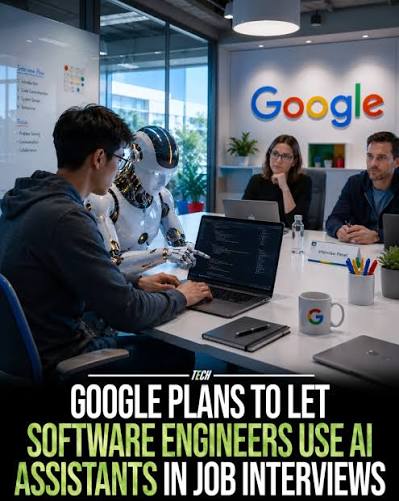
The landscape of technical interviews is on the cusp of a transformative change, and for aspiring software engineers in India, this shift is particularly noteworthy. Google, a dream employer for lakhs of tech graduates from IITs, NITs, and other premier institutions, is reportedly exploring the integration of AI tools into its rigorous coding assessments. This isn't just a minor tweak; it's a fundamental re-evaluation of how talent is identified and assessed, prompting candidates, especially in competitive hubs like Bengaluru, Hyderabad, and Pune, to rethink their preparation.
Traditionally, Google's interviews have been a test of raw problem-solving ability, algorithmic thinking, and data structure mastery, often under intense pressure. The potential introduction of AI tools like GitHub Copilot or ChatGPT into this environment changes the game entirely. It signifies an acknowledgement that in the real world, developers don't code in isolation; they leverage powerful tools to enhance productivity. For Indian candidates vying for these coveted roles, understanding this paradigm shift and adapting their strategy will be paramount to success.
The Shifting Landscape of Technical Interviews
For decades, Google's technical interviews have been synonymous with whiteboard coding and complex algorithmic challenges. The goal was to assess a candidate's ability to think on their feet, design efficient solutions, and write clean, bug-free code from scratch. However, the rise of sophisticated AI coding assistants has begun to blur the lines between human and machine capabilities in routine coding tasks.
Tools like GitHub Copilot can auto-complete code, suggest functions, and even generate entire blocks of logic based on comments or existing code patterns. ChatGPT can explain complex algorithms, debug code, and help brainstorm approaches. As these tools become indispensable in daily development workflows, it's only natural for leading tech companies like Google to consider how to incorporate them into their hiring process, ensuring interviews reflect real-world engineering practices rather than an artificial, tool-less environment.
This shift isn't about making interviews easier; it's about making them more relevant. Google aims to assess a candidate's higher-order thinking, their ability to leverage tools intelligently, and their judgment, rather than just their memorization of syntax or common patterns that AI can now handle efficiently.
What AI-Assisted Interviews Might Look Like
Imagine a Google coding interview where you're allowed to use an AI assistant. This isn't a free pass to outsource your thinking. Instead, it's likely to mean a change in the type of problems posed and the expectations from your solution. Interviewers will be less interested in whether you can recall the exact syntax for a HashMap and more interested in why you choose a HashMap over a TreeMap for a given scenario.
Candidates might be provided with a coding environment that has an integrated AI assistant, or they might be permitted to use their preferred tools. The problems could become more open-ended, requiring more design choices, or involve larger, more ambiguous problem statements where effectively breaking down the problem and prompting the AI becomes a skill in itself. The focus will likely pivot from raw coding speed to:
- Problem Decomposition: How you break a complex problem into manageable parts.
- Strategic AI Prompting: Your ability to ask the right questions to the AI to get useful suggestions.
- Critical Evaluation: Your judgment in discerning good AI suggestions from bad ones and integrating them effectively.
- Debugging and Refinement: Your skill in identifying and fixing issues, even if the initial code was AI-generated.
Adapting Your Preparation Strategy for the AI Era
For Indian aspirants, this means a significant recalibration of their preparation. While Data Structures and Algorithms (DSA) and System Design remain the bedrock, the way you practice them needs to evolve.
Master the Fundamentals (Still Essential)
AI tools are powerful, but they are only as good as the prompts they receive and the human intelligence guiding them. A deep understanding of core computer science concepts – algorithms, data structures, time/space complexity, operating systems, and networking – is non-negotiable. AI can write a quickSort implementation, but it won't explain the pivot selection strategy or its worst-case scenario unless you understand these concepts yourself.
Practice with AI Tools
Integrate AI assistants into your daily coding practice. Use tools like GitHub Copilot or VS Code's AI extensions while solving problems on platforms like LeetCode or HackerRank. Experiment with different prompts to see how AI responds. Can it generate boilerplate code for a graph traversal? Can it suggest an optimal approach for a dynamic programming problem? This hands-on experience is crucial.
Develop Prompt Engineering Skills
Learning to communicate effectively with AI is a new, vital skill. Instead of just saying "write a function to reverse a string," try "write a Python function reverse_string(s) that takes a string s and returns its reverse using in-place modification and handles Unicode characters, ensuring O(N) time complexity and O(1) space complexity." The more specific and detailed your prompts, the better the AI's output.
Emphasize Communication and Explanation
Even with AI assistance, your ability to articulate your thought process, explain your design choices, and justify trade-offs will be paramount. Interviewers want to understand your reasoning, not just the AI's output. Practice explaining complex concepts clearly and concisely, perhaps by discussing your solutions with peers in study groups common in Indian tech cities.
Beyond Code: Showcasing Your Value in an AI Era
In an AI-assisted interview, simply writing functional code might not be enough. Candidates need to demonstrate capabilities that AI currently struggles with or cannot fully replicate.
- Architectural Thinking: AI can generate components, but designing a scalable, robust system from scratch, considering various services, databases, and deployment strategies, requires human expertise. Focus on system design principles, discussing trade-offs between different architectural patterns, and ensuring your solution meets non-functional requirements like scalability and security.
- Complex Problem Solving & Ambiguity: Real-world problems are rarely neatly defined. Showcase your ability to clarify requirements, break down ambiguous problems, and explore multiple solution paths. AI can assist, but the strategic direction must come from you.
- Debugging and Critical Evaluation: AI might introduce subtle bugs or suggest inefficient solutions. Your ability to critically review AI-generated code, identify potential issues, and debug complex problems will be highly valued. This involves understanding error messages, tracing code execution, and using profiling tools.
- Innovation and Creativity: While AI can generate variations of existing solutions, true innovation—thinking outside the box to devise novel approaches—remains a human domain. Demonstrate creative problem-solving and an eagerness to explore unconventional solutions.
- Ethical Considerations: Briefly touch upon the ethical implications of your solutions, especially in contexts relevant to data privacy or fairness, showing a holistic understanding of software development.
FAQs About AI in Google Interviews
Q1: Will AI replace human interviewers entirely?
Highly unlikely in the foreseeable future. AI tools are assistants, not replacements for human judgment, empathy, and the ability to assess soft skills like communication, collaboration, and cultural fit. Human interviewers will likely focus on higher-level reasoning, design discussions, and understanding your thought process.
Q2: What specific AI tools might be allowed in Google interviews?
While Google hasn't specified, it's reasonable to expect widely used and accessible tools like GitHub Copilot, or possibly an internally developed AI assistant integrated into their interview platform. Candidates should be proficient with general-purpose coding AI assistants rather than specific proprietary tools.
Q3: How can I practice prompt engineering for coding effectively?
Start by using AI assistants for your daily coding tasks. Instead of writing code directly, try to describe what you want the AI to do. Experiment with different levels of detail, constraints (e.g., time/space complexity), and examples. Review the AI's output critically and refine your prompts based on the results. Platforms like LeetCode provide excellent scenarios for this practice.
Conclusion
The potential integration of AI into Google's coding interviews marks an exciting, albeit challenging, evolution for Indian tech aspirants. It's a clear signal that the industry values not just coding prowess, but also the intelligent application of advanced tools and higher-order problem-solving skills. By focusing on fundamental concepts, actively practicing with AI assistants, honing prompt engineering skills, and emphasizing clear communication and architectural thinking, you can position yourself strongly for these future assessments. Embrace this change as an opportunity to showcase a more rounded, real-world ready engineering skillset. The future belongs to those who adapt and innovate.
Support creators
If you found this article insightful, consider supporting the writers on ContentVerse.
Was this helpful?
Your feedback helps us improve content for everyone.
Liked this piece?
Tip Dhananjay for the work
100% goes to the creator. Send a one-time tip in rupees and back the writing you love.
Dhananjay Singh
0 followers · 0 blogs
Creator on ContentVerse. Building, writing, and shipping in public.
0 followers


Discussion