
Will AI Replace Indian Software Engineers by Year-End 2026? The Truth
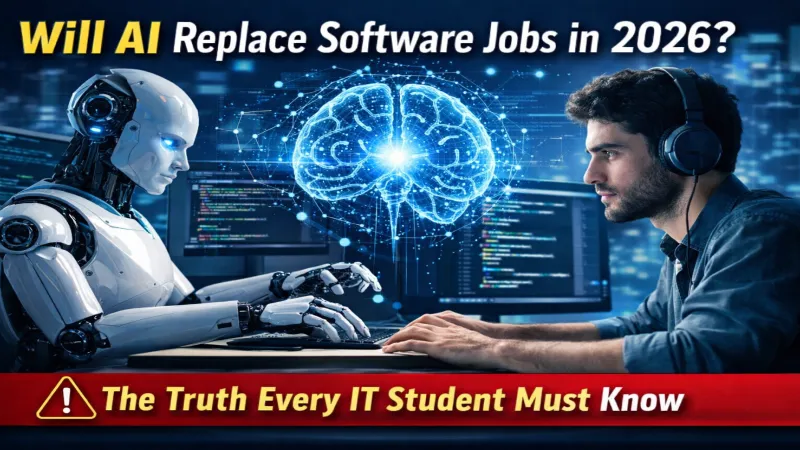
A prominent AI tool creator's prediction about software engineering roles disappearing by 2026 has sparked widespread anxiety among Indian tech professionals. This article dives into the reality of AI's impact on the Indian software industry, distinguishing hype from genuine transformation.
Reading this article: 0s
News in 60 words
~150-word AI digest in one read
Thesis, bullets, quote & takeaway — slogan stays "60 words"
6d ·6 min read· 0 · 0 · 0
Full story
The recent pronouncement by a prominent AI tool creator, suggesting the imminent disappearance of software engineering roles by year-end 2026, has sent ripples of concern through India's vast tech ecosystem. With millions employed in the IT sector across hubs like Bengaluru, Hyderabad, and Pune, the question isn't just academic; it's a direct challenge to career stability and future prospects. Is this a dire warning of impending job losses, or a call for strategic adaptation?
This alarming prediction taps into a widespread fear about AI's job displacement potential, making it a critical, time-sensitive topic for every Indian tech professional. Understanding the truth behind such statements is crucial for navigating the evolving landscape of software development.
The Alarming Prediction: Context vs. Catastrophe
Statements predicting the wholesale disappearance of entire job categories often gain traction due to their sensational nature. While AI's advancements are undeniably rapid and transformative, such bold predictions frequently overlook the nuanced realities of a highly complex industry. AI tool creators, naturally, highlight their technology's capabilities, sometimes leading to an exaggerated perception of its immediate, disruptive power.
It's essential to differentiate between automation and complete replacement. AI tools are becoming incredibly adept at automating repetitive, predictable tasks – tasks that traditionally consume a significant portion of a software engineer's time. However, the creative, problem-solving, and strategic aspects of software engineering remain firmly in the human domain.
AI's True Impact on Software Development in India
In India, AI is already integrated into various stages of the software development lifecycle, primarily as an augmentation tool. Platforms like GitHub Copilot and similar AI assistants are rapidly gaining traction, offering intelligent code suggestions, generating boilerplate code, and even debugging. This isn't eliminating jobs; it's changing how engineers work.
Consider a developer in Chennai or Gurugram using AI to instantly generate SQL queries or write unit tests. This significantly boosts productivity, allowing them to focus on more complex architectural challenges, innovative feature development, and understanding intricate business logic. Indian IT service companies are actively exploring and adopting these tools to enhance delivery efficiency and competitive edge, not to downsize their workforce. The goal is often to do more with existing teams, or to allow teams to tackle more sophisticated projects.
Evolving Roles: Skills for the Future Indian Engineer
The narrative isn't about AI replacing engineers, but rather about engineers who leverage AI replacing those who don't. The demand for purely code-generating roles might decrease, but the need for skilled professionals who can design, implement, and manage AI-powered systems will surge. For Indian engineers, this means a pivot towards new competencies:
- Prompt Engineering: Understanding how to effectively communicate with AI models to get desired code or solutions.
- AI Model Integration: Knowing how to incorporate AI/ML models into existing software architectures and troubleshoot potential issues.
- System Design & Architecture: Focusing on high-level design, scalability, security, and performance – areas where human strategic thinking is paramount.
- Ethical AI & Governance: Ensuring AI applications are fair, transparent, and compliant with regulations, a critical skill given India's emerging data protection landscape.
- Complex Problem Solving & Critical Thinking: Tackling unique, non-standard challenges that AI cannot yet solve autonomously.
- Interdisciplinary Collaboration: Working with domain experts, product managers, and UI/UX designers to translate complex requirements into software solutions.
Government initiatives like the Skill India Mission, alongside private academies and corporate training programs, are increasingly focusing on these future-ready skills, making them accessible to Indian professionals.
India's Unique Tech Landscape and Job Resilience
India's IT services sector is a global powerhouse, thriving on delivering bespoke solutions, managing complex enterprise systems, and providing cost-effective talent. This requires extensive human oversight, client communication, and strategic planning – aspects where AI currently falls short. The sheer volume of customisation, integration, and maintenance work across diverse industries, from banking to healthcare, ensures a sustained demand for human engineers.
Moreover, India's burgeoning startup ecosystem and the digital transformation push across various sectors within the country itself create immense domestic opportunities. From developing innovative fintech apps to e-governance platforms, the need for human ingenuity to understand local contexts, user behaviours, and regulatory frameworks (like UPI, Aadhaar) is irreplaceable. The growth of IT hubs beyond metros to cities like Indore, Jaipur, and Chandigarh also indicates a distributed and resilient job market.
Beyond Coding: Where Human Expertise Remains Critical
Software engineering is not just about writing lines of code; it's about creativity, innovation, empathy, and strategic thinking. AI can generate code, but it cannot conceive a groundbreaking product idea based on market needs, understand subtle client emotions during a project review, or navigate complex organisational politics. These are inherently human capabilities.
- Innovation & Ideation: Conceptualising entirely new software solutions or features.
- Client & Stakeholder Management: Building relationships, negotiating requirements, and managing expectations.
- Debugging & Problem Solving (Complex): Diagnosing intricate system failures that require deep logical reasoning and intuition.
- Mentorship & Team Leadership: Guiding junior engineers, fostering collaboration, and building cohesive teams.
- Ethical Considerations: Making decisions about the societal impact of software and ensuring responsible development.
FAQs for Indian Software Engineers
Q1: Will entry-level software engineering jobs be the first to disappear due to AI?
Entry-level roles focusing heavily on repetitive coding tasks might see significant transformation. However, they won't disappear entirely. Instead, AI will empower junior engineers to be more productive from day one, handling more complex tasks earlier in their careers. The focus for new graduates should be on learning how to effectively use AI tools and developing strong foundational computer science principles, problem-solving skills, and a willingness to learn continuously.
Q2: What specific skills should Indian engineers prioritise learning right now to stay relevant?
Beyond core programming languages, focus on prompt engineering, understanding AI/ML fundamentals, cloud computing (AWS, Azure, GCP), DevOps practices, data engineering, and cybersecurity. Soft skills like critical thinking, communication, adaptability, and emotional intelligence are also paramount. Consider certifications from leading platforms or NASSCOM-recognised courses in AI/ML.
Q3: Is it too late for someone in a non-tech field in India to transition into software engineering with AI's rise?
Absolutely not. While the landscape is evolving, the demand for skilled professionals remains high, particularly for those who can adapt. Many online platforms and bootcamps offer comprehensive courses. Leveraging AI tools can even accelerate the learning process for new entrants. The key is to commit to continuous learning, build practical projects, and focus on niche areas that combine your existing domain knowledge with new tech skills.
Conclusion: Adapt, Don't Fear
The prediction of AI entirely replacing Indian software engineers by year-end 2026 is largely sensationalist. While AI will undoubtedly reshape the industry, its primary role will be one of augmentation, not outright displacement. Indian engineers, with their proven adaptability and strong foundational skills, are well-positioned to thrive in this evolving environment.
The future isn't about AI replacing Indian engineers, but rather engineers who effectively wield AI replacing those who resist change. Embrace continuous learning, focus on higher-order thinking skills, and view AI as a powerful co-pilot. By doing so, you can secure your place at the forefront of India's vibrant and dynamic tech future.
Support creators
Was this helpful?
Your feedback helps us improve content for everyone.
Liked this piece?
Tip Dhananjay for the work
100% goes to the creator. Send a one-time tip in rupees and back the writing you love.
Dhananjay Chauhan
0 followers · 0 blogs
Creator on ContentVerse. Building, writing, and shipping in public.
0 followers
Discussion