
Startup India Fund of Funds 2.0: Your Guide to India's Rs 10,000 Cr Boost
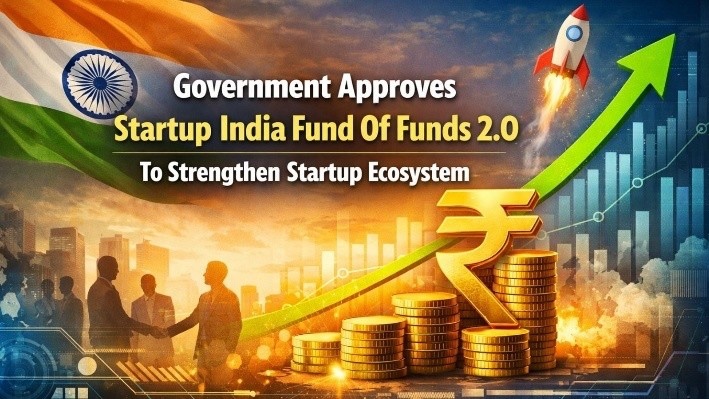
India's startup ecosystem is poised for a significant uplift with the government's release of new guidelines for the Rs 10,000 Crore Startup India Fund of Funds 2.0. This crucial development promises to channel substantial capital into domestic venture capital funds, indirectly fueling innovation and growth across the nation.
Reading this article: 0s
News in 60 words
~150-word AI digest in one read
Thesis, bullets, quote & takeaway — slogan stays "60 words"
6d ·8 min read· 0 · 0 · 0
Full story
The Indian startup landscape is a dynamic powerhouse, consistently ranking among the top global ecosystems. Yet, access to timely and sufficient capital remains a critical challenge for many innovative ventures, especially those beyond the initial seed stage. The recent release of detailed guidelines for the Startup India Fund of Funds (FoF) 2.0 by the government marks a pivotal moment, promising to infuse a substantial ₹10,000 crore into the domestic venture capital ecosystem. This development is not just about money; it's about solidifying India's position as a global innovation hub and empowering the next generation of entrepreneurs.
For Indian founders, investors, and policymakers alike, understanding these new guidelines is paramount. It dictates how capital will flow, which sectors might see increased interest, and ultimately, how India's startup story will evolve. This guide will walk you through the nuances of FoF 2.0, its implications, and how you can navigate this exciting new era of startup funding.
Understanding the Startup India Fund of Funds 2.0
The Startup India Fund of Funds (FoF) scheme, initially launched in 2016, was conceptualized as a crucial component of the broader Startup India initiative. Its primary objective is not to directly invest in startups, but rather to act as an indirect investor by committing capital to SEBI-registered Alternative Investment Funds (AIFs). These AIFs, in turn, invest in promising Indian startups.
FoF 2.0 builds upon the foundation of its predecessor, significantly scaling up the commitment to ₹10,000 crore. Managed by SIDBI (Small Industries Development Bank of India), this fund aims to address the 'equity gap' in the Indian startup ecosystem, ensuring that innovative ideas do not falter due to lack of growth capital. It's a strategic move to foster a robust and self-sustaining funding environment, encouraging more domestic capital participation.
How it Differs from Direct Funding
Unlike direct government grants or schemes that provide capital directly to startups, FoF 2.0 operates on a 'fund of funds' model. This means:
- Indirect Investment: The government (through SIDBI) invests in established or emerging Venture Capital Funds (VCFs) and AIFs.
- Professional Management: These AIFs, managed by experienced fund managers, then undertake the due diligence and investment decisions for individual startups.
- Market-Driven Decisions: Investment decisions remain largely market-driven, leveraging the expertise of private fund managers to identify high-potential ventures.
This model allows the government to catalyse private investment, multiply its impact, and ensure that capital is deployed efficiently by market experts, rather than through a bureaucratic process.
The New Guidelines: What's Changed and Why It Matters
The recently released guidelines for FoF 2.0 are designed to enhance transparency, streamline processes, and increase the effectiveness of the fund. These updates are crucial for both AIFs seeking capital commitments and startups hoping to benefit indirectly.
Key aspects of the new guidelines include refined eligibility criteria for AIFs, clearer investment mandates, and updated reporting requirements. For instance, there's a strong emphasis on AIFs demonstrating a clear investment strategy, a robust pipeline of potential startups, and a proven track record (for existing funds) or a compelling team (for new funds).
Impact on Fund Managers and Startups
For AIFs, the new guidelines mean increased scrutiny but also a clearer roadmap to securing commitments from FoF 2.0. This push for greater accountability will likely lead to more professional and robust fund management practices across the board. Fund managers will need to articulate their value proposition and investment thesis more clearly to SIDBI.
For startups, while the funding remains indirect, these guidelines are a positive sign. They indicate a more structured and predictable flow of capital into the ecosystem. This translates to a greater likelihood of AIFs raising larger funds, which in turn means more capital available for various stages of startup growth, from seed to Series C and beyond. Startups in cities like Hyderabad, Pune, and Chennai, which are rapidly emerging as tech hubs, stand to benefit significantly from this increased capital access.
How Indian Startups Can Benefit (Directly & Indirectly)
The ₹10,000 crore commitment from FoF 2.0 has far-reaching implications for the Indian startup ecosystem. While the funding doesn't flow directly to startups, the ripple effect is substantial.
Increased Capital Availability
The most immediate benefit is the surge in capital available to AIFs. This enables them to deploy more funds into a wider array of startups. Founders can anticipate more active investment cycles, potentially larger cheque sizes, and greater competition among VCs to back promising ventures.
Boost for Specific Sectors
The guidelines often subtly encourage investments in sectors aligned with national priorities. While not explicitly stated as a mandate for FoF 2.0, broader government initiatives typically favour sectors like:
- DeepTech: AI, Machine Learning, Blockchain, IoT, and advanced manufacturing.
- HealthTech: Digital health platforms, medical devices, telemedicine solutions.
- AgriTech: Solutions for farm productivity, supply chain efficiency, farmer welfare.
- FinTech: Digital payments, lending, insurance tech, wealth management solutions.
- Clean Energy & EV: Renewable energy solutions, electric vehicle infrastructure and manufacturing.
Startups operating in these critical areas, especially those addressing unique Indian challenges, may find a more receptive audience among AIFs backed by FoF 2.0.
Regional Development and Job Creation
Increased funding helps startups scale, leading to job creation across various roles, from technology and product development to sales and operations. This growth isn't limited to major metros like Bengaluru or Delhi-NCR; it can extend to Tier 2 and Tier 3 cities as startups expand their reach and operations. This aligns with the government's vision of fostering entrepreneurship and economic development across the entire nation.
Navigating the Funding Landscape: Tips for Founders
Given the new impetus from FoF 2.0, Indian founders need to be strategic in their approach to securing capital. While you won't apply directly to SIDBI, understanding the ecosystem is key.
- Build a Robust Business Plan: Focus on a clear problem statement, an innovative solution, a viable business model, and a scalable market opportunity. Highlight your unique selling proposition in the Indian context.
- Demonstrate Traction: Whether it's user growth, revenue figures, pilot project success, or strong engagement metrics, tangible traction is crucial for attracting AIFs.
- Identify the Right AIFs: Research venture capital funds, angel networks, and other AIFs that align with your sector, stage of growth, and investment needs. Look at their portfolio companies and investment thesis.
- Network Strategically: Attend startup events, pitch competitions, and industry conferences. Connect with mentors, advisors, and fellow founders who can provide introductions to relevant investors. Platforms like Startup India Hub and various industry associations can be valuable.
- Focus on Strong Unit Economics: Investors are increasingly scrutinizing the profitability and efficiency of businesses. Clearly articulate your path to sustainable growth and positive unit economics.
- Prepare for Due Diligence: Be ready with comprehensive financial projections, legal documents, team profiles, and market research. A well-organized data room can significantly speed up the investment process.
Challenges and Future Outlook
While the ₹10,000 crore FoF 2.0 is a significant boost, challenges remain. Effective deployment of such a large fund requires robust monitoring and evaluation. Ensuring that the capital reaches truly innovative and deserving startups, including those from diverse backgrounds and geographies, will be crucial. There's also the challenge of balancing financial returns with the broader developmental objectives of the scheme.
Despite these challenges, the future outlook is overwhelmingly positive. FoF 2.0 reinforces the government's commitment to fostering a vibrant startup ecosystem. It will likely lead to a deeper pool of domestic capital, reducing reliance on foreign investment and making the Indian startup landscape more resilient to global economic fluctuations. This strategic infusion of capital is set to accelerate India's journey towards becoming a global leader in innovation and entrepreneurship, creating millions of jobs and driving economic prosperity across the nation.
FAQs on Startup India Fund of Funds 2.0
Q1: Is the Startup India Fund of Funds 2.0 a direct funding scheme for startups?
No, the Fund of Funds 2.0 is not a direct funding scheme for startups. It operates on an indirect model, where the government (through SIDBI) commits capital to SEBI-registered Alternative Investment Funds (AIFs) such as Venture Capital Funds. These AIFs then conduct their own due diligence and invest directly into eligible startups.
Q2: What types of startups are preferred by AIFs receiving capital from FoF 2.0?
While there are no strict official preferences for specific startup types from FoF 2.0 itself, AIFs typically look for startups with innovative solutions, strong market potential, a scalable business model, and a competent founding team. Many AIFs supported by government initiatives tend to favour sectors aligned with national priorities like DeepTech, AgriTech, HealthTech, and Clean Energy, especially those addressing unique Indian challenges.
Q3: How can a startup apply for funding that originates from the FoF 2.0?
Startups cannot apply directly to SIDBI or the government for funds from FoF 2.0. Instead, they should identify and approach SEBI-registered Venture Capital Funds (VCFs) or other Alternative Investment Funds (AIFs) that have received commitments from FoF 2.0. Startups should prepare a compelling pitch, a robust business plan, and demonstrate traction to these AIFs, following their specific application processes.
Conclusion
The Startup India Fund of Funds 2.0, with its substantial ₹10,000 crore corpus and refined guidelines, represents a landmark moment for India's entrepreneurial journey. It's a clear signal of the government's unwavering commitment to empowering domestic innovation and creating a fertile ground for startups to thrive. For founders, this means a more vibrant, capital-rich ecosystem, ripe with opportunities for growth and scale. By understanding its mechanisms and strategically positioning themselves, Indian startups can harness this monumental boost to build the next generation of global businesses right here at home.
This is educational content, not financial advice.
Support creators
Was this helpful?
Your feedback helps us improve content for everyone.
Liked this piece?
Tip Dhananjay for the work
100% goes to the creator. Send a one-time tip in rupees and back the writing you love.
Dhananjay Chauhan
0 followers · 0 blogs
Creator on ContentVerse. Building, writing, and shipping in public.
0 followers
Discussion