
AWS Lambda for Indian Startups: Cost-Saving Serverless Strategies
Indian startups are rapidly adopting cloud technologies, and optimizing costs is crucial for sustained growth. This article explores how AWS Lambda offers significant cost savings through serverless strategies, empowering startups to scale efficiently.
Reading this article: 0s
News in 60 words
~150-word AI digest in one read
Thesis, bullets, quote & takeaway — slogan stays "60 words"
(1mo)7 min read 3 0 0
Creator on ContentVerse. Building, writing, and shipping in public.
Full story
Indian startups are at the forefront of digital innovation, rapidly embracing cloud technologies to build scalable and resilient products. However, in a competitive market where every rupee counts, optimizing cloud expenditure is not just an advantage—it's a necessity. This is where serverless computing, particularly AWS Lambda, emerges as a game-changer, offering a powerful avenue for significant cost savings and operational efficiency.
Traditional server-based architectures often lead to over-provisioning and idle resources, especially for startups with fluctuating demand. AWS Lambda, with its pay-per-execution model, eliminates these inefficiencies, allowing Indian startups to focus their capital on innovation rather than infrastructure. Let's delve into how serverless strategies can transform your cloud economics.
Understanding AWS Lambda's Cost Advantage for Startups
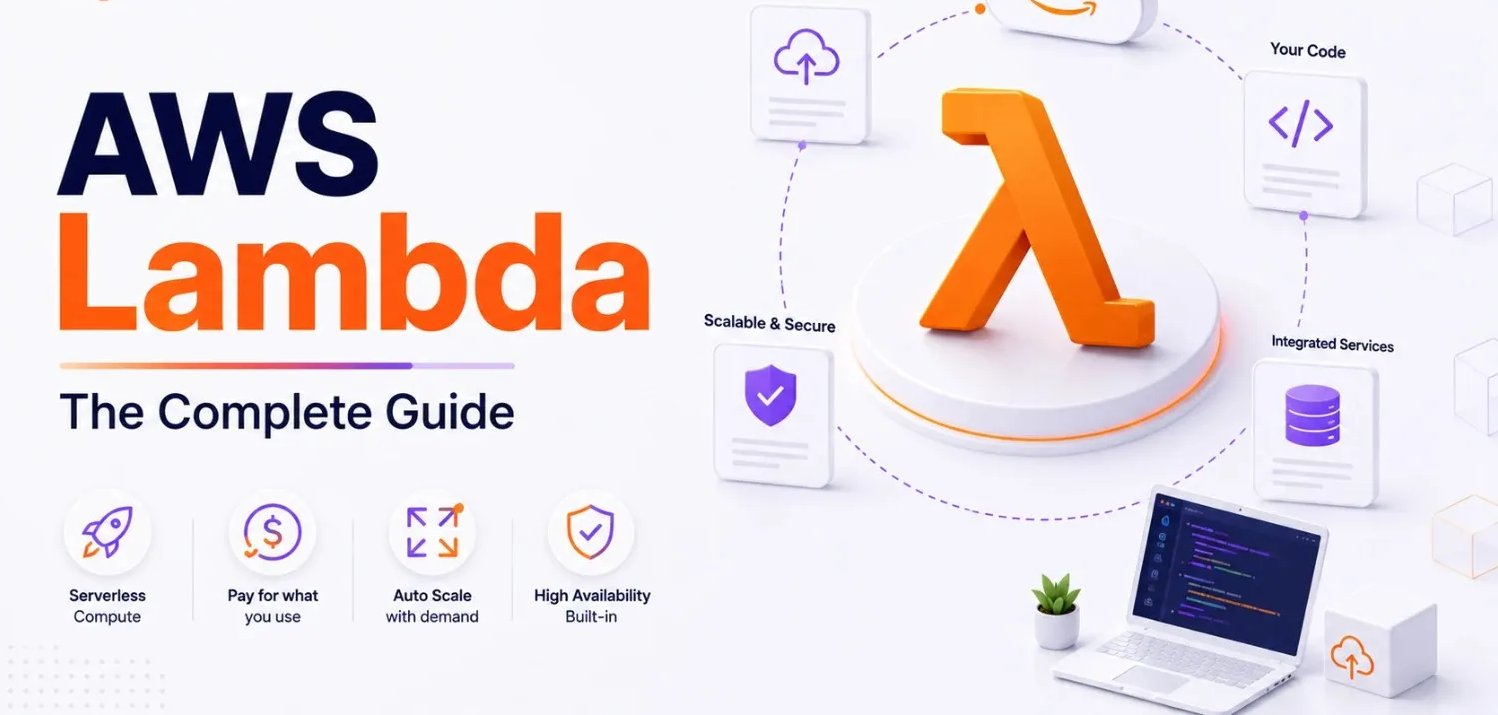
AWS Lambda fundamentally alters the cost structure of running applications. Instead of provisioning and managing servers 24/7, you only pay for the compute time consumed when your code is actually running. This 'pay-as-you-go' model is incredibly beneficial for startups, particularly those with unpredictable traffic patterns or event-driven workloads.
Consider an e-commerce startup in Bengaluru preparing for a major festive sale like Diwali. With traditional EC2 instances, they would need to provision servers for peak load, leading to significant idle capacity and costs during off-peak times. With Lambda, the startup's backend functions (like order processing, payment gateway integration, or inventory updates) would only incur costs when invoked by customer actions, scaling automatically from zero to thousands of requests per second without any manual intervention or upfront investment in idle capacity.
Key Differentiators for Cost Efficiency:
- No Idle Costs: Unlike virtual machines that run continuously, Lambda functions only execute when triggered. If your application has periods of low activity, you pay nothing.
- Automatic Scaling: Lambda automatically scales your application to meet demand, removing the need for costly over-provisioning to handle potential spikes.
- Granular Billing: Billing is precise, down to the nearest millisecond, ensuring you only pay for exactly what you use.
- Operational Overhead Reduction: Less time spent on server maintenance, patching, and scaling means more resources for product development.
Practical Serverless Strategies for Cost Savings
Optimizing AWS Lambda costs goes beyond just adopting serverless. Strategic implementation can unlock even greater savings.
1. Optimize Memory and Duration
Lambda functions are billed based on duration and allocated memory. The execution cost scales linearly with memory. It's crucial to find the sweet spot for memory allocation. Start with the lowest viable memory (e.g., 128 MB) and gradually increase it while monitoring performance (CPU, network throughput are proportional to memory). Sometimes, allocating slightly more memory can reduce execution duration, leading to a lower overall cost if the duration reduction is significant.
2. Leverage Event-Driven Architectures
Lambda shines when integrated with other AWS services in an event-driven manner. Instead of polling for changes, services like S3, DynamoDB Streams, SQS, and SNS can directly trigger Lambda functions. This ensures your functions only run when there's an actual event to process, minimizing unnecessary invocations and associated costs.
- Example: An EdTech startup in Pune can use S3 event notifications to trigger a Lambda function whenever a new study material PDF is uploaded, processing it for indexing or thumbnail generation, rather than having a server constantly checking the S3 bucket.
3. Minimize Cold Starts and Optimize Code
Cold starts occur when a Lambda function is invoked after a period of inactivity, requiring AWS to initialize the execution environment. While typically short, they can impact latency and, indirectly, cost if users abandon operations. Strategies to mitigate include:
- Efficient Code: Write lean, optimized code. Smaller deployment packages reduce load times.
- Provisioned Concurrency: For latency-sensitive applications, use Provisioned Concurrency. While it incurs a cost for pre-warmed execution environments, it guarantees minimal cold starts. Use it judiciously for critical functions.
- Runtime Choice: Some runtimes (e.g., Node.js, Python) generally have faster cold start times and lower resource footprints than others (e.g., Java, .NET).
4. Monitor and Analyze Costs Rigorously
AWS provides robust tools to track and analyze your spending. Utilize AWS CloudWatch for detailed logs and metrics of your Lambda functions (invocations, errors, duration). AWS Cost Explorer and AWS Budgets allow you to visualize spending trends, identify cost hotspots, and set alerts for exceeding predefined thresholds. Regularly review these insights to fine-tune your resource allocation and identify areas for optimization.
Real-World Indian Startup Use Cases
Across India, startups are leveraging Lambda for diverse applications, demonstrating its versatility and cost-efficiency.
- Fintech Platforms (Gurugram): A fintech startup can use Lambda for real-time KYC document processing, transaction fraud detection, or generating personalized financial reports. These are often bursty workloads where Lambda's instantaneous scaling and pay-per-execution model prove invaluable, allowing them to handle millions of transactions without maintaining expensive, idle servers.
- Logistics & Supply Chain (Chennai): A logistics tech firm can deploy Lambda functions to process shipment updates from IoT devices, optimize delivery routes based on real-time traffic data, or send automated notifications to customers. This event-driven processing ensures costs are directly tied to operational activity.
- Media & Entertainment (Mumbai): A content streaming startup might use Lambda for video transcoding, image resizing for different devices, or processing user comments and likes. These tasks are inherently sporadic and computationally intensive, making Lambda a perfect fit for cost-effective execution.
Best Practices for Keeping Lambda Costs Low
Beyond the core strategies, several best practices can further reduce your Lambda bill:
- Batch Processing: Where possible, batch events before invoking a Lambda function. For instance, instead of triggering a Lambda for every single log line, aggregate logs and process them in batches. This reduces the number of invocations, which are also a cost component.
- Utilize the Free Tier: AWS offers a generous Lambda Free Tier: 1 million free requests per month and 400,000 GB-seconds of compute time per month. Many early-stage Indian startups can operate entirely within this tier for their initial workloads, incurring zero compute costs.
- Cost Allocation Tags: Implement a consistent tagging strategy (e.g.,
Project,Environment,Team) for your Lambda functions and other AWS resources. This allows you to accurately track and attribute costs to specific teams or projects, providing better visibility for budgeting and optimization efforts. - Asynchronous Invocation: For non-critical tasks that don't require an immediate response, use asynchronous invocations. This simplifies your architecture and often integrates well with SQS or SNS, which can buffer events and reduce the chance of invocation failures.
Frequently Asked Questions
Q1: Is AWS Lambda always cheaper than running on EC2 instances?
Not always. For event-driven, sporadic, or highly variable workloads, Lambda is typically far more cost-effective due to its pay-per-execution model and automatic scaling. However, for long-running, constant, and predictable workloads that utilize a high percentage of CPU consistently, a well-optimized EC2 instance (especially with Reserved Instances or Savings Plans) might sometimes be more economical. The key is to analyze your workload patterns.
Q2: How can I effectively monitor my Lambda costs?
Utilize AWS CloudWatch for detailed metrics on invocations, duration, and errors. Integrate with AWS Cost Explorer to visualize spending trends and identify cost drivers. Set up AWS Budgets to receive alerts when your spending approaches or exceeds predefined thresholds. Implementing cost allocation tags is also crucial for granular cost breakdown by project or team.
Q3: What are common pitfalls to avoid when optimizing Lambda costs?
Common pitfalls include over-provisioning memory unnecessarily, inefficient code leading to longer execution durations, excessive logging (which can increase CloudWatch costs), not leveraging the free tier effectively, and failing to clean up unused Lambda functions or associated resources. Regularly reviewing and optimizing your functions is key to avoiding these traps.
Conclusion
For Indian startups navigating the dynamic digital landscape, AWS Lambda provides a powerful toolkit for building scalable, resilient, and most importantly, cost-efficient applications. By embracing serverless strategies, optimizing your function configurations, and diligently monitoring your spending, you can significantly reduce your cloud overhead, freeing up valuable capital and resources to accelerate your innovation and growth journey. The future of cloud for Indian startups is undoubtedly serverless.
Support creators
Was this helpful?
Your feedback helps us improve content for everyone.
Liked this piece?
Tip Dhananjay for the work
100% goes to the creator. Send a one-time tip in rupees and back the writing you love.
Dhananjay Singh
2 followers · 619 blogs
Published 7 Jul 2026 · Updated 27 Jul 2026
Creator on ContentVerse. Building, writing, and shipping in public.
View full profile2 followers
Discussion