
Vikram-1: What India's First Private Rocket Launch Means for Space Tech
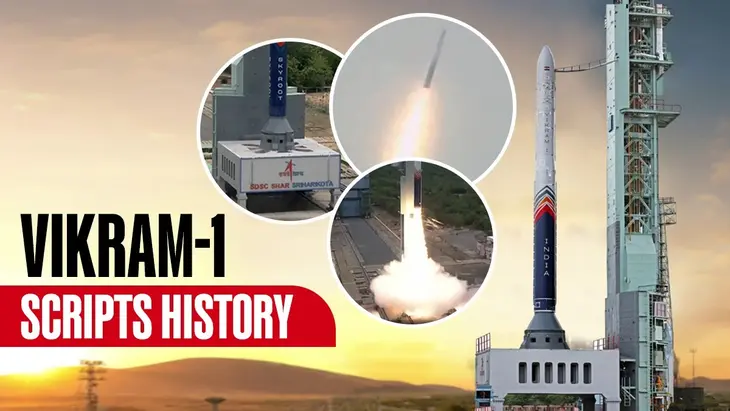
India is on the cusp of a historic milestone with the impending orbital launch of Vikram-1, the nation's first privately developed rocket. This event signifies a monumental shift, ushering in a new era of private sector participation and innovation in India's burgeoning space industry.
Reading this article: 0s
News in 60 words
~150-word AI digest in one read
Thesis, bullets, quote & takeaway — slogan stays "60 words"
2d ·6 min read· 1 · 0 · 0
Full story
India stands at the precipice of a new space age, marked by the imminent orbital launch of Vikram-1, the nation's first privately developed rocket. This isn't just another rocket launch; it's a historic declaration of intent, signaling India's ambition to democratize space access and become a global hub for space technology. For every Indian, it’s a moment of immense national pride, showcasing our engineering prowess and entrepreneurial spirit on the world stage.
The entry of private players like Skyroot Aerospace into orbital launches marks a pivotal shift from ISRO's traditionally state-led space endeavors. This move is set to unlock unprecedented innovation, create new economic opportunities, and significantly bolster India's position in the global space economy. As the world watches, Vikram-1 is poised to redefine India's space narrative.
The Dawn of a New Era: Vikram-1 and Skyroot Aerospace
At the heart of this revolution is Skyroot Aerospace, a Hyderabad-based startup founded by former ISRO scientists Pawan Kumar Chandana and Naga Bharath Daka. Their vision was clear: to make space access affordable and reliable. Vikram-1 is the culmination of years of dedicated research, development, and rigorous testing, embodying this very ambition.
Named in honour of Dr. Vikram Sarabhai, the revered father of India's space program, Vikram-1 is a multi-stage launch vehicle designed to carry small satellites into Low Earth Orbit (LEO). It leverages advanced carbon-fibre structures and 3D-printed components, showcasing cutting-edge engineering. This rocket is a testament to the fact that Indian private enterprises can develop complex, high-technology systems capable of global standards.
Skyroot has already made waves with its sub-orbital test flight of the Vikram-S (Prarambh mission) in November 2022, demonstrating key technologies. The orbital launch of Vikram-1 is the next logical, and much grander, step, promising to deliver payloads for both domestic and international clients, marking India's firm entry into the commercial launch market.
India's Private Space Sector: A Paradigm Shift
For decades, ISRO has been the sole torchbearer of India's space ambitions, achieving remarkable feats from Chandrayaan to Mangalyaan. However, the global space industry has witnessed a rapid expansion of private players, largely driven by companies like SpaceX, which have revolutionized launch costs and accessibility.
Recognizing this global trend and the immense potential within India, the government initiated reforms to open the space sector to private participation. The establishment of the Indian National Space Promotion and Authorisation Centre (IN-SPACe) in 2020 was a game-changer. IN-SPACe acts as a single-window agency to promote, enable, and regulate private sector activities in space, providing them with access to ISRO facilities and expertise.
Furthermore, the Indian Space Policy 2023 officially codified this new approach, clearly delineating roles for ISRO, IN-SPACe, and NewSpace India Limited (NSIL), while explicitly encouraging private entities to undertake end-to-end space activities. This policy framework provides the necessary regulatory clarity and support for startups like Skyroot to thrive and innovate, fostering a vibrant ecosystem for Indian space tech.
Economic and Strategic Implications for India
The implications of Vikram-1 and the broader private space sector are profound for India's economy and strategic standing. Firstly, it positions India as a competitive player in the global small satellite launch market, which is projected to grow significantly. By offering cost-effective and reliable launch services, Indian companies can attract international clients, bringing in foreign exchange and boosting the economy.
Secondly, the growth of the private space sector will spur innovation, R&D, and job creation across various high-tech domains – from advanced manufacturing and propulsion systems to satellite development and ground segment operations. This aligns perfectly with the 'Aatmanirbhar Bharat' (Self-Reliant India) vision, reducing dependence on foreign entities for critical space infrastructure and services.
Thirdly, it enhances India's strategic autonomy in space. Having multiple, independent launch capabilities means greater resilience and flexibility in deploying satellites for national security, communication, and earth observation. This diversified approach strengthens India's overall space program and its geopolitical influence.
Challenges and the Road Ahead
While the future looks promising, the private space sector in India faces its share of challenges. Competition, both domestic and international, is fierce. Companies will need to continuously innovate to offer more competitive pricing and advanced services. Funding remains a crucial aspect, with startups requiring significant capital for R&D, infrastructure, and operational costs.
Regulatory frameworks, while evolving positively, will need to adapt further to the rapid pace of technological advancements and the unique needs of private players. The development of dedicated private launch infrastructure, beyond ISRO's existing facilities at Sriharikota, will also be essential for scaling operations.
Looking ahead, the success of Vikram-1 will pave the way for more ambitious missions. Skyroot Aerospace itself plans to develop larger launch vehicles like Vikram-II and Vikram-III, capable of carrying heavier payloads. This journey is not just about rockets; it's about fostering an entire ecosystem of space applications, satellite manufacturing, and services that can transform India into a global space superpower.
Frequently Asked Questions
What is Vikram-1 and who developed it?
Vikram-1 is India's first privately developed orbital launch vehicle, designed to deploy small satellites into Low Earth Orbit. It has been developed by Skyroot Aerospace, a startup based in Hyderabad, founded by former ISRO engineers. The rocket is named after Dr. Vikram Sarabhai, the pioneer of India's space program.
How does the rise of private space companies impact ISRO?
The rise of private space companies like Skyroot Aerospace complements ISRO's objectives rather than competing with them. ISRO can now focus more on fundamental research, inter-planetary missions, human spaceflight, and advanced technology development, while private players handle commercial launches and satellite services. This collaboration is facilitated by IN-SPACe, allowing private entities to access ISRO's facilities and expertise.
What are the economic benefits for India from a thriving private space sector?
A thriving private space sector brings numerous economic benefits, including job creation in high-tech fields, increased foreign investment, and the growth of ancillary industries. It positions India as a competitive player in the global commercial launch market, generating revenue from international clients. Furthermore, it fosters innovation, contributes to the 'Aatmanirbhar Bharat' initiative, and creates new applications in areas like remote sensing, communication, and navigation.
Conclusion
The impending launch of Vikram-1 is more than just a technological feat; it's a symbol of India's burgeoning potential and its strategic vision for the 21st century. It marks the successful transition of India's space ambitions from a purely state-driven enterprise to a dynamic ecosystem where innovation is fostered by both public and private entities. As Vikram-1 soars into orbit, it carries with it the aspirations of a nation, ready to etch its name firmly in the annals of space history. This is India's moment, a proud step towards becoming a global leader in space technology and exploration.
Support creators
Was this helpful?
Your feedback helps us improve content for everyone.
Liked this piece?
Tip Dhananjay for the work
100% goes to the creator. Send a one-time tip in rupees and back the writing you love.
Dhananjay Singh
0 followers · 0 blogs
Creator on ContentVerse. Building, writing, and shipping in public.
0 followers



Discussion