
'We do not think we have found the limits of Air yet', says Nike's Bret Schoolmeester
Apex carries more Air than any running shoe Nike has made.
Reading this article: 0s
News in 60 words
~150-word AI digest in one read
Thesis, bullets, quote & takeaway — slogan stays "60 words"
(1h)8 min read 0 0 0
Creator on ContentVerse. Building, writing, and shipping in public.
Full story
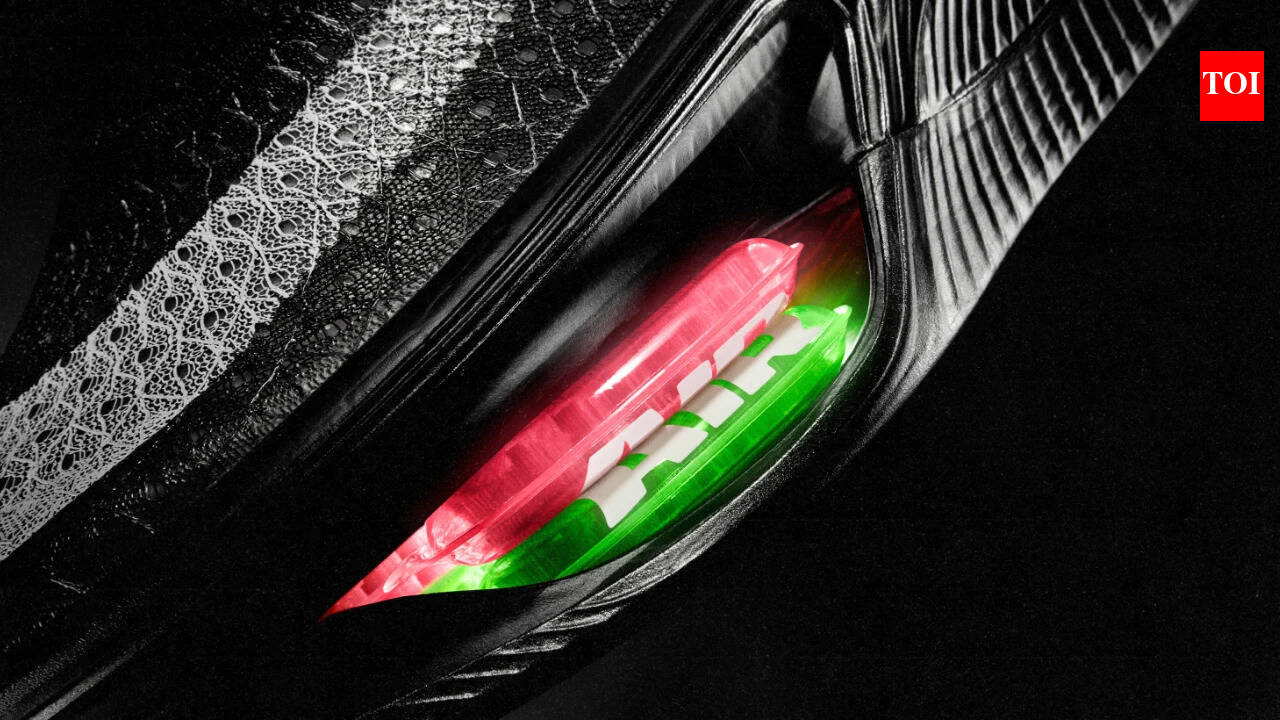
Apex carries more Air than any running shoe Nike has made. The marathon racer, due in January 2027, packs four Air Zoom units into two stacked pairs under the forefoot, and Alphafly 4 uses a pair of the same new unit.
Nike is leaning on Air harder than it has in years, and it is doing so right after a stretch in which Air was blamed more often than praised. When the Pegasus Premium and Vomero Premium turned out heavier than runners expected, it was the Air Zoom units inside them that took the blame.
So I asked Bret Schoolmeester, Nike's Vice President of Running Footwear, what still holds Air back. His answer was short, and it did not hedge.
"We do not think we have found the limits of Air yet."A line like that is easy to say about the technology Nike built its name on. What makes it more convincing here is that Nike changed how the unit is made, and that change is what made room for four of them in Apex.
Nike fixed Air's weight problem at the weld It helps to know what an Air Zoom unit is before getting to what changed. Strip it down and you have a sealed polymer bag holding pressurised gas.
Load it with the forefoot and the gas compresses, its pressure climbing as the volume shrinks. Push off and that pressure pushes back, returning part of the energy into the stride.
Schoolmeester calls it "one of the highest-energy-return cushioning technologies we have tested", and it has an edge over foam that marathoners will appreciate. Foam cells slowly pack out across a training block, while a sealed unit is designed to hold its behaviour for the life of the shoe.
The clever bit is inside. A high-pressure bag left to itself would swell into a rounded pillow, so Nike runs tensile fibres between the top and bottom surfaces to hold them at a set distance.
Schoolmeester describes them as tethers. They return no energy themselves, but they let Nike pressurise the unit hard while keeping it flat, and they leave four settings to tune: pressure, height, shape and placement.
None of that answers the weight question, though. That answer came from the way the shell is sealed.
Nike used to form the Zoom unit with a heat-based process and has now moved to radio-frequency welding. The difference, in general terms, is where the heat comes from.
Heat forming pushes heat into the film from outside, so the material has to be thick enough to come through without thinning or warping at the seam. Radio-frequency welding uses a high-frequency electromagnetic field that makes certain polymers heat up from within, right at the joint.
That lets Nike seal a much thinner film, and according to Schoolmeester, the tensile-fibre structure and the unit's performance survived the switch. Each unit came out 30 percent lighter.
Nike already had the technique in-house. Its Air Manufacturing Innovation team, which works out of three US facilities and holds more than 500 patents on Air, lists radio-frequency welding alongside blow moulding and thermoforming, and puts units through proprietary durability rigs called Kim Testers, named after the daughter of Air's inventor, Frank Rudy.
Getting it to work on this unit, at racing-shoe volumes, took what Schoolmeester has described as urgency and sleepless nights. There was no single moment when the team knew it had cracked factory scale.
"Confidence grew as the process repeatedly delivered consistent results, first in development and then through athlete testing," he says. He did not go into how every sealed unit is checked as it leaves the line, the one detail missing from an otherwise thorough account.
Apex spends every millimetre the rules allow on Air A lighter unit only solves half the problem in a racing shoe. The other half is room.
World Athletics caps the sole of a road racing shoe at 40mm, measured along the centreline at 12 percent of the shoe's internal length for the forefoot and 75 percent for the heel, insole included. Most racers spend that allowance unevenly.
Give a shoe an 8mm drop, max it out at the heel, and the forefoot is left with 32mm. Apex is zero-drop at 40mm in both places, which hands the entire allowance to the forefoot, where the stacked Air sits.
Schoolmeester put it plainly: "Zero-drop is more about the maximum propulsion in the forefoot." Nike has also done away with a conventional sock liner, freeing a few more of those counted millimetres for cushioning. As for why two units sit on top of each other instead of one taller one, Nike ran simulations across several configurations, and the stack gave the best balance of energy return and stability within the platform.
The order of the layers tells you how the shoe works. At the bottom sits a bed of Zoom X LT, Nike's new race foam, which in Alphafly 4 is up to 17 percent lighter than standard Zoom X with 8 percent more energy return.
The Air pairs sit on top of it, and above them a raised, inverse-wave Flyplate. Alphafly 4 uses the same unit differently, with a single pair in the forefoot and Zoom X LT layered both above and below its plate.
That carbon-fibre plate is tuned around the stack. It is comparatively flat, since its main job is to spread load down into the units so they compress properly, while Swooshfly's plate carries more curve for a different cushioning system.
The rocker in Apex comes from the shape of the whole shoe, and so does its stability, with a wider outsole giving the platform a broader base. "Stability doesn't necessarily come from adding more material, it comes from how you use the material you have," Schoolmeester says.
It is sensible thinking, since every gram of structure Nike avoids adding is a gram the lighter units do not have to win back. The same logic runs to the outsole, where GOATEK and Fast Shot rubber sit only where runners need grip and wear, and to a minimal Flyknit X upper.
Nike's numbers for the finished shoe are up to 40 percent more energy return than Alphafly 3, at more than 10 percent less weight. The zero-drop is the one thing worth watching.
A lower drop generally asks more of the calves and Achilles, and Schoolmeester's view that runners notice it less once they are moving will be tested by plenty of legs that are not elite. Nike's wear testers did log more than 160km training and racing in the shoe before the company settled on the ride, and Jacob Kiplimo raced Nike prototypes to his half marathon world record in Lisbon and the fastest marathon of his career in London.
Nike is not running out of Air Air has always moved forward in steps like this. Nike's archive in Beaverton still keeps a failed experiment called Tri-Cell, a predecessor to the Air Zoom unit that was made with dabs of ink on polyurethane film.
The radio-frequency-welded unit in Apex sits at the far end of that line, and Phil Mc Cartney, Nike's Chief Innovation, Design and Product Officer, puts its value in terms marathoners will recognise. Air keeps its cushioning, responsiveness and energy return over the whole distance.
"That means runners can experience a more consistent ride from the first mile to mile 26," he says. That consistency within a race has not yet turned into a longer-lasting race shoe.
Schoolmeester says Nike's durability expectation for Alphafly 4 is the same as for Alphafly 3, new unit and all. He was also firm when asked how much of Apex's 40 percent belongs to Air and how much to the plate and the zero-drop platform.
Nike understands each element on its own, he says, but measures the whole system, and Apex is compared with Alphafly 3 because that is the closest established marathon benchmark. The split would have been useful, though the rest of the range explains why Nike thinks this way.
It is not chasing Air for its own sake. Swooshfly, the more accessible racer, has no Air Zoom at all.
It uses Sky X, a foam of TPU beads steamed to different densities around the heel, plate and forefoot, which Nike itself compares to tuned Air. Its Flyplate has five layers of carbon fibre against eight in Alphafly, for more flex and control, and the whole shoe came together in roughly a year, about half the time of a typical new model.
"We never start with a technology," Schoolmeester says. "We start with the runner and build the complete system around their needs."That is why his line about Air's limits lands better than it might have.
Not long ago, the knock on Air was that it was heavy. Nike answered it with a change in the factory, and the 30 percent it saved went straight into the most ambitious racer it has built.
Schoolmeester expects more of the same. "Every advancement in materials, manufacturing and design creates new possibilities for how we can shape, tune and deploy Air within a performance system," he says.
Apex makes a persuasive case that he is right. You use AI every day.
Now get your AI Quotient.
Key quotes
-
“We do not think we have found the limits of Air yet.”
-
“one of the highest-energy-return cushioning technologies we have tested”
-
“Confidence grew as the process repeatedly delivered consistent results, first in development and then through athlete testing,”
-
“Zero-drop is more about the maximum propulsion in the forefoot.”
-
“Stability doesn't necessarily come from adding more material, it comes from how you use the material you have,”
-
“That means runners can experience a more consistent ride from the first mile to mile 26,”
-
“We never start with a technology,”
-
“We start with the runner and build the complete system around their needs.”
-
“Every advancement in materials, manufacturing and design creates new possibilities for how we can shape, tune and deploy Air within a performance system,”
Was this helpful?
Your feedback helps us improve content for everyone.
Liked this piece?
Tip Dhananjay for the work
100% goes to the creator. Send a one-time tip in rupees and back the writing you love.
Dhananjay Singh
3 followers · 266 blogs
Published 21 Oct 2026
Creator on ContentVerse. Building, writing, and shipping in public.
Reviewed by the ContentVerse India editorial team. Educational pages are not personalised advice.
View full profile3 followers



Discussion