
Why 'India Is Not For Beginners' Memes Are Winning the Internet
Explore the viral cultural phenomenon of 'India is not for beginners' memes capturing the everyday absurdities of Indian life. Discover why Gen Z and millennials relate to these chaotic digital moments.
Reading this article: 0s
News in 60 words
~150-word AI digest in one read
Thesis, bullets, quote & takeaway — slogan stays "60 words"
2h ·4 min read· 0 · 0 · 0
Full story
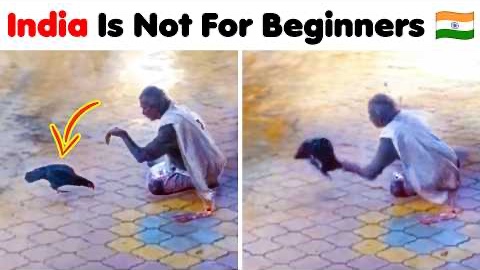
If you open Instagram, X, or Reddit in India today, you are almost guaranteed to stumble upon a specific phrase. Whether it is a video of a delivery agent navigating a flooded street in Bengaluru on a jet ski or a bizarre local jugaad involving a ceiling fan and a bicycle, the caption remains stubbornly consistent: India is not for beginners. This viral catchphrase has evolved from a niche internet joke into a massive cultural phenomenon. It perfectly captures the chaotic, unpredictable, and endlessly fascinating reality of living in contemporary India.
For Gen Z and millennial netizens across Mumbai, Delhi, Bengaluru, and beyond, this trend is more than just a passing joke. It is a shared coping mechanism and a badge of honor. It acknowledges that navigating daily life in the world's most populous nation requires a unique survival skill set. Let us decode why this meme format is winning the internet and what it tells us about modern Indian digital culture.
The Birth of an Iconic Cultural Catchphrase
The phrase itself taps into the gaming and corporate world, where 'not for beginners' usually implies a high-difficulty level requiring advanced skills. Applied to India, it elevates everyday civic absurdities to the level of an extreme sport. A viral incident like a devotee casually riding a motorcycle with a massive Nandi statue strapped to the back, or a cow casually walking into a high-end clothing store in South Delhi, instantly earns this tag.
Unlike traditional comedy that relies on punchlines, these memes rely on raw, unedited reality. The humor comes from the sheer disbelief of the viewer. It creates a collective digital community where millions of Indians simultaneously say, Only in India, and hit the share button.
Why Gen Z and Millennials Relate to the Chaos
Young Indians live at the intersection of hyper-modernity and ancient tradition. You can order organic groceries via Blinkit in 10 minutes, only to have the delivery partner ask for directions because a stray wedding procession has blocked the entire main road in Jaipur. This friction between ultra-fast technology and unpredictable street-level chaos is fertile ground for content.
For overworked young professionals in tech hubs, scrolling through these reels offers instant catharsis. When your landlord in Pune comes up with yet another arbitrary rule, seeing a viral video of someone dealing with an even more absurd Indian bureaucratic hurdle makes your own stress feel oddly normal. It transforms frustration into collective laughter.
The Art of Jugaad Meets Extreme Situations
At the heart of many 'India is not for beginners' posts is our legendary concept of jugaad—ingenious, make-shift problem-solving. While jugaad has traditionally been celebrated as a sign of Indian resilience, these memes sometimes push it into hilarious territory.
- A family of five balancing precariously on a single Activa scooter in Lucknow.
- A local shopkeeper using a modified mixer-grinder motor to churn lassi during a power outage.
- Ingenious street vendors cooking dosas using steam irons in cramped market stalls.
These visuals showcase a country that refuses to stop moving, no matter what obstacles appear on the road. They celebrate the relentless hustle of everyday Indians who make things work against all logical odds.
The Global Appeal and Relatability
What makes this trend fascinating is its crossover appeal. Foreign vloggers traveling through Varanasi or old Delhi often use the exact same hashtag when they encounter chaotic traffic or complex cultural customs for the first time. It bridges the gap between how locals experience their cities and how outsiders view the organized chaos of the subcontinent.
Indians living abroad also use these memes as a form of nostalgia. Even after moving to Toronto or London, seeing a typical chaotic Indian street scene triggers an instant wave of homesickness, proving that you can take the person out of India, but you can never quite remove the chaotic charm of India from the person.
Frequently Asked Questions
Where did the 'India is not for beginners' meme originate?
While the exact origin is untraceable, the phrase gained massive traction on X (formerly Twitter) and Instagram reels around 2023 and 2024, popularized by creators sharing bizarre, funny, and chaotic everyday Indian moments.
Is the meme meant to mock India?
Not at all. For the vast majority of creators and viewers, it is an affectionate, humorous nod to the vibrant unpredictability and resilience of everyday life in the country.
Can anyone contribute to this trend?
Yes. The beauty of this internet trend is that everyday citizens capture organic, unscripted moments on their smartphones, meaning anyone who witnesses an absurd daily life moment can participate.
Conclusion
The 'India is not for beginners' trend is ultimately a celebration of our collective resilience wrapped in humor. It reminds us that no matter how stressful traffic in Bengaluru or bureaucratic red tape in Mumbai gets, someone out there is experiencing something even more wonderfully absurd. As internet culture continues to evolve, this meme format proves that the greatest content writer in India is reality itself.
Support creators
If you enjoyed this deep dive into Indian internet culture, consider tipping our writers on ContentVerse India to support original local journalism.
Was this helpful?
Your feedback helps us improve content for everyone.
Liked this piece?
Tip Dhananjay for the work
100% goes to the creator. Send a one-time tip in rupees and back the writing you love.
Dhananjay Singh
0 followers · 0 blogs
Creator on ContentVerse. Building, writing, and shipping in public.
0 followers
Discussion