
Why India Needs a Mental Health Revolution: Challenges and Solutions
India faces a severe mental healthcare crisis driven by a shortage of specialists and deeply ingrained social stigma. Modern solutions like Tele-MANAS and primary healthcare integration offer a pathway to accessible psychological support.
Reading this article: 0s
News in 60 words
~150-word AI digest in one read
Thesis, bullets, quote & takeaway — slogan stays "60 words"
(1mo)5 min read 2 0 0
Creator on ContentVerse. Building, writing, and shipping in public.
Full story
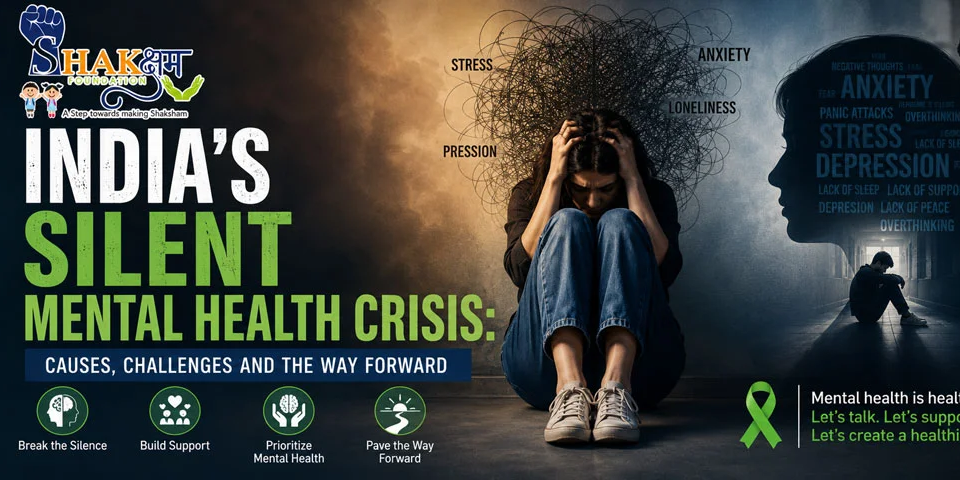
Mental health has long remained the invisible crisis in India. While physical ailments receive immediate medical attention, psychological distress is frequently brushed under the carpet as mere stress, exhaustion, or mood swings. Recent national health surveys and clinical discussions highlight a massive treatment gap, leaving millions of citizens without professional psychological support.
As India rapidly urbanizes and digital connectivity deepens, socio-economic pressures on young adults and families have intensified. Addressing this silent emergency requires a complete reimagining of how the Indian healthcare ecosystem approaches psychological well-being.
The Anatomy of India's Treatment Gap
India carries a heavy psychological burden, yet the resources available to manage it remain dangerously scarce. National health datasets indicate that India has fewer than 0.75 psychiatrists per 100,000 citizens, falling drastically short of the World Health Organization recommendation of three psychiatrists per 100,000 people. The shortage of Rehabilitation Council of India (RCI) registered clinical psychologists is even more severe.
This gap is felt acutely outside major metropolitan centers like Bengaluru, Mumbai, and Delhi. Rural residents often travel hundreds of kilometers to regional hubs like CIP Ranchi or AIIMS New Delhi just to secure an initial psychiatric intake session.
Furthermore, the financial barrier remains high for the urban middle class:
- Private Consultation Costs: A single 45-minute therapy session in Tier-1 cities costs between ₹1,500 and ₹4,000, placing long-term care out of reach for average income earners.
- Overwhelmed Public OPDs: Premier government institutions such as NIMHANS in Bengaluru offer free or heavily subsidized care, but their outpatient departments process thousands of patients daily, leading to long wait times and brief follow-up consultations.
- Medication Accessibility: While basic generic psychotropic drugs are inexpensive, specialized psychiatric treatments and long-term therapeutic care lack uniform government subsidies in smaller towns.
Social Stigma: The Silent Barrier
Beyond institutional shortages, social stigma remains the most formidable obstacle to mental healthcare in India. Cultural narratives frequently frame psychological struggles as personal weaknesses, a lack of spiritual discipline, or moral failings. Consequently, individuals routinely conceal their symptoms out of fear of social exclusion, professional discrimination, or ruined matrimonial prospects.
- Family Secrecy: Families often hide a member's clinical depression or bipolar disorder to safeguard family reputation and marriage prospects on matrimonial portals.
- Workplace Reticence: Employees in high-pressure hubs like Gurugram or Bengaluru rarely disclose panic disorders or severe burnout to human resources, fearing stalled promotions or job losses.
- Reliance on Unregulated Alternatives: Families frequently visit faith healers, astrologers, or unverified wellness gurus before consulting a qualified medical specialist, severely delaying critical medical intervention.
This culture of silence prevents early intervention. By the time individuals finally visit a clinical psychologist or psychiatrist, their conditions have often escalated into acute crises requiring complex pharmacological interventions.
Integrating Mental Health into Primary Healthcare
Solving India's mental health crisis requires decentralizing care away from elite urban psychiatric hospitals and embedding it within local communities. The National Mental Health Programme (NMHP) and District Mental Health Programme (DMHP) established the groundwork, but implementation across India's 700+ districts remains uneven.
Primary Health Centers (PHCs) and Ayushman Bharat Health and Wellness Centres must be trained to screen for common mental health conditions. General medical officers and accredited social health activist (ASHA) workers in rural areas need structured training to identify early symptoms of depression, anxiety, and alcohol dependence. This enables timely primary interventions and referrals to district hospitals.
Technological interventions are accelerating this integration:
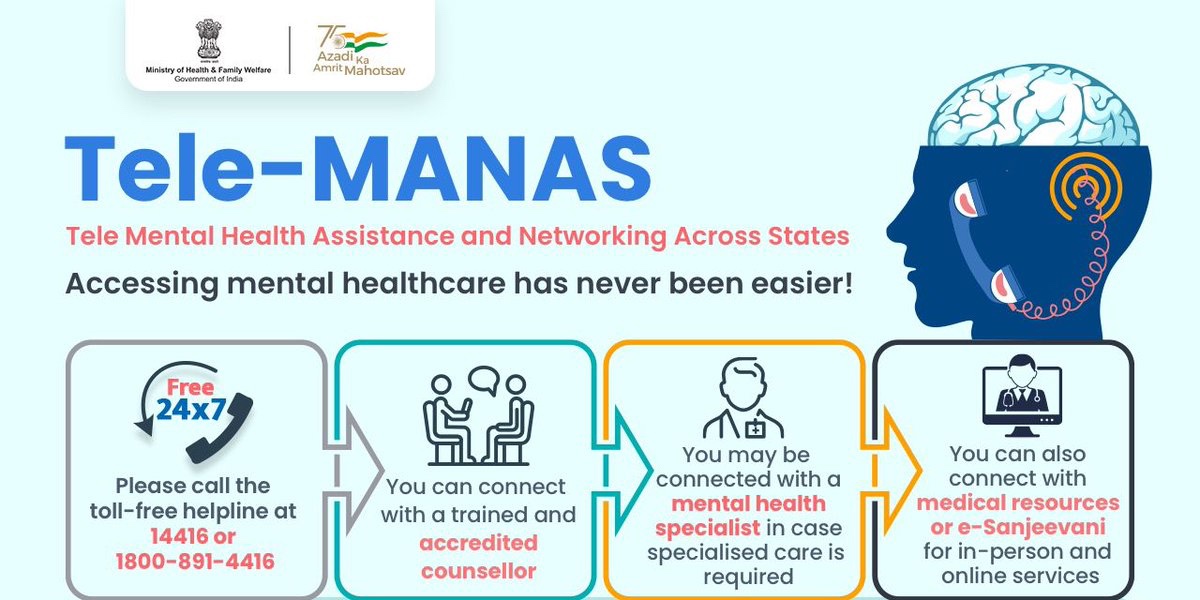
- Tele-MANAS (14416): The government's 24/7 tele-mental health helpline provides free, confidential counseling across more than 20 regional languages, handling thousands of calls monthly.
- Digital Triage Apps: Mobile platforms help users track mood patterns, practice evidence-based cognitive behavioral therapy (CBT) exercises, and connect with licensed counselors remotely.
Corporate and Educational Reforms
Preventative mental healthcare must start early within India's intensive educational system. Academic pressure in student hubs like Kota, Rajasthan, has highlighted the human cost of unmanaged stress among adolescents. Educational institutions must shift from pure academic output toward holistic development by integrating mandatory emotional literacy and professional counseling into school systems.
Corporate India must also move beyond token wellness workshops. Employers should implement comprehensive measures that support psychological well-being:
- Mandatory Insurance Coverage: Complying fully with IRDAI guidelines and the Mental Healthcare Act of 2017, which mandates that health insurance policies cover mental illnesses on equal terms with physical conditions.
- Confidential EAPs: Establishing robust Employee Assistance Programs (EAPs) with independent third-party counseling providers to ensure employee privacy.
- Workplace Norms: Enforcing reasonable working hours, clear boundaries for after-hours communications, and actionable policies against workplace harassment.
Actionable Steps for Seeking Help Today
If you or someone you know is experiencing psychological distress, taking organized, practical steps can make a difference:
- Use National Helplines: Call Tele-MANAS at 14416 or 1800-891-4416 for immediate, free tele-counseling with trained professionals.
- Verify Credentials: Ensure private therapists are certified by the Rehabilitation Council of India (RCI) or hold recognized postgraduate degrees in Clinical Psychology or Psychiatry (MD/DPM).
- Check Insurance Policies: Review your existing health insurance coverage to confirm inpatient psychiatric hospitalization benefits under current IRDAI mandates.
Frequently Asked Questions
What is the state of public mental health funding in India?
India allocates roughly one percent of its total public health budget to mental health care. Public health advocates continue to call for an increase in funding to build district-level infrastructure, train community health workers, and make essential medications accessible everywhere.
Does health insurance in India cover outpatient psychiatric therapy?
While the Mental Healthcare Act of 2017 and IRDAI directives require insurance companies to cover mental health conditions on par with physical ailments, most basic health policies primarily cover inpatient hospitalization rather than routine outpatient therapy sessions. Always check policy specifics for OPD coverage riders.
How can someone in a Tier-3 town access certified psychologists?
Residents in smaller cities and towns can access certified mental health care through the government's free Tele-MANAS tele-counseling line or by using verified tele-consultation platforms that connect patients with RCI-registered psychologists via video calls.
Actionable Conclusion
A mental health revolution in India is both a medical necessity and a social imperative. Achieving systemic change requires coordinated efforts from policymakers, healthcare leaders, educators, and corporate executives. By dismantling social stigma, strengthening primary healthcare networks, and ensuring financial accessibility, India can build an inclusive healthcare system where mental well-being is treated as a fundamental right.
Support creators
If this article provided valuable insights, consider supporting independent writers and researchers on ContentVerse India.
Was this helpful?
Your feedback helps us improve content for everyone.
Liked this piece?
Tip Dhananjay for the work
100% goes to the creator. Send a one-time tip in rupees and back the writing you love.
Dhananjay Singh
3 followers · 120 blogs
Published 14 Aug 2026 · Updated 16 Sept 2026
Creator on ContentVerse. Building, writing, and shipping in public.
Reviewed by the ContentVerse India editorial team. Educational pages are not personalised advice.
View full profile3 followers


Discussion