
Will AI Take Your Tech Job? What World Bank's Report Means for India
With global headlines highlighting AI-driven restructuring at multinational firms, Indian tech professionals are understandably anxious. However, recent World Bank analysis suggests a nuanced future where job roles in India's IT hubs evolve rather than simply vanish.
Reading this article: 0s
News in 60 words
~150-word AI digest in one read
Thesis, bullets, quote & takeaway — slogan stays "60 words"
1h ·5 min read· 0 · 0 · 0
Full story
Every week brings a fresh wave of unsettling headlines for technology professionals. Major global corporations, including payments giant Visa and international tech conglomerates, have announced structural realignments and headcount adjustments attributed to increased automation and generative AI integration. For software engineers in Bengaluru, Hyderabad, Pune, and the NCR region, these headlines spark an urgent question: Is my job next?
However, stepping back from the alarmist news cycles reveals a far more complex picture. Recent analytical frameworks from the World Bank and industry bodies like NASSCOM suggest that while routine, repetitive task automation is accelerating rapidly, India may not face a net collapse in technology employment. Instead, Indian tech talent is undergoing a massive structural shift from traditional delivery model execution to AI-augmented development.
Global Headlines vs. India's Tech Ground Reality
The narrative surrounding artificial intelligence in Western corporate markets often focuses on cost-reduction and headcount rationalization. Companies trimming international workforces frequently cite productivity gains from AI coding assistants as a key reason to slow hiring.
In India, where the IT-BPM sector contributes significantly to the national economy and employs nearly 5.4 million people, the dynamic operates differently. Indian IT services giants—such as TCS, Infosys, and Wipro—are actively restructuring their delivery engines rather than shuttering operations. The focus is shifting from headcount-led growth to value-per-employee growth.
- Legacy Maintenance vs. AI Integration: Routine manual code testing and basic bug fixing are being automated rapidly across traditional IT projects.
- Global Capability Centers (GCCs): Over 1,600 multinational GCCs operating in cities like Hyderabad and Bengaluru are expanding their strategic AI R&D footprint in India.
- Enterprise AI Adoption: Domestic Indian firms across banking, retail, and healthcare are heavily investing in custom enterprise AI workflows.
What the World Bank Report Reveals About Indian Employment
The World Bank's regional economic updates offer an encouraging perspective on developing economies equipped with strong digital infrastructure. Unlike mature markets where task substitution often leads directly to workforce downscaling, emerging tech ecosystems with high digital adaptability tend to experience task augmentation.
According to analysis referenced in regional development assessments, generative AI acts primarily as a productivity multiplier in India's service-led export model. Key insights include:
- Low Net Job Loss Risk: Pure job substitution is restricted to narrow, entry-level repetitive tasks. Overall labor demand is projected to stay resilient as lowered software development costs increase total global project volume.
- The Productivity Paradox: As AI tools lower the cost of writing code, global demand for custom enterprise software applications is exploding, creating new positions in architecture, security, and domain customization.
- Skill Premium Acceleration: The wage gap is widening rapidly between basic scriptwriters and professionals skilled in AI orchestration, cloud engineering, and system design.
Impact on India's Major Tech Hubs
The ground reality varies across regions and experience levels. In software corridors along Outer Ring Road in Bengaluru or HITEC City in Hyderabad, hiring patterns have visibly transformed over the past 12 months.
Entry-level campus recruitment has moved away from mass hiring of generic engineering graduates. Instead, companies are searching for specialized talent capable of working alongside AI co-pilots from day one. High-tier roles in data engineering, cloud infrastructure, and AI safety are commanding premium compensation, often reaching ₹18–25 LPA for mid-level professionals with specialized skills.
Conversely, mid-level managers who solely coordinate basic testing pipelines or manual reporting face real headwinds. The demand for pure legacy maintenance is shrinking, forcing mid-career professionals to pivot toward domain-specific architecture and client-facing technology solutions.
Strategic Upskilling: Navigating the AI Transition
To remain competitive, Indian software engineers must move up the value chain. Simply knowing syntax in languages like Java or Python is no longer a stand-alone differentiator; developers must master full-lifecycle system architecture and AI toolchains.
Key Focus Areas for Engineers
- AI Tool Integration: Mastering productivity platforms like GitHub Copilot, Amazon Q, and Claude for faster prototyping and workflow automation.
- Data Engineering & Pipelines: Building deep expertise in structuring, cleaning, and securing enterprise data required for Large Language Model (LLM) fine-tuning.
- Domain Expertise: Combining software engineering fundamentals with deep industry knowledge in FinTech, Healthcare, or Supply Chain logic.
Utilizing National Platforms
Indian tech workers should leverage government-backed initiatives designed for large-scale digital upskilling. The FutureSkills Prime platform, a joint initiative by MeitY and NASSCOM, offers subsidized pathways in Artificial Intelligence, Big Data Analytics, and Cybersecurity. Coupled with industry-recognized certifications, these frameworks help developers transition into high-value roles without stepping away from full-time employment.
Frequently Asked Questions
Will entry-level coding jobs completely disappear in India?
No, but the nature of entry-level jobs is changing permanently. Junior developers will spend far less time writing boilerplate code and more time debugging, validating AI-generated suggestions, building automated test suites, and integrating complex APIs.
How are Indian IT services companies adapting to generative AI?
Major IT service providers are training hundreds of thousands of employees on generative AI platforms. They are shifting business models away from billing based purely on billable hours toward outcome-based pricing models driven by productivity gains.
Should computer science students in India change their specialization?
Students do not need to abandon core Computer Science principles. Foundational knowledge in algorithms, data structures, operating systems, and database architecture remains essential. However, students should supplement core degrees with hands-on experience in machine learning pipelines and modern software engineering toolchains.
Conclusion: Adapting to the Co-Pilot Era
The fear of AI making Indian software developers obsolete overlooks the historical adaptability of the country's technology sector. Just as Indian IT successfully navigated shifts from mainframe computing to Y2K, client-server architectures, and cloud migration, it is now recalibrating for the generative AI era.
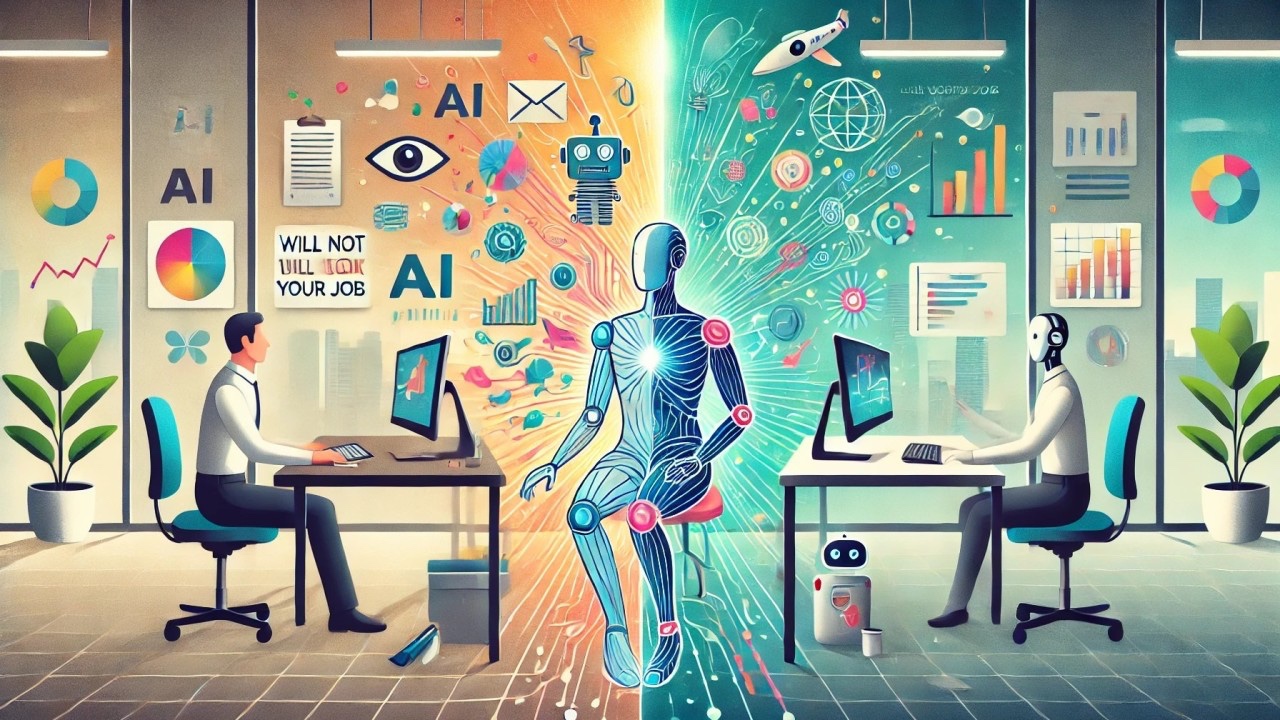
The World Bank's perspective reinforces a fundamental truth: AI will not replace software engineers, but engineers who effectively leverage AI tools will inevitably replace those who do not. By continuously upskilling and embracing AI co-pilots, Indian tech workers can turn automation fears into long-term career resilience.
Support creators
If you found this analysis helpful, consider tipping the author on ContentVerse India to support independent, research-backed technology journalism.
Was this helpful?
Your feedback helps us improve content for everyone.
Liked this piece?
Tip Dhananjay for the work
100% goes to the creator. Send a one-time tip in rupees and back the writing you love.
Dhananjay Singh
0 followers · 0 blogs
Creator on ContentVerse. Building, writing, and shipping in public.
0 followers


Discussion