
India's AI Path: Why We're Building for Good, Not Just the Global Race
India is charting a unique course in artificial intelligence, prioritizing ethical development and collaborative growth over a purely competitive global race. This approach, championed by leaders like PM Modi, aims to leverage AI for inclusive societal benefit.
Reading this article: 0s
News in 60 words
~150-word AI digest in one read
Thesis, bullets, quote & takeaway — slogan stays "60 words"
2d ·5 min read· 0 · 0 · 0
Full story
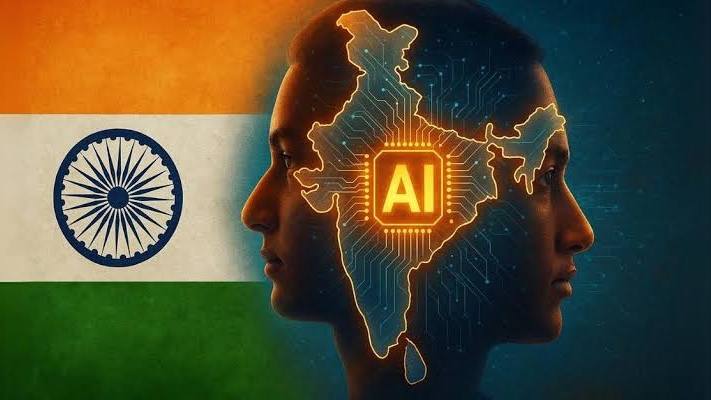
The global discourse around Artificial Intelligence often conjures images of an intense technological race, a high-stakes competition for supremacy. However, India is consciously choosing a different path, one less focused on winning a race and more on building a future where AI serves the collective good. This distinctive vision has been amplified by events like the India-AI Impact Summit and reinforced by Prime Minister Narendra Modi's powerful call for 'AI for global common good'. India's strategy is not merely about adopting cutting-edge technology; it's about embedding responsibility, ethics, and inclusivity into the very fabric of AI development, creating solutions that resonate with the needs of its diverse population and, by extension, the world.
The 'AI for Global Common Good' Philosophy
PM Modi's vision isn't just rhetoric; it's a foundational principle guiding India's AI journey. Unlike nations primarily driven by economic dominance or military advantage through AI, India seeks to position AI as a tool for societal upliftment. This philosophy is deeply rooted in India's ancient ethos of Vasudhaiva Kutumbakam – the world is one family. When applied to AI, it means fostering development that addresses global challenges like healthcare disparities, climate change, and educational access, rather than exacerbating inequalities.
This approach naturally steers India away from a purely competitive mindset. Instead, the focus is on open innovation, data sharing where appropriate, and collaborative research. India's vast and diverse datasets, combined with its burgeoning tech talent, offer a unique laboratory for developing AI solutions that are robust, equitable, and scalable for similar developing economies worldwide.
India's Unique Digital Public Infrastructure: The India Stack
A significant enabler of India's 'AI for good' strategy is its robust digital public infrastructure, famously known as the India Stack. Components like Aadhaar for digital identity, UPI for instant payments, and DigiLocker for document management have already transformed public service delivery and financial inclusion. This digital foundation provides an unparalleled platform for building AI applications that are inherently inclusive and accessible.
For instance, AI models built on top of UPI data can help in fraud detection and financial literacy for millions, including those in rural areas. Integrating AI with platforms like CoWIN demonstrated its potential in managing large-scale public health initiatives. This infrastructure ensures that AI solutions can reach the last mile, bridging the digital divide and ensuring that the benefits of AI are not confined to urban centers or affluent segments.
Prioritizing Responsible and Ethical AI Development
The conversation around AI in India invariably circles back to ethics and responsibility. Thought leaders like Amitabh Kant, India’s G20 Sherpa and former NITI Aayog CEO, have consistently articulated India's distinct AI strategy, emphasizing the need for frameworks that ensure data privacy, algorithmic fairness, and accountability. The goal is to prevent biases, protect individual rights, and ensure transparency in AI systems.
India is actively working towards establishing regulatory sandboxes and guidelines for AI deployment, learning from global best practices while tailoring them to local contexts. This includes addressing concerns around job displacement through reskilling initiatives, ensuring AI systems are explainable, and building safeguards against misuse. The emphasis is on human-centric AI, where technology augments human capabilities rather than replaces human judgment without ethical oversight.
Fostering a Collaborative Ecosystem and Skill Development
India's AI journey is characterized by a strong emphasis on collaboration across government, industry, academia, and startups. Government initiatives like the National Strategy for Artificial Intelligence aim to create an enabling environment for research, development, and deployment. Partnerships between leading tech companies, Indian universities, and research institutions are fostering a vibrant ecosystem for innovation.
Furthermore, there's a significant push for skill development in AI and related fields. Programs are being launched to train a new generation of AI professionals, from data scientists and machine learning engineers to ethical AI specialists. This focus on building a strong talent pool ensures that India can not only develop its own AI solutions but also contribute significantly to global AI research and development, embodying the spirit of collaboration for common good.
Conclusion: A Blueprint for a Better Tomorrow
India's approach to AI is more than just a technological pursuit; it's a societal commitment. By prioritizing 'AI for global common good', leveraging its unique digital infrastructure, embedding ethical considerations, and fostering a collaborative ecosystem, India is setting a precedent for how a nation can harness the transformative power of AI responsibly. This path offers a compelling alternative to the often-touted competitive race, proving that true progress lies in collective advancement and the shared pursuit of a better, more equitable future for all.
FAQ
How does India's AI strategy differ from Western models?
India's strategy primarily differs in its foundational philosophy. While Western models often focus on commercial advantage, technological leadership, and competitive innovation, India emphasizes 'AI for global common good', focusing on inclusive growth, ethical development, and solving societal challenges. The India Stack provides a unique digital public infrastructure for large-scale, equitable AI deployment, which is less common in many Western nations.
What are some key areas where India is applying AI for social good?
India is leveraging AI extensively in sectors like healthcare (e.g., early disease detection, improving access to medical advice in rural areas), agriculture (e.g., crop yield prediction, pest detection, optimizing irrigation), education (e.g., personalized learning platforms, language translation for diverse regional languages), and financial inclusion (e.g., credit scoring for underserved populations, fraud detection via UPI).
How can individuals contribute to responsible AI development in India?
Individuals can contribute by pursuing education and careers in ethical AI, data science, and machine learning, advocating for responsible data practices, participating in open-source AI projects, and engaging in public discourse around AI's societal impact. Supporting initiatives that focus on AI literacy and skill development also plays a crucial role in building a responsible AI ecosystem in India.
Support creators
Was this helpful?
Your feedback helps us improve content for everyone.
Liked this piece?
Tip Dhananjay for the work
100% goes to the creator. Send a one-time tip in rupees and back the writing you love.
Dhananjay Chauhan
0 followers · 0 blogs
Creator on ContentVerse. Building, writing, and shipping in public.
0 followers

Discussion