
Indian Railways' Hydrogen Push: How 35 Green Trains Will Impact Travel
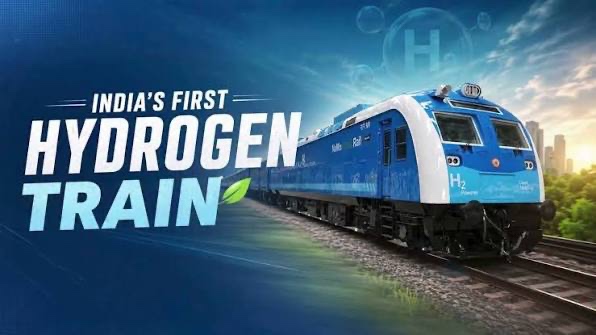
Indian Railways is preparing to launch 35 hydrogen-powered trains under its 'Hydrogen for Heritage' initiative. This shift towards zero-emission fuel marks a pivotal moment for sustainable travel across India's scenic railway routes.
Reading this article: 0s
News in 60 words
~150-word AI digest in one read
Thesis, bullets, quote & takeaway — slogan stays "60 words"
1h ·5 min read· 0 · 0 · 0
Full story
Indian Railways is executing one of the most ambitious transport modernization projects in the world. As part of its goal to become a net-zero carbon emitter by 2030, the ministry has outlined a concrete plan to deploy 35 hydrogen-powered trains across the country.
Titled the Hydrogen for Heritage initiative, this project targets non-electrified, ecologically sensitive routes where conventional overhead electric lines are difficult or visually disruptive to install. By swapping diesel engines for hydrogen fuel cells, Indian Railways aims to cut carbon emissions while lowering the long-term production cost of green fuel through domestic innovation.
Here is a detailed breakdown of how India’s hydrogen rail strategy works, where these trains will run, and what it means for commuters, regional tourism, and green technology investors.
The 'Hydrogen for Heritage' Route Blueprint
The initial rollout targets historic hill railways and regional tourist corridors. Installing overhead traction lines on narrow-gauge mountain tracks often requires cutting trees and disrupting fragile slope geology. Hydrogen trains offer a zero-emission solution that runs on existing tracks without major structural overhauls.
The initial line-up of proposed corridors includes:
- Jind–Sonipat (Haryana): Serves as the primary ground testing section (~89 km) for India’s first indigenous hydrogen train prototype.
- Kalka–Shimla Railway (Himachal Pradesh): A UNESCO World Heritage route where clean operations will protect mountain air quality.
- Nilgiri Mountain Railway (Tamil Nadu): Replaces age-old diesel hauling on steep gradients through forest zones.
- Darjeeling Himalayan Railway (West Bengal): Cuts local particulate emissions in dense tourist clusters.
- Kangra Valley Railway (Himachal Pradesh): Enhances eco-tourism along the scenic lower Himalayan valley.
- Matheran Hill Railway (Maharashtra): Preserves the eco-sensitive status of the pedestrian-only hill station.
Understanding the Technology and Fuel Cost Dynamics
Unlike traditional diesel-electric locomotives that burn fossil fuels, a hydrogen train relies on onboard fuel cells. Hydrogen stored in pressurized tanks combines with atmospheric oxygen inside the fuel cell stack to generate electricity, which powers the traction motors. The only byproduct discharged from the exhaust is pure water vapor.
Transitioning to green hydrogen presents distinct economic and operational considerations:
- Initial Capital Expenditure: Manufacturing a hydrogen train set costs approximately ₹80 crore, compared to ₹30–35 crore for a standard Vande Bharat rake. Infrastructure setup, including ground storage and refueling stations, requires an additional investment of roughly ₹70 crore per route.
- Fuel Price Parity: Current green hydrogen production costs in India range between ₹350 and ₹450 per kilogram. Indian Railways, in partnership with public sector units like Indian Oil Corporation Limited (IOCL), aims to scale local generation to bring costs down to around ₹150–200 per kilogram over the next five years.
- Energy Efficiency: Hydrogen fuel cells offer higher energy density per unit weight than heavy battery banks, making them suitable for long mountain runs where charging stops are impractical.
Impact on Eco-Tourism and Local Commuters
For daily commuters and tourists, the transition to hydrogen trains promises a noticeable upgrade in travel comfort and local environmental quality.
Reduced Noise and Air Pollution
Diesel locomotives on mountain routes emit significant amounts of black carbon and noise pollution. Hydrogen trains operate almost silently, preserving the quiet ambiance of hill stations while preventing soot accumulation on nearby structures and flora.
Modern Passenger Amenities
Built on modern coach platforms similar to the Vande Metro design, these train sets will feature improved suspension, wide panoramic glass windows, automated sliding doors, and modular passenger seating tailored for sightseers.
Minimal Impact on Ticket Pricing
While infrastructure costs are higher upfront, government subsidies under the National Green Hydrogen Mission are expected to absorb early operational deficits. Standard travel fares on heritage routes are anticipated to see only minor revisions, making clean travel accessible to regular passengers.
Challenges Facing India's Hydrogen Rail Network
Despite the clear environmental benefits, scaling hydrogen trains across Indian Railways involves technical and logistical hurdles:
- Safe Refueling Infrastructure: Hydrogen is highly flammable and must be stored at high pressures (350 to 700 bar). Storage facilities require strict compliance with guidelines set by the Petroleum and Explosives Safety Organization (PESO).
- Supply Chain Maturity: Producing true 'green' hydrogen requires water electrolysis powered entirely by renewable sources like solar or wind. Establishing dedicated solar-powered electrolysis plants near railway hubs is essential to keep the supply chain carbon-free.
- Operational Range: Early train models are designed for short to mid-distance routes (150–300 km) before requiring refueling. Expansion to main trunk lines will depend on advancements in high-capacity liquid hydrogen storage.
Frequently Asked Questions
When will the first hydrogen train start running in India?
The trials for India's first indigenously developed hydrogen train on the Jind–Sonipat section in Haryana are scheduled to begin in mid-2024, with regular commercial service planned shortly after successful trial runs.
How fast will these hydrogen trains run?
On heritage mountain routes like Kalka–Shimla, speeds will remain capped between 25 and 40 km/h due to sharp track curvatures and steep gradients. On flat test sections like Jind–Sonipat, prototypes are designed to operate at speeds up to 110 km/h.
Are hydrogen fuel cell trains safe for passengers?
Yes. Hydrogen fuel systems use multi-layered composite storage tanks equipped with automated leak detection sensors, pressure relief valves, and emergency shut-off mechanisms that meet international rail safety standards.
The Road Ahead for Green Rail Travel
The introduction of 35 hydrogen trains marks a practical shift toward zero-emission public transport in India. By deploying this technology first on fragile heritage routes, Indian Railways is tackling emissions in areas where overhead electrification is impractical. As domestic green hydrogen production scales up and fuel costs decline, hydrogen technology could become a viable long-term solution for feeder routes across the national rail network.
Support creators
If you found this article insightful, consider tipping the writer on ContentVerse India to support independent, research-driven journalism.
Was this helpful?
Your feedback helps us improve content for everyone.
Liked this piece?
Tip Dhananjay for the work
100% goes to the creator. Send a one-time tip in rupees and back the writing you love.
Dhananjay Singh
0 followers · 0 blogs
Creator on ContentVerse. Building, writing, and shipping in public.
0 followers



Discussion