
AI and Indian Jobs: How Technology Is Transforming Work Culture in 2026
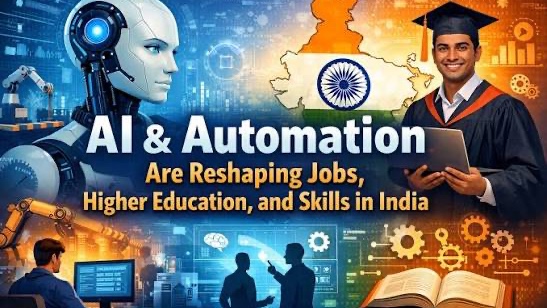
Global financial giants like Goldman Sachs and Nomura reveal that AI will augment rather than simply eliminate jobs in India. As technology reshapes workplace dynamics, Indian corporate professionals must adapt and upskill to thrive in 2026.
Reading this article: 0s
News in 60 words
~150-word AI digest in one read
Thesis, bullets, quote & takeaway — slogan stays "60 words"
1h ·5 min read· 0 · 0 · 0
Full story
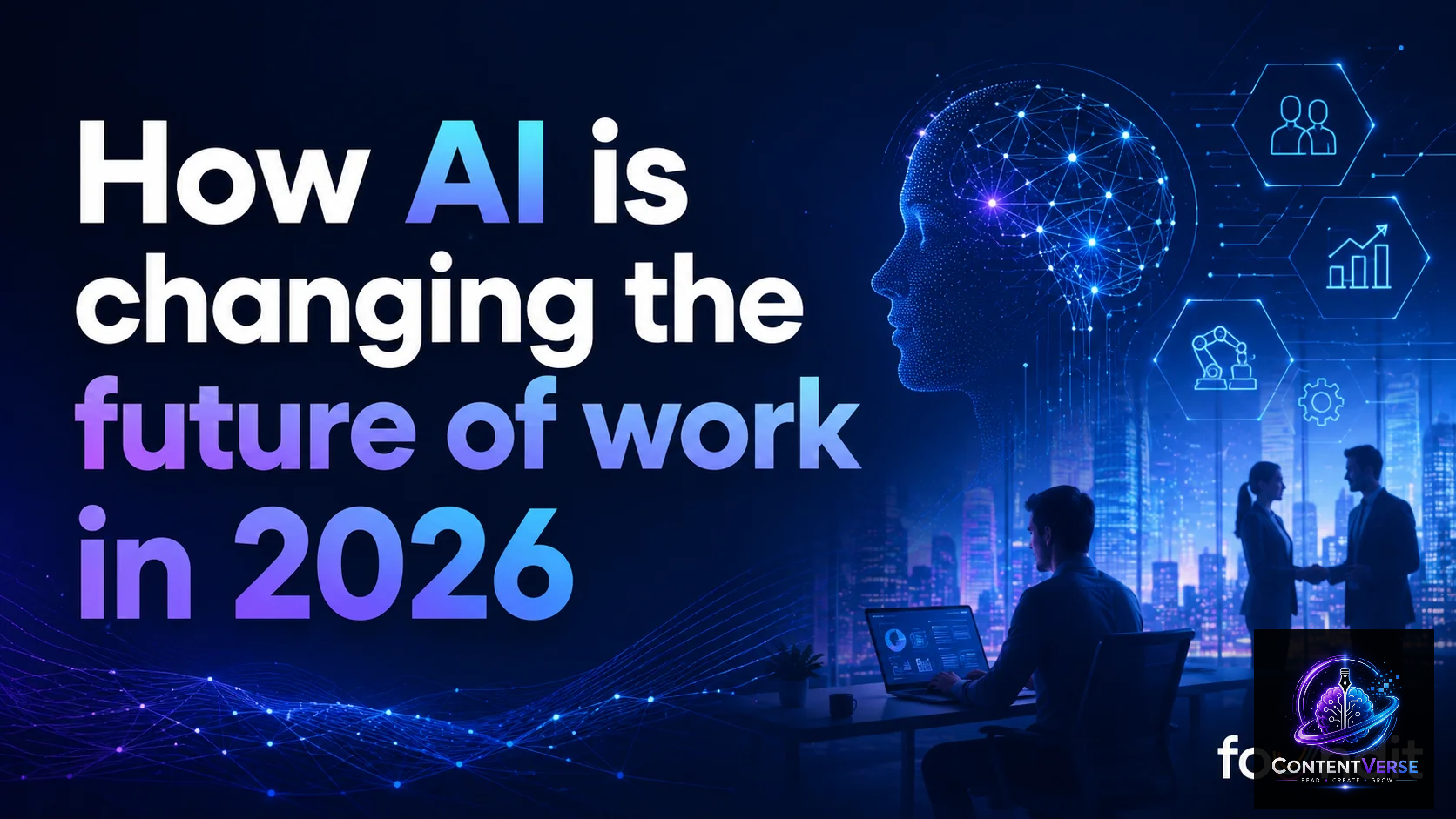
Headlines across tech hubs like Bengaluru, Hyderabad, and Gurugram have frequently framed artificial intelligence as an existential threat to white-collar employment. However, recent findings from global financial institutions tell a remarkably different story. Structural studies by Goldman Sachs and Nomura indicate that generative AI is set to augment Indian jobs far more than it will eliminate them.
As India cements its position as the back-office and innovation engine of the world, the 2026 workplace is undergoing a massive shift. Rather than replacing human talent, AI tools are absorbing repetitive, low-complexity tasks. This transition enables Indian professionals to focus on higher-value strategic, creative, and domain-specific work.
Augmentation Over Elimination: What the Reports Reveal
According to analysis by Goldman Sachs, roughly two-thirds of current occupations are exposed to some degree of AI automation. Crucially, the firm notes that most exposed jobs will be complemented rather than replaced by AI. Nomura’s economic research echoes this, emphasizing that India's tech ecosystem is uniquely positioned to leverage AI to boost worker productivity.
In India's massive Global Capability Centers (GCCs)—which employ over 1.6 million professionals across cities like Pune, Chennai, and Bengaluru—AI integration is driving output quality rather than head-count reductions. Teams that once spent hours writing baseline code, compiling financial data, or drafting customer responses are now using AI copilots to double their daily output.
Instead of replacing engineers, IT services giants are shifting metrics from hours billed to outcomes delivered. The human element remains mandatory for system architecture, complex logic, client empathy, and regulatory compliance.
Impact Across Key Indian Sectors
AI adoption is not uniform across industries. Specific corporate verticals in India are experiencing tailored transformations.
Software Development and IT Services
Developers using tools like GitHub Copilot and Amazon Q report completing routine coding tasks up to 40% faster. Entry-level coding roles are shifting away from manual syntax writing toward code review, bug debugging, and system integration. Senior roles now demand strong architectural knowledge and prompt orchestration.
Banking, Financial Services, and Insurance (BFSI)
Major Indian financial players like HDFC Bank and ICICI Bank, alongside fintech platforms such as PhonePe and Paytm, use AI models for instant fraud detection, credit underwriting, and personalized customer queries. Algorithmic underwriting processes loan applications in minutes, freeing risk officers to focus on high-value, complex corporate lending portfolios.
Customer Operations and Business Process Management (BPM)
Traditional call centers are evolving into advanced customer experience hubs. AI voicebots handle routine tier-1 queries in regional languages such as Hindi, Tamil, and Marathi. Human agents step in for complex escalations, requiring deeper emotional intelligence and problem-solving skills.
Government Initiatives and Upskilling Systems
To ensure the workforce keeps pace with technology, both public and private sectors in India are investing heavily in skills training.
- IndiaAI Mission: With a central cabinet allocation of ₹10,372 crore, this initiative supports computing infrastructure, foundational AI research, and localized skill development.
- NASSCOM FutureSkills Prime: A digital skilling platform created in partnership with the Ministry of Electronics and Information Technology (MeitY), offering certified courses in machine learning, data engineering, and AI ethics.
- Corporate Upskilling Mandates: Major IT players are mandating annual AI competency certificates for employees, offering pay incentives and project allocations for certified workers.
Essential Skills for the 2026 Indian Workplace
To maintain job security and secure competitive salary raises in 2026, professionals must develop a hybrid skill set combining technical fluency with uniquely human capabilities:
- Prompt Engineering and AI Tool Mastery: The ability to craft precise context and constraints for large language models to yield actionable code, copy, or analytical outputs.
- Domain-Specific Expertise: AI can generate general answers, but deep knowledge of Indian tax codes, RBI compliance rules, or local consumer behavior remains irreplaceable.
- Data Literacy and Critical Thinking: Professionals must audit AI output for hallucinations, bias, and privacy violations before publishing or presenting data.
- Emotional Intelligence and Client Management: High-stakes negotiation, stakeholder management, and cross-cultural communication cannot be automated.
A Practical Action Plan for Professionals
If you want to stay ahead of AI-driven restructuring in corporate India, follow this step-by-step roadmap:
- Audit Your Weekly Workflow: Identify repetitive tasks (data collation, standard email drafting, baseline research) that take up more than 30% of your time. Test enterprise-approved AI tools to automate them.
- Earn Recognized Credentials: Enroll in government-aligned platforms like FutureSkills Prime or complete vendor certifications from AWS, Google, or Microsoft in generative AI application.
- Build an AI-Augmented Portfolio: Document how AI integration improved your efficiency. Show metrics like "reduced reporting turnaround time by 50% using custom scripts."
- Focus on Cross-Functional Knowledge: Learn how your function intersects with business goals. Technologists who understand product management and revenue metrics are far harder to replace.
Frequently Asked Questions
Will AI lead to mass layoffs in Indian IT companies?
Current data from Goldman Sachs and Nomura suggests mass layoffs solely due to AI are unlikely. Instead, hiring criteria are shifting. Companies are reducing intake for purely manual coding roles while actively hiring professionals capable of working alongside AI tools.
What are the highest-paying AI-augmented roles in India right now?
Roles combining domain knowledge with AI execution command top salaries in India. AI Systems Architects, MLOps Engineers, AI Risk & Compliance Officers, and AI Product Managers command mid-to-senior packages ranging from ₹22 LPA to over ₹60 LPA depending on experience.
How can non-technical corporate workers adopt AI?
Non-technical workers in HR, marketing, legal, or finance can use conversational AI tools for draft writing, competitive research, trend analysis, and workflow automation without writing a single line of code.
Conclusion
The narrative that AI will devastate the Indian job market overlooks the historical resilience and adaptability of the country's workforce. From the Y2K transition to the cloud computing era, Indian professionals have consistently transformed technological disruptions into competitive advantages.
By leveraging tools that handle operational drudgery, corporate workers across India can focus on strategic execution, innovation, and leadership. The future of work in 2026 belongs not to AI alone, but to professionals who master the art of working with AI.
Support creators
If you found this insight helpful, consider tipping the author on ContentVerse India to support independent, expert journalism.
Was this helpful?
Your feedback helps us improve content for everyone.
Liked this piece?
Tip Dhananjay for the work
100% goes to the creator. Send a one-time tip in rupees and back the writing you love.
Dhananjay Singh
0 followers · 0 blogs
Creator on ContentVerse. Building, writing, and shipping in public.
0 followers

Discussion