
Inside India's First Longevity Summit 2026: The Future of Health
India's healthcare landscape is shifting rapidly from treating illnesses to extending human healthspan. Discover how groundbreaking innovations from India's First Longevity Summit 2026 are democratizing anti-aging science and preventive medicine.
Reading this article: 0s
News in 60 words
~150-word AI digest in one read
Thesis, bullets, quote & takeaway — slogan stays "60 words"
1h ·5 min read· 0 · 0 · 0
Full story
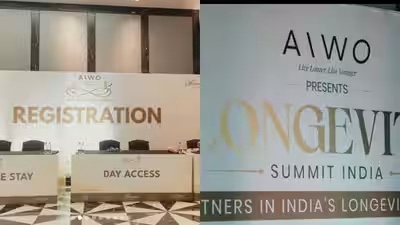
For decades, mainstream medicine across India focused almost exclusively on disease management—treating sickness after symptoms manifested. However, a monumental shift toward preventive longevity is underway. This transformation was clearly on display at India's First Longevity Summit 2026, hosted jointly at the luxurious Fairmont Mumbai and Le Florence India in collaboration with AIWO. The landmark gathering brought together top global scientists, longevity physicians, Indian biohackers, and wellness innovators to answer a single pressing question: How can we extend human healthspan, ensuring our extra years are vibrant and disease-free?
Driven by rising disposable incomes, accessible AI diagnostics, and a growing urban middle class, longevity medicine in India is moving out of niche research labs into mainstream clinics. Here is a deep dive into the breakthrough trends, biological age science, and accessible longevity tools defining the future of Indian healthcare.
The Shift From Lifespan to Healthspan
While India's average lifespan has steadily increased over the last three decades, healthspan—the number of years lived free from chronic disability and disease—has lagged behind. Metabolic conditions like Type-2 diabetes, cardiovascular issues, and hypertension frequently strike urban Indians a decade earlier than their Western counterparts.
At the Longevity Summit 2026, experts emphasized that anti-aging science is not about living forever; it is about compressing morbidity. By targeting cellular senescence, systemic inflammation, and mitochondrial decay, longevity protocols aim to keep individuals at peak cognitive and physical performance into their 70s, 80s, and beyond.
Biohacking Protocols: Hyperbaric Oxygen, NAD+, and Cold Therapy
Once reserved for elite athletes, advanced longevity therapies are rapidly scaling across metro hubs like Mumbai, Bengaluru, and Delhi-NCR. Key interventions showcased at the summit included:
- Hyperbaric Oxygen Therapy (HBOT): Pressurized oxygen chambers that stimulate stem cell release, enhance vascularization, and reduce brain inflammation. Single sessions in top Mumbai centers range from ₹4,000 to ₹8,000.
- NAD+ Therapy & Boosters: Intravenous (IV) drips and oral precursor supplements (such as NMN) designed to replenish Nicotinamide Adenine Dinucleotide, a vital coenzyme for cellular repair that drops sharply with age.
- Cryotherapy and Cold Plunges: Rapid thermal contrasts used to boost brown fat activity, lower baseline inflammation, and sharpen mental clarity.
Clinics like AIWO and specialized wellness hubs are building comprehensive longevity centers where patients can access personalized stacks combining oxygen therapy, red-light treatments, and targeted micro-nutrient IVs under medical supervision.
Advanced Diagnostics: Measuring Your Biological Age
Chronological age measures the years since birth, but biological age measures cellular wear and tear. One of the biggest takeaways from the summit was the democratization of epigenetic clocks and advanced diagnostic panels in India.
Key Diagnostics Defining Indian Longevity Protocols:
- Epigenetic DNA Methylation Testing: Measures biological age with high precision by analyzing chemical markers on DNA strands. Tests from providers like Metropolis and specialty labs currently cost between ₹18,000 and ₹45,000.
- Continuous Glucose Monitors (CGMs): Devices from Indian health-tech leaders like Ultrahuman and BeatO allow users to track real-time glycemic variability, helping prevent insulin resistance long before clinical diabetes develops.
- Advanced Lipid & Biomarker Panels: Going beyond standard cholesterol tests to measure ApoB, Lipoprotein(a), High-Sensitivity C-Reactive Protein (hs-CRP), and Homocysteine for early cardiovascular risk prediction.
Integrating Ancient Wisdom with Epigenetic Science
India possesses a unique advantage in the global longevity race: the traditional wisdom of Ayurveda. Summit discussions highlighted how classical Rasayana therapies—focused on tissue rejuvenation and immunity enhancement—align remarkably well with modern cellular biology.
Adaptogenic herbs like Ashwagandha, Guduchi, and Curcumin are being re-evaluated through double-blind clinical trials. Indian longevity researchers are now formulating bio-optimized extracts that enhance autophagy (the body's process of clearing damaged cells) while adhering to strict FSSAI quality controls.
How Urban Indians Can Begin Their Longevity Journey
Optimizing your biological healthspan does not require a fortune. You can implement core longevity practices starting today:
- Prioritize Deep Sleep: Utilize budget-friendly sleep tracking through smart bands or dedicated rings to ensure at least 90 minutes of daily deep sleep.
- Optimize Nutrient Timing: Practice time-restricted feeding (e.g., 14:10 or 16:8 intermittent fasting) to trigger cell-clearing autophagy.
- Build Resistance Training: Muscle mass is a strong predictor of longevity. Incorporate strength training 3–4 times per week to preserve metabolic health.
- Get Baseline Biomarkers: Request comprehensive blood work including HbA1c, fasting insulin, ApoB, and hs-CRP during your annual health checkup.
Frequently Asked Questions
What is the difference between biological age and chronological age?
Chronological age is the exact number of years you have been alive. Biological age reflects how fast or slow your cells and tissues are aging based on biomarkers, epigenetics, and physiological function.
How much does a basic longevity assessment cost in India?
A basic functional biomarker panel through major diagnostic labs costs around ₹3,000 to ₹7,000. Full longevity evaluations featuring biological age DNA testing and personalized protocols range between ₹25,000 and ₹60,000.
Are longevity treatments covered under Indian health insurance?
Currently, health insurance policies in India cover reactive treatments for diagnosed diseases rather than elective longevity treatments, biohacking therapies, or wellness diagnostic panels. However, preventive corporate health packages are gradually expanding to cover CGMs and basic biomarker screenings.
Conclusion
India's First Longevity Summit 2026 marked a pivotal shift in how the nation views aging and health. By pairing modern biohacking, AI-driven diagnostics, and foundational lifestyle disciplines, Indian urbanites now have unprecedented tools to extend their vital years. Investing in your cellular health today is the surest way to secure a active, vibrant future tomorrow.
Support creators
If you enjoyed this deep-dive into the future of longevity and preventive health in India, please consider tipping our independent writers on ContentVerse India.
Was this helpful?
Your feedback helps us improve content for everyone.
Liked this piece?
Tip Dhananjay for the work
100% goes to the creator. Send a one-time tip in rupees and back the writing you love.
Dhananjay Singh
0 followers · 0 blogs
Creator on ContentVerse. Building, writing, and shipping in public.
0 followers

Discussion