
Cervical Cancer Elimination in India: HPV Vaccine & Screening Guide
Union Health Minister JP Nadda recently reaffirmed India's commitment to eliminate cervical cancer through targeted screening and expanded HPV immunization drives. Here is everything you need to know about vaccine age limits, costs like Cervavac, Pap smear guidelines, and early detection in India.
Reading this article: 0s
News in 60 words
~150-word AI digest in one read
Thesis, bullets, quote & takeaway — slogan stays "60 words"
1h ·5 min read· 0 · 0 · 0
Full story
India's Renewed Push Against Cervical Cancer
Cervical cancer remains one of the most critical public health challenges for women in India, accounting for nearly 18% of all female cancer cases in the country. However, unlike most cancers, cervical cancer is almost entirely preventable. Union Health Minister JP Nadda recently reaffirmed India's firm commitment to eliminate cervical cancer through a dual strategy: expanding national Human Papillomavirus (HPV) vaccination drives for young girls and scaling up regular screening coverage across primary healthcare centers.
With indigenous vaccines making immunization more affordable and government health initiatives expanding access under Ayushman Bharat, India stands at a pivotal moment. Understanding when to get vaccinated, which screening tests to choose, and how to recognize early symptoms can safeguard millions of lives across Indian households.
Understanding HPV and Cervical Cancer
Over 95% of cervical cancer cases are caused by persistent infection with high-risk strains of the Human Papillomavirus (HPV), primarily strains 16 and 18. HPV is an extremely common virus transmitted through close skin-to-skin contact, often during sexual activity. In most individuals, the body's immune system clears the infection naturally within two years.
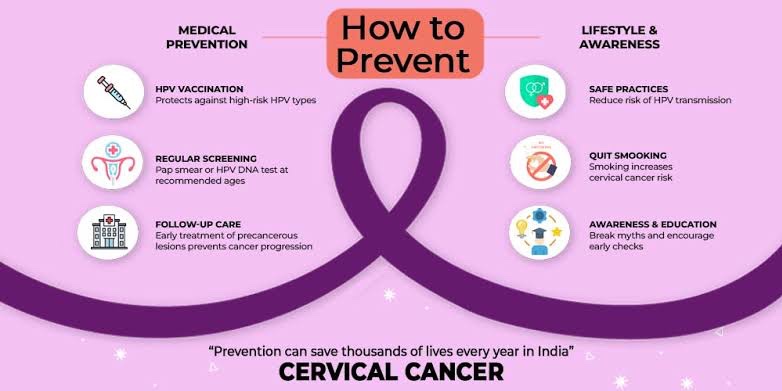
However, when high-risk HPV strains persist in the cervical tissue, they cause cellular changes that slowly evolve into precancerous lesions over 10 to 20 years. Because this progression is gradual, timely vaccination prevents initial infection, while periodic screening catches cell changes long before they turn into invasive cancer.
HPV Vaccination in India: Age, Brands, and Prices
Vaccination is most effective when administered before exposure to the virus, making adolescent girls the primary target group for preventive immunization campaigns.
Recommended Vaccination Schedule
- Girls aged 9 to 14 years: Recommended 2-dose schedule (the second dose given 6 months after the first). This age group achieves the strongest immune response.
- Females aged 15 to 26 years: Recommended 3-dose schedule (0, 1–2 months, and 6 months).
- Adults aged 27 to 45 years: Vaccination can be considered after consulting a gynecologist, though efficacy is highest when given earlier.
Available Vaccine Brands and Costs in India
India now offers both domestic and imported HPV vaccine options:
- Cervavac (Quadrivalent): Developed by the Serum Institute of India (SII) in partnership with the Department of Biotechnology. It protects against HPV strains 6, 11, 16, and 18. Cervavac is priced at approximately ₹2,000 per dose, making it significantly more accessible than imported alternatives.
- Gardasil 4 (Quadrivalent): Manufactured by MSD, covering strains 6, 11, 16, and 18. Costs approximately ₹3,500 to ₹4,000 per dose in private hospitals across cities like Mumbai, Bengaluru, and Delhi.
- Gardasil 9 (Nonavalent): Covers 9 HPV strains (6, 11, 16, 18, 31, 33, 45, 52, 58), offering broader protection. Priced between ₹9,500 and ₹11,000 per dose in private clinics.
Several state governments, including Sikkim and Punjab, have previously integrated HPV vaccines into local public health drives, and broader national school-based rollout programs are expanding continuously.
Cervical Cancer Screening Guidelines for Indian Women
Even after receiving the HPV vaccine, regular screening remains essential because vaccines do not cover every single high-risk strain. Public health authorities recommend that every woman in India begin routine screening from age 30 (or earlier if high-risk factors exist).
Key Screening Methods
- Visual Inspection with Acetic Acid (VIA): A low-cost, fast screening technique used widely in government Primary Health Centres (PHCs) and Ayushman Arogya Mandirs. Diluted vinegar is applied to the cervix, turning abnormal areas white for immediate visual detection. VIA is often provided free of cost under public health programs.
- Pap Smear Test: A sample of cells from the cervix is examined under a microscope to detect abnormal or precancerous cell changes. Pap tests cost between ₹300 and ₹1,200 in private diagnostic labs such as Dr Lal PathLabs or Metropolis.
- HPV DNA Testing: A molecular test that checks cervical cells directly for the presence of high-risk HPV DNA. It is highly sensitive and recommended every 5 years. Costs range from ₹1,500 to ₹3,500 in private laboratories.
Recommended Screening Frequency
- Ages 30 to 65: Pap smear every 3 years, OR an HPV DNA test every 5 years, OR co-testing (both together) every 5 years.
- Above Age 65: Screening can stop if previous consecutive test results over the past 10 years were consistently normal.
Warning Signs and Early Symptoms
Early-stage cervical cancer often presents no noticeable symptoms, which is why preventive screening is critical. However, as the disease progresses, women should watch for warning signs:
- Irregular or unexplained vaginal bleeding between menstrual cycles
- Unusually heavy or prolonged menstrual periods
- Bleeding or pelvic pain during or after sexual intercourse
- Unexplained postmenopausal bleeding
- Persistent, watery, or foul-smelling vaginal discharge
- Persistent pain in the lower back, pelvis, or legs
If you or a family member experience any of these symptoms, consult a qualified gynecologist at a district hospital, medical college, or private clinic immediately for an evaluation.
FAQs on Cervical Cancer and HPV Vaccination
1. Can married or sexually active women still get the HPV vaccine?
Yes, sexually active women up to age 26 (and up to age 45 after clinical evaluation) can get the HPV vaccine. While the vaccine cannot treat an existing infection, it protects against other covered HPV strains that you have not yet been exposed to.
2. Is the HPV vaccine covered under health insurance in India?
Most retail health insurance plans in India cover hospitalization expenses for cancer treatment under major illness policies. OPD coverage for preventive vaccinations varies, but comprehensive wellness policies from major insurers increasingly offer partial coverage or discounts for preventive health check-ups and vaccines.
3. How can rural families access cervical screening under Ayushman Bharat?
Under the Ayushman Bharat scheme, Ayushman Arogya Mandirs (Health & Wellness Centres) across rural and urban India are equipped to perform free Visual Inspection with Acetic Acid (VIA) screening and clinical breast exams. Positive cases are referred to district hospitals for diagnostic confirmation and treatment under the PM-JAY scheme.
Taking Action Today
Eliminating cervical cancer in India requires active participation from families, healthcare providers, and policymakers. Parents should prioritize immunizing young daughters aged 9 to 14 with the HPV vaccine, while adult women must schedule routine screenings every 3 to 5 years. By combining early immunization with systematic screening, Indian households can protect future generations from a preventable disease.
Support creators
If you found this public health guide useful, consider supporting our independent medical writers on ContentVerse India by leaving a small tip.
Was this helpful?
Your feedback helps us improve content for everyone.
Liked this piece?
Tip Dhananjay for the work
100% goes to the creator. Send a one-time tip in rupees and back the writing you love.
Dhananjay Singh
0 followers · 0 blogs
Creator on ContentVerse. Building, writing, and shipping in public.
0 followers



Discussion