
Why Nifty Slipped Below 24,600: Crude Oil Surge & Bajaj Finance Plunge Explained
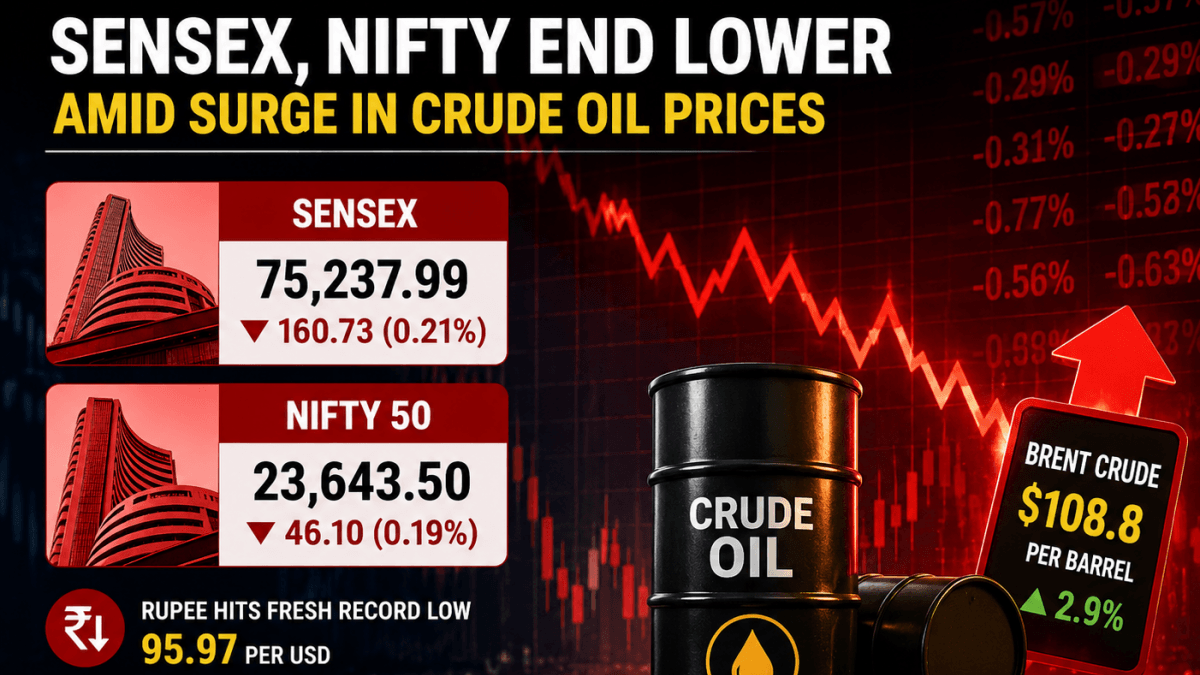
Dalal Street experienced fresh volatility as the Nifty 50 broke its key technical support level of 24,600 during trade. Spiking global crude oil prices combined with a severe drag from Bajaj Finance triggered widespread selling across retail and institutional portfolios.
Reading this article: 0s
News in 60 words
~150-word AI digest in one read
Thesis, bullets, quote & takeaway — slogan stays "60 words"
1h ·5 min read· 0 · 0 · 0
Full story
Dalal Street Under Pressure: The 24,600 Breakout
Indian equity markets faced intense selling pressure today as the benchmark Nifty 50 index dropped below the crucial psychological and technical support zone of 24,600. For retail investors tracking their portfolios on apps like Zerodha, Groww, and Angel One, the sudden downturn brought a wave of red across major indices, including the Bank Nifty and Nifty Financial Services.
While market corrections are a natural part of stock market cycles, today's decline was driven by a classic combination of global macro headwinds and heavy stock-specific drag. The two primary catalysts behind this sudden sell-off were the rapid surge in Brent crude oil prices and a sharp plunge in market heavyweight Bajaj Finance. Understanding these factors is essential for every Indian investor evaluating whether to buy the dip or hold cash.
Factor 1: Spiking Crude Oil Prices Hit Macro Sentiment
India imports over 85% of its crude oil requirements, making the domestic economy uniquely vulnerable to global energy price swings. Brent crude surged past major resistance levels, driven by escalating geopolitical tensions in the Middle East and unexpected supply constraints announced by OPEC+ nations.
Why Rising Oil Hurts Indian Equities
- Inflation and Interest Rates: Higher crude oil prices directly inflate India's import bill, putting upward pressure on consumer inflation (CPI). This reduces the likelihood of aggressive interest rate cuts by the Reserve Bank of India (RBI) in upcoming Monetary Policy Committee (MPC) meetings.
- Rupee Depreciation: A wider Current Account Deficit (CAD) pressures the Indian Rupee (INR) against the US Dollar (USD), leading to foreign portfolio investor (FPI) capital outflows from Dalal Street toward dollar-denominated assets.
- Corporate Margin Compression: Sectors such as paints, logistics, aviation, and auto ancillaries face immediate raw material cost inflation, direct impacts on quarterly EBITDA margins.
Factor 2: Bajaj Finance Plunges on Earnings and Asset Quality Concerns
The second major trigger was stock-specific. Bajaj Finance, a high-weightage component in both the Nifty 50 and Bank Nifty indices, witnessed a heavy sell-off of over 4% to 5% in a single session, dragging the entire non-banking financial company (NBFC) basket down with it.
The Trigger Behind the Sell-Off
- Compression in Net Interest Margins (NIM): Rising cost of funds for NBFCs has begun squeezing interest spreads, impacting core profitability across consumer lending portfolios.
- Asset Quality Tick-Up: Recent quarterly updates highlighted minor stress in uncollateralized personal loans and micro-segments, sparking conservative risk-off sentiment among domestic and foreign institutional investors.
- Intense Sectoral Competition: Aggressive credit expansion by traditional public sector banks and new fintech players like Jio Financial Services has intensified competition for quality retail borrowers.
When heavyweights like Bajaj Finance tumble, algorithmic trading desks and institutional baskets trigger automated sell orders across related financial stocks like Bajaj Finserv, HDFC Bank, and SBI.
Sectoral Impact: How Other Segments Fared
The sell-off was not isolated to financial services alone. Defensive sectors saw muted activity while high-beta growth stocks took the brunt of the market correction.
| Sector | Index Impact | Key Drivers |
|---|---|---|
| Nifty Bank | Moderate Loss | Dragged down by NBFC weakness and elevated borrowing costs |
| Nifty IT | Mild Decline | US economic uncertainty delaying discretionary tech spending |
| Nifty Auto | Sectoral Drag | Input cost inflation concerns due to oil derivative price hikes |
| Nifty FMCG | Outperformed | Investors shifted capital to defensive cash-flow resilient stocks |
Portfolio Strategy: What Should Retail Investors Do Now?
Navigating sharp single-day market dips requires disciplined risk management rather than emotional decision-making. Here is a practical roadmap for Indian retail investors:
1. Maintain Systematic Investment Plans (SIPs)
Do not pause or cancel ongoing SIPs in mutual funds. Market dips allow your fund managers to accumulate quality stocks at lower valuations, reducing your long-term rupee cost average.
2. Avoid Heavy Over-Leverage in FnO
Retail traders active in Nifty Options and Futures should exercise strict stop-loss management. Elevated volatility (India VIX) can quickly erode option buyer premiums through theta decay and sharp whipsaws.
3. Rebalance Towards Quality
Use market corrections to clean up your direct stock portfolio. Shift capital away from speculative micro-cap counters toward balance-sheet strong companies with strong pricing power and low debt.
Frequently Asked Questions
Is the drop below Nifty 24,600 a trend reversal or a temporary correction?
Market experts view this move as a healthy technical correction within a broader structural bull market. Key technical support now sits near the 24,400–24,200 zone.
Should I buy Bajaj Finance shares after this dip?
Bajaj Finance remains a market leader in Indian retail lending. Long-term investors may consider systematic staggered buying (SIP route) rather than deploying lump-sum capital at once.
How high oil prices directly impact my mutual fund portfolio?
High oil prices weaken cyclical sectors like paints, auto, and logistics while benefiting oil exploration companies like ONGC and Oil India. Diversified equity funds balance these forces automatically.
Conclusion
Today's dip below Nifty 24,600 serves as a reminder that macro indicators like crude oil prices and single-stock weighted headwinds can rapidly alter short-term market momentum. By maintaining asset allocation, keeping cash reserves handy for blue-chip dips, and avoiding panicky derivatives trading, retail investors can navigate Dalal Street's volatility with confidence.
Disclaimer: This article is strictly for educational purposes and should not be construed as financial advice or stock recommendations. Always consult a SEBI-registered investment advisor before making financial decisions.
Support creators
Enjoyed this market breakdown? Support independent financial journalism on ContentVerse India by leaving a small tip for the writer!
Was this helpful?
Your feedback helps us improve content for everyone.
Liked this piece?
Tip Dhananjay for the work
100% goes to the creator. Send a one-time tip in rupees and back the writing you love.
Dhananjay Chauhan
0 followers · 0 blogs
Creator on ContentVerse. Building, writing, and shipping in public.
0 followers



Discussion