
Will Meta Muse Code AI Replace Indian Developers? What You Must Know
Mark Zuckerberg’s reveal of Meta Muse Code AI has triggered intense debate across India’s tech hubs about the future of software engineering. This in-depth analysis breaks down what automated code generation really means for freshers, senior architects, and the IT service ecosystem.
Reading this article: 0s
News in 60 words
~150-word AI digest in one read
Thesis, bullets, quote & takeaway — slogan stays "60 words"
1h ·6 min read· 0 · 0 · 0

Full story
When Mark Zuckerberg recently unveiled Meta Muse Code AI—claiming it can autonomously handle complex software engineering tasks from scaffolding to deployment—it sent immediate shockwaves through India’s $250 billion IT ecosystem. From the tech parks of Bengaluru’s Outer Ring Road to Hyderabad’s HITEC City and Pune’s Hinjewadi, freshers and mid-level engineers are asking the same anxious question: Is my coding job about to become obsolete?
India produces over 1.5 million engineering graduates every year, with a massive portion entering IT service giants like TCS, Infosys, Wipro, and Accenture. For decades, routine software maintenance, unit testing, and basic full-stack development formed the backbone of India's tech employment engine. With autonomous AI agents now writing syntax, debugging errors, and converting natural language into production-ready repositories in seconds, the rules of the game have fundamentally changed.
Here is a realistic, grounded look at what Meta Muse Code AI actually does, who is at risk, and how Indian developers can pivot to remain irreplaceable.
Understanding Meta Muse Code AI: Reality vs Hyperbole
To evaluate the threat, it is essential to distinguish between AI marketing claims and practical software deployment. Meta Muse Code AI represents a leap beyond assistant-style copilots. Instead of merely autocomplete functions, it functions as an agentic system capable of parsing entire codebases, creating architectural blueprints, generating test suites, and resolving dependency conflicts.
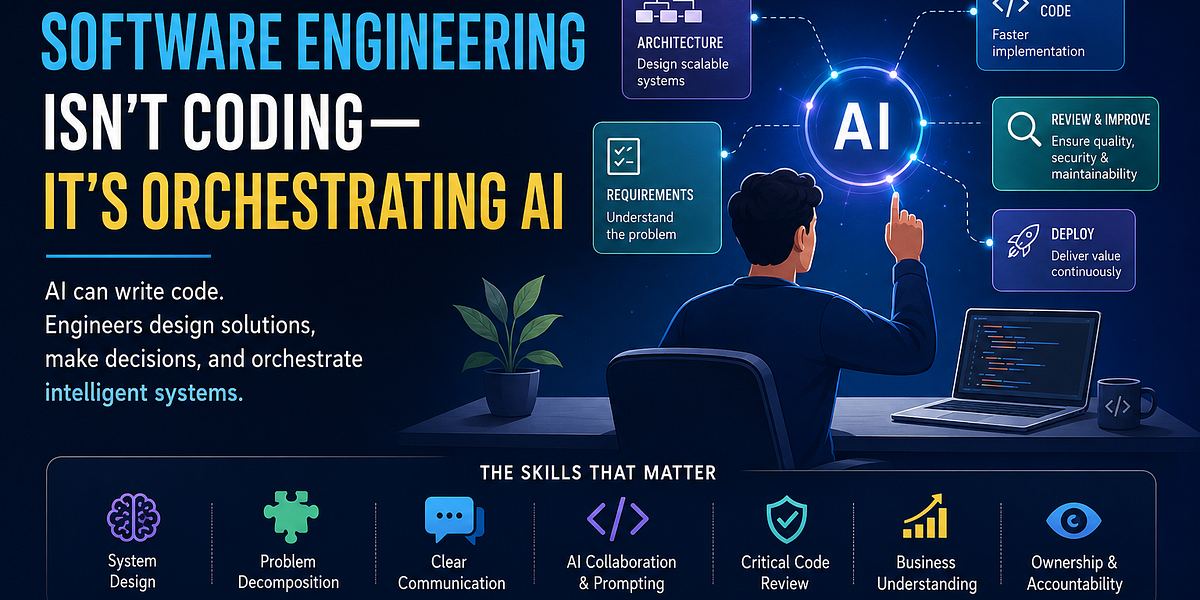
However, software engineering extends far beyond writing code syntax. In a real-world enterprise environment, code is only 20% of the puzzle. The remaining 80% involves:
- Deconstructing ambiguous business requirements into precise technical logic.
- Navigating legacy systems and undocumented infrastructure.
- Ensuring strict data governance, security compliance, and privacy rules (such as RBI financial mandates or HIPAA standards).
- Managing trade-offs between system latency, cloud infrastructure costs, and scalability.
While Muse Code AI excels at structured, predictable engineering tasks, it struggles when faced with incomplete specifications, complex domain logic, and real-time organizational constraints.
Impact on the Indian Tech Hierarchy: Who is at Risk?
The impact of tools like Muse Code AI will not be uniform across the Indian IT sector. The fallout depends heavily on your role, experience tier, and everyday responsibilities.
1. Entry-Level Roles and Service Desk Engineers (High Vulnerability)
Freshers earning starting packages of ₹3.5 LPA to ₹5 LPA at conventional IT services firms face the steepest uphill climb. Tasks historically assigned to junior devs—writing CRUD endpoints, converting Figma design files into HTML/React components, drafting basic unit tests, and triaging L1 support tickets—are precisely what Muse Code AI automates instantly.
IT services companies are already slowing entry-level campus intake in favor of lateral hiring. The traditional model of bench management and training freshers on basic syntax for six months is rapidly becoming financially unviable.
2. Mid-Level Developers (Moderate Impact / High Adaptation Required)
Engineers with 3 to 7 years of experience writing routine code without deep domain understanding will feel squeeze. If your primary daily output is writing boilerplate Java, Python, or JavaScript logic based on tightly defined Jira tickets, an AI agent will replace a significant portion of your billable hours. To survive, mid-level developers must transition from code writers to code reviewers and systems integrators.
3. System Architects and Product Engineers (Low Vulnerability / High Growth)
Senior developers, tech leads, and solution architects earning ₹20 LPA and above stand to gain the most. For these professionals, Muse Code AI is not a competitor but a high-powered multiplier. By offloading repetitive coding tasks to AI agents, a single senior engineer can now deliver product features that previously required a team of five developers.
How Indian IT Hubs and Service Giants Are Pivoting
The traditional "time-and-material" billing model—where Indian IT firms billed global clients based on developer hours spent—is undergoing a structural collapse. Global enterprises in the US and Europe are demanding fixed-outcome pricing, knowing that AI tools reduce development hours by 30% to 50%.
In response, major Indian tech employers are radically altering their strategy:
- Mandatory AI Upskilling: Companies like Infosys and Wipro have launched internal learning paths, mandating that every engineer complete certification in AI-assisted development and prompt engineering.
- Focus on Product Engineering: Hubs in Gurugram, Bengaluru, and Hyderabad are shifting from low-margin maintenance contracts toward high-value AI implementation, cloud migration, and custom LLM integration for Fortune 500 clients.
- Emergence of Niche Startups: Indian SaaS startups in Indiranagar and Koramangala are using tools like Muse Code AI to launch products with lean teams of 3–4 core engineers instead of 20.
Your Actionable Playbook: How to AI-Proof Your Tech Career
If you are a software engineer in India today, panicking will not help—upgrading your skillset will. Here is how to position yourself at the top of the talent pool:
- Shift from Syntax to Architecture: Stop focusing solely on learning syntax or framework variations. Master system design, distributed systems, database indexing, and microservices architecture.
- Develop Deep Domain Expertise: An AI tool does not understand Indian UPI payment flow nuances, core banking software integration, or healthcare compliance regulations. Pair your technical knowledge with specific industry domain depth (FinTech, HealthTech, Logistics).
- Master AI Orchestration: Learn how to connect AI models with corporate databases using frameworks like LangChain, LlamaIndex, and vector databases (Pinecone, Qdrant). Become the engineer who builds and fine-tunes AI workflows for companies.
- Focus on Security and Auditing: Code generated by AI often contains subtle edge-case bugs and security vulnerabilities. Developers who specialize in cybersecurity, code audits, and performance tuning will see soaring demand.
Frequently Asked Questions
Should freshers still learn programming languages like Java or Python?
Yes, absolutely. Understanding core programming concepts, data structures, and algorithms remains essential. However, learning syntax alone is no longer enough. Freshers must learn how to read, debug, and architect code using AI development tools from day one.
Will Indian IT companies stop hiring fresh graduates completely?
No, hiring will not stop, but the nature of intake will change. IT firms will hire fewer freshers for generic coding roles, prioritizing candidates who demonstrate system design fundamentals, problem-solving abilities, and familiarity with AI-assisted software tools.
What short-term skills should I focus on to upgrade my resume?
Prioritize cloud platforms (AWS/Azure/GCP), API architecture, Docker/Kubernetes containerization, AI framework integration (LangChain/LlamaIndex), and modern DevOps practices.
Conclusion
Meta Muse Code AI is not the end of the Indian developer—it is the end of repetitive, assembly-line coding. Just as the transition from assembly language to high-level languages like C++ and Java did not eliminate programmers, autonomous AI tools will elevate software engineering to a higher level of abstraction. The developers who thrive in this new era will be those who stop viewing themselves as code writers and start operating as system architects and technology problem solvers.
Support creators
If you found this career breakdown valuable, consider tipping the author on ContentVerse India to support independent tech journalism.
Was this helpful?
Your feedback helps us improve content for everyone.
Liked this piece?
Tip Dhananjay for the work
100% goes to the creator. Send a one-time tip in rupees and back the writing you love.
Dhananjay Singh
0 followers · 0 blogs
Creator on ContentVerse. Building, writing, and shipping in public.
0 followers


Discussion