
How AI Autonomous Tools Are Reshaping Software Engineering Jobs in India
Autonomous AI tools like Cursor and Devin are fundamentally altering the software engineering workflow across Indian tech centers. Discover how developers can adapt their skill sets and navigate changing hiring trends to stay ahead.
Reading this article: 0s
News in 60 words
~150-word AI digest in one read
Thesis, bullets, quote & takeaway — slogan stays "60 words"
2h ·5 min read· 0 · 0 · 0
Full story
In tech hubs like Bengaluru, Hyderabad, and Pune, late-night coding sessions across Outer Ring Road tech parks are undergoing a quiet revolution. Software development in India—an industry employing over 5 million professionals—is no longer just about writing syntax line by line. The rapid adoption of autonomous AI tools, ranging from GitHub Copilot and Cursor to advanced AI agents like Devin, is changing how software is built, tested, and deployed.
Global technology firms and Indian IT giants alike are embedding AI-assisted workflows into their core infrastructure. While this shift boosts productivity, it also reshapes developer career trajectories, hiring expectations, and enterprise security frameworks.
The Shift from Code Generators to Autonomous AI Agents
Until recently, AI tools in software engineering acted primarily as auto-complete assistants. Tools like early GitHub Copilot suggested single lines or basic functions based on context. Today, autonomous AI software agents operate at a higher level of abstraction.
Modern AI development environments, such as Cursor, Claude 3.7 Sonnet integrations, and Devin, can read entire codebases, run terminal commands, debug errors independently, and create pull requests. For example, a developer in a Bengaluru startup can ask an autonomous agent to refactor a legacy microservice, add unit test coverage, and fix runtime bugs with minimal human intervention.
This capability reduces the time required for routine tasks by 30% to 50%. Consequently, the baseline expectation for developer output has risen, shifting the focus from writing code to orchestrating complex AI workflows.
Evolution of Required Engineering Skills in India
The rise of autonomous coding tools is redefining what makes a software engineer valuable in the Indian job market.
1. Architectural Thinking Over Syntax Mastery
Knowing the exact syntax of a framework like React or Django is no longer a primary differentiator. Autonomous tools generate syntactically correct code within seconds. Instead, developers must excel at system architecture, API design, microservices orchestration, and database scaling.
2. Code Auditing and Verification
AI models frequently hallucinate, introduce subtle logical flaws, or use outdated library versions. Senior engineers spend more time reviewing AI-generated pull requests, running static code analysis, and checking performance bottlenecks than writing boilerplate code from scratch.
3. Domain Context and Problem Definition
AI tools require precise context to generate effective solutions. Engineers who understand product domain context—such as UPI payment flow integrations, India Stack APIs, or regional logistics—can frame problems better, producing vastly superior software outcomes.
Security, Intellectual Property, and Data Compliance
As Indian development teams integrate cloud-connected AI agents, enterprise security priorities are shifting dramatically. Sending proprietary source code to external AI model endpoints introduces significant risk.
Key security considerations for Indian engineering teams include:
- Data Sovereignty and DPDP Act Compliance: India's Digital Personal Data Protection (DPDP) Act imposes strict guidelines on how personal data is processed. Development teams must ensure AI coding tools do not store or leak user personal identifiable information (PII) in prompt logs.
- IP Leakage and Licensing: Pasting enterprise code into public AI models risks training public weights on sensitive IP. Companies in Pune and Gurugram are establishing strict internal policies, favoring local self-hosted models or enterprise-tier privacy agreements.
- Supply Chain Vulnerabilities: AI tools occasionally suggest deprecated or vulnerable third-party packages. Security audits and automated vulnerability scanning are now mandatory in AI-assisted CI/CD pipelines.
Impact on Indian Hiring Trends and IT Majors
The hiring landscape across Indian IT service majors like TCS, Infosys, and Wipro, as well as product unicorns, is experiencing a structural recalibration.
Entry-level hiring for pure coder roles is tightening. Freshers entering the market at entry-level salaries (typically ₹3.5 LPA to ₹6 LPA) are expected to possess strong foundational concepts in data structures, systems engineering, and AI tool usage rather than basic HTML/CSS skills.
Conversely, demand for specialized roles is soaring. Salaries for AI Systems Engineers, DevSecOps Specialists, and Solutions Architects with 4–8 years of experience now range from ₹20 LPA to ₹45+ LPA. Organizations are actively upskilling their workforce to move up the value chain from standard application maintenance to high-margin system architecture and cloud migration.
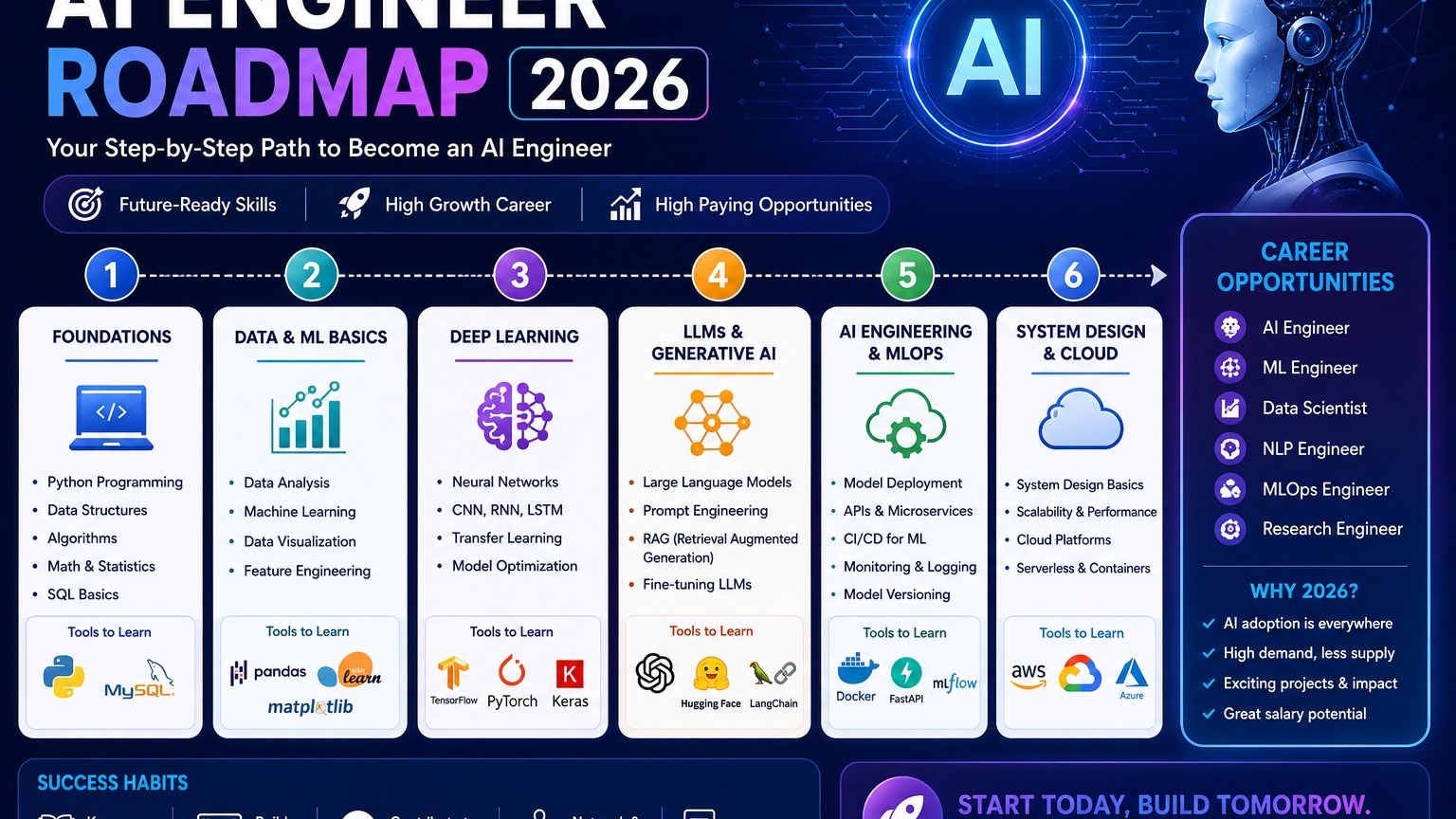
Actionable Career Roadmap for Indian Developers
To remain competitive in an AI-driven ecosystem, Indian developers should adopt a proactive upskilling strategy:
- Master System Design: Study distributed systems, caching strategies, and event-driven architecture.
- Integrate AI Tools into Daily Workflow: Get hands-on experience with tools like Cursor, Claude Code, and GitHub Copilot Workspace to double personal output.
- Focus on Security and Testing: Learn static application security testing (SAST), automated end-to-end testing, and privacy-preserving architecture.
- Build End-to-End Projects: Create full-stack applications using modern tech stacks, leveraging AI tools to build complex products faster.
Frequently Asked Questions
Will AI replace entry-level software engineering jobs in India?
AI will not replace software engineers, but engineers who use AI effectively will replace those who do not. While traditional boilerplate coding roles are declining, demand for engineers who can verify, architect, and secure AI-generated solutions remains strong.
Which AI tools should Indian developers start using today?
Developers should gain hands-on experience with AI-native IDEs like Cursor, AI-assisted completion tools like GitHub Copilot, and conversational models tailored for coding like Claude 3.7 Sonnet and ChatGPT Plus.
How does India's DPDP Act affect developers using AI code assistants?
The DPDP Act requires strict handling of personal data. Developers must ensure AI assistants do not capture end-user personal identifiable information (PII) during testing or code generation, using enterprise-grade tools with strict zero-data-retention policies.
Conclusion
Autonomous AI tools are not ending software engineering in India—they are elevating it. By shifting focus from manual syntax writing to high-level architecture, security, and product design, Indian developers can leverage this technological transformation to build world-class software at unprecedented speed.
Support creators
If you found this insight valuable, consider tipping the author on ContentVerse India to help support independent technical writing.
Was this helpful?
Your feedback helps us improve content for everyone.
Liked this piece?
Tip Dhananjay for the work
100% goes to the creator. Send a one-time tip in rupees and back the writing you love.
Dhananjay Singh
0 followers · 0 blogs
Creator on ContentVerse. Building, writing, and shipping in public.
0 followers


Discussion