
AI Jobs in India: How to Bridge the Skill Gap and Avoid Layoffs in 2026
Recent industry reports reveal a striking paradox in India's tech ecosystem: 66% of AI workers fear layoffs, even as 2.6 new AI roles are created for every job lost. Discover how to transition from legacy IT to high-demand AI architecture and future-proof your career in 2026.
Reading this article: 0s
News in 60 words
~150-word AI digest in one read
Thesis, bullets, quote & takeaway — slogan stays "60 words"
2h ·5 min read· 0 · 0 · 0
Full story
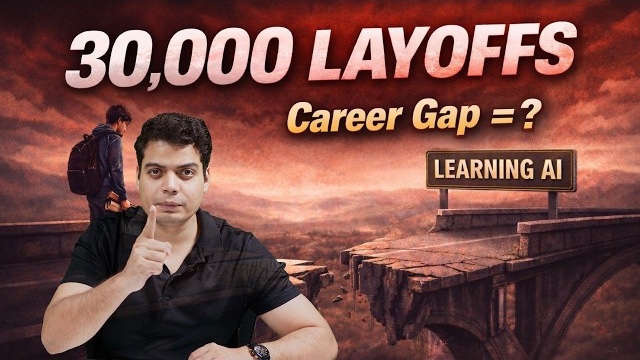
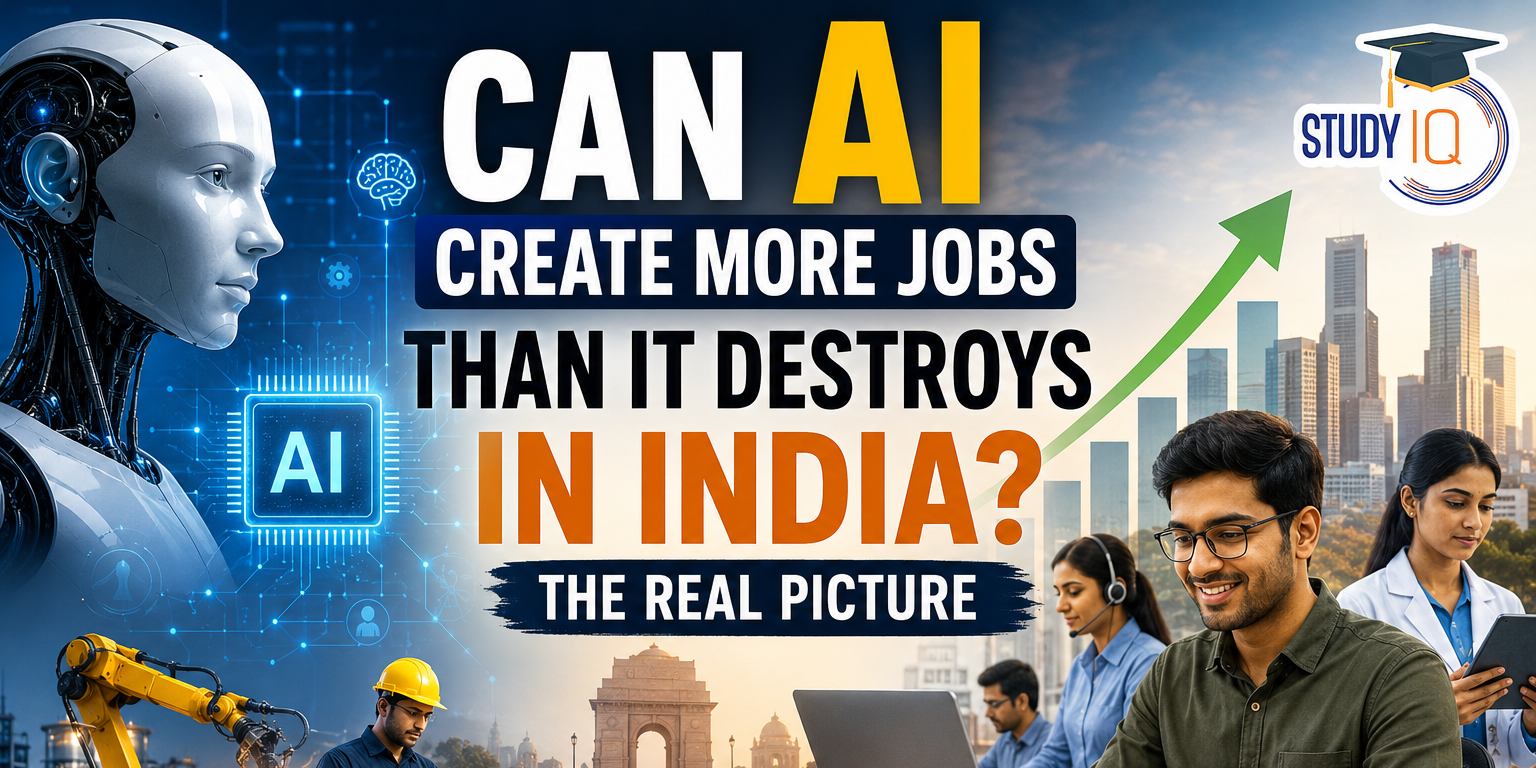
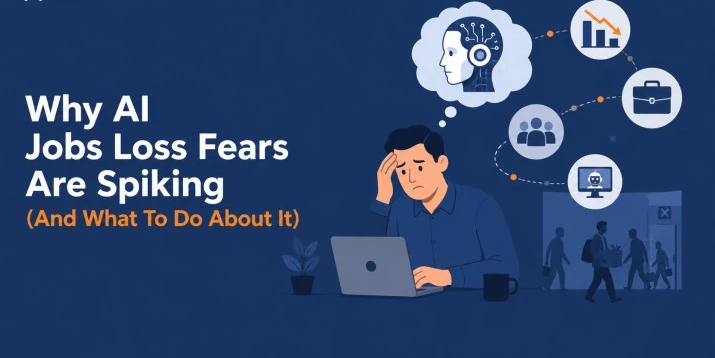
The Indian technology landscape is witnessing a dramatic paradox in 2026. According to recent workforce studies, 66% of Indian tech professionals express deep anxiety over potential layoffs due to artificial intelligence automation. Yet, paradoxically, industry data reveals that 2.6 new AI-driven roles are being created for every traditional job that is eliminated.
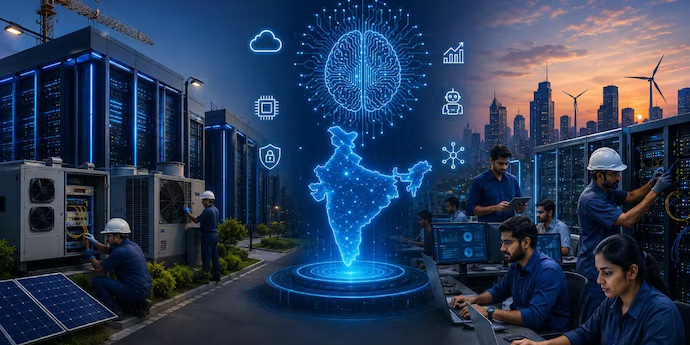
This contradiction points directly to a widening skills gap across IT hubs like Bengaluru, Hyderabad, Pune, and Gurugram. Companies are actively reducing headcount in legacy manual testing, basic maintenance, and transactional coding, while aggressively competing for engineers skilled in Generative AI, Retrieval-Augmented Generation (RAG), and LLMOps. If you want to protect your career and command premium salaries, bridging this skill gap is no longer optional—it is essential.
The Shift from Legacy Coding to Agentic AI Systems
For decades, India's IT export industry thrived on software maintenance, manual Quality Assurance (QA), and routine full-stack development. However, autonomous AI agents and intelligent code generators have compressed standard software build cycles by up to 40%. Routine code generation and basic bug fixing no longer require large, dedicated offshore teams.
Roles currently facing the highest risk of displacement across Indian tech firms include:
- Manual Test Engineers and Basic QA Analysts
- Level 1 Support and Infrastructure Maintenance Teams
- Entry-Level Frontend Developers writing standard boilerplate HTML/CSS/JavaScript
- Traditional Data Entry and Elementary ETL Pipeline Developers
Conversely, demand has spiked for professionals who know how to orchestrate multi-agent workflows, deploy localized vector databases, and integrate fine-tuned open-source language models into secure enterprise infrastructure. The work hasn't vanished; it has shifted up the value chain.
High-Demand AI Skills for Indian Engineers in 2026
To bridge the gap and transition from redundant maintenance work to high-growth architecture, mid-level software engineers must focus on four foundational competencies:
1. Retrieval-Augmented Generation (RAG) Architecture
Enterprises across India—from HDFC Bank to Swiggy—are eager to leverage their internal corporate data without exposing sensitive trade secrets to public model endpoints. Building contextual enterprise search using frameworks like LangChain, LlamaIndex, and hybrid search pipelines is currently one of the most sought-after skill sets.
2. LLMOps and Production Optimization
Moving a prototype from a Jupyter Notebook to a enterprise production environment is a major hurdle for tech companies. LLMOps specialists focus on model quantization (like LoRA/QLoRA), reducing API latency, cost optimization, and continuously monitoring model hallucination rates.
3. Vector Databases and Embedded Data Engineering
Handling unstructured high-dimensional embeddings requires expertise in specialised databases. Mastering PostgreSQL with pgvector, ChromaDB, Milvus, or Qdrant enables engineers to build hyper-fast semantic search tools that power modern AI applications.
4. AI Governance and DPDP Act Compliance
With India strictly enforcing the Digital Personal Data Protection (DPDP) Act, enterprises require engineers who understand data anonymization, model red-teaming, guardrails, and compliance frameworks when deploying customer-facing AI agents.
Cost-Effective Upskilling Pathways in India
Upskilling does not require quitting your job or taking on heavy debt for overseas master's degrees. Several subsidized and flexible pathways are available locally:
- FutureSkills Prime: A joint initiative by NASSCOM and MeitY (Ministry of Electronics and IT). It offers government-subsidized certification courses in AI/ML ranging from ₹2,500 to ₹15,000, with government cashbacks available upon successful course completion.
- Executive IIT/IIIT Certifications: Top tier institutes like IIT Madras, IIT Hyderabad, and IIIT Bangalore offer part-time 6-month Executive AI/ML PG Diplomas priced between ₹1.5 Lakh and ₹3.5 Lakh. These offer strong industry recognition and alumni networking.
- Open-Source Building: Contributing to open-source frameworks on GitHub or competing in regional hackathons hosted by Analytics Vidhya and Kaggle frequently leads to direct recruitment referrals from fast-growing Indian startups.
The 90-Day Plan to AI-Proof Your Career
If you face uncertainty at your current workplace, execute this practical quarterly upskilling roadmap alongside your day job:
- Month 1 (Foundations): Master Python for data manipulation, understand transformer architecture mechanics, and get comfortable integrating APIs from providers like OpenAI, Anthropic, and open-source models like DeepSeek or Llama.
- Month 2 (RAG & Vector Storage): Build a working context-aware chatbot using LlamaIndex and ChromaDB. Ground the chatbot on private internal documentation or government reports to prove context management skills.
- Month 3 (Deployment & Portfolio): Containerize your AI pipeline using Docker and deploy it on cloud services like AWS or Azure. Write a comprehensive case study on LinkedIn and share your GitHub repository with recruiters.
Salary Growth: Legacy vs. AI Specialists in India
The financial return on bridging this skill gap is immediate. While a traditional Java or full-stack developer with 5 years of experience in India earns an average annual compensation of ₹12 Lakh to ₹18 Lakh, an AI engineer or LLMOps specialist with equivalent experience commands salaries ranging from ₹28 Lakh to ₹45 Lakh in major markets like Bengaluru, Gurugram, and Hyderabad.
Frequently Asked Questions
FAQ 1: Will fresh computer science graduates face fewer job openings in India?
Freshers face tougher initial screening, but tech companies are actively hiring entry-level candidates who possess practical project portfolios in generative AI integration over candidates with only theoretical academic credentials.
FAQ 2: How many hours a week are needed to transition to an AI role?
Dedicating 10 to 12 hours per week for 4 to 6 months is generally sufficient to transition from legacy application development to an actionable AI development or operations role.
FAQ 3: Do I need an advanced mathematics or PhD background to work in AI?
No. While research roles developing foundational models require heavy linear algebra and calculus, application engineering—building apps using existing AI models, APIs, and frameworks—requires software engineering skills, logic, and systems orchestration rather than high-level math.
Conclusion
The widespread anxiety surrounding AI layoffs in India reflects a shift in skills rather than a permanent loss of job opportunities. With 2.6 new roles emerging for every legacy position phased out, the future favors professionals who upgrade their technical toolkit. By taking actionable steps toward practical AI integration, you can easily turn industry disruption into career progress.
Support creators
If you found this career guide helpful, consider tipping the author on ContentVerse India to support independent technical writers.
Was this helpful?
Your feedback helps us improve content for everyone.
Liked this piece?
Tip Dhananjay for the work
100% goes to the creator. Send a one-time tip in rupees and back the writing you love.
Dhananjay Chauhan
0 followers · 0 blogs
Creator on ContentVerse. Building, writing, and shipping in public.
0 followers
Discussion