
US Tariffs: Decoding the 10% Duty & Exemptions for Indian Exports
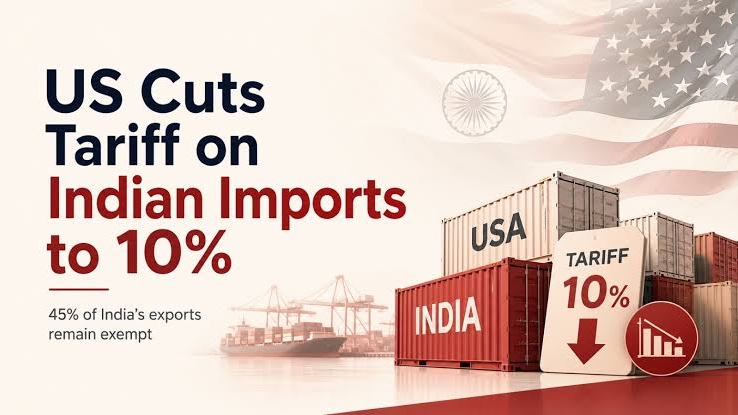
New US tariffs imposing a 10% duty have sparked concern, yet nearly half of India's exports to the US are exempt. Understanding these specifics is crucial for Indian businesses to strategize and maintain competitiveness.
Reading this article: 0s
News in 60 words
~150-word AI digest in one read
Thesis, bullets, quote & takeaway — slogan stays "60 words"
2d ·6 min read· 0 · 0 · 0
Full story
The recent announcement of new US tariffs, including a 10% duty on certain imports, has naturally sparked concern across India's vibrant export community. Initial headlines might suggest a broad setback, but a closer look reveals a more nuanced reality: nearly half of India's exports to the US have been granted significant exemptions. For Indian businesses and exporters, understanding these specifics is not just prudent, it's essential for strategizing and maintaining competitiveness in the critical American market.
This shift demands a clear-eyed assessment of what goods are truly affected, which sectors can breathe easier, and how Indian enterprises can adapt to leverage the exemptions and mitigate risks. Navigating this new trade landscape requires precision, from verifying Harmonized System (HSN) codes to exploring government support mechanisms.
The New Tariff Landscape: What's Changed?
The United States has recently implemented new tariff measures, imposing a 10% duty on a range of imported goods. This move is generally aimed at rebalancing trade relations and encouraging domestic production. For Indian exporters, this means that specific product categories will now face an additional cost when entering the US market, directly impacting their pricing and competitive edge.
These tariffs are not arbitrary; they typically target sectors where the US believes its domestic industries are vulnerable or where specific trade practices are deemed unfair. Understanding the precise list of affected goods, often identified by their HSN codes, is the first critical step for any Indian business involved in US trade. This 10% duty can significantly erode profit margins, especially for goods that already operate on tight financial windows.
Navigating the Exemptions: India's Strategic Advantage
Crucially, the new tariff regime is not a blanket imposition. A significant portion – nearly 50% – of India's total exports to the US have been explicitly exempted from these new duties. This is a substantial relief and highlights the strategic importance of various Indian goods within the US supply chain, or perhaps reflects diplomatic engagements.
Sectors benefiting from these exemptions often include critical components, raw materials, or finished goods that are not readily available from US domestic producers or are essential for American industries. For example, pharmaceuticals, certain specialty chemicals, and specific agricultural products frequently fall into this category. These exemptions provide a vital window of opportunity for Indian exporters in unaffected sectors to consolidate their market share and even explore expansion.
Impact on Key Indian Export Sectors
The impact of these tariffs will be felt unevenly across India's diverse export basket.
Affected Sectors and Their Challenges
- Textiles and Apparel: India is a major global player in textiles, with significant exports from hubs like Tirupur and Surat. A 10% duty on specific textile categories, such as certain ready-made garments or home furnishings, could make Indian products less competitive against those from countries without similar tariffs or with lower production costs. Exporters in this sector may need to absorb some costs or innovate to justify higher prices.
- Certain Engineering Goods: While broad, specific sub-sectors of engineering goods, particularly those with strong US domestic alternatives, might face the 10% duty. This could include some types of auto components or industrial machinery parts, compelling manufacturers in Chennai or Pune to re-evaluate their export strategies.
- Handicrafts and Jewellery: While many unique Indian handicrafts might be exempt due to their niche nature, certain mass-produced items or lower-value jewellery could see an impact, challenging artisans and small businesses.
Exempted/Less Affected Sectors and Opportunities
- Pharmaceuticals: India is the "pharmacy of the world," with major pharma hubs in Hyderabad and Ahmedabad. Many essential drugs, active pharmaceutical ingredients (APIs), and formulations are often considered critical imports and are likely to remain exempt. This strengthens India's position as a reliable supplier.
- IT Services: While the tariffs primarily target goods, India's robust IT and software services sector remains largely unaffected by goods tariffs, continuing its strong growth trajectory.
- Agricultural Products: Specific high-value or unique agricultural products, not directly competing with US produce, could also find themselves exempt, offering a stable export channel for farmers and agri-businesses.
Strategies for Indian Exporters to Mitigate Risk
Navigating this complex trade environment requires proactive and strategic planning.
- Thorough Due Diligence: Exporters must meticulously check the HSN codes of their products against the official US tariff lists. Consulting with the Directorate General of Foreign Trade (DGFT) or export promotion councils like FIEO can provide clarity on specific product classifications and exemptions.
- Supply Chain Optimization: Re-evaluate existing supply chains. Can sourcing be diversified to reduce reliance on tariff-affected components? Are there opportunities to add more value within India to shift the product's classification or absorb the tariff impact?
- Market Diversification: While the US remains a crucial market, exploring new export destinations or strengthening existing ties with other trade blocs can reduce over-reliance on a single market. Countries in Southeast Asia, Africa, or Europe might offer new avenues.
- Value Addition and Premiumization: For products facing tariffs, focusing on higher quality, unique designs, or brand building can help justify a higher price point, enabling businesses to absorb the 10% duty without losing competitiveness.
- Leveraging Government Support Schemes: The Indian government offers various schemes to boost exports. Exporters should explore benefits under programs like the Remission of Duties and Taxes on Exported Products (RoDTEP) scheme, which aims to refund embedded taxes, or the Production Linked Incentive (PLI) scheme, which encourages domestic manufacturing and can make products more competitive globally.
Frequently Asked Questions
Q1: How do I definitively confirm if my product is exempt from the new US tariffs?
A1: The most accurate way is to check the specific US tariff schedules and official announcements using your product's Harmonized System (HSN) code. These codes are globally recognized for classifying goods. You can consult with your customs broker, the DGFT, or relevant export promotion councils (e.g., AEPC for apparel, Pharmexcil for pharma) for expert guidance and the latest updated lists.
Q2: What immediate steps should Indian exporters take if their products are affected by the 10% duty?
A2: Firstly, conduct a thorough cost-benefit analysis to understand the exact impact on your margins. Secondly, engage with your US buyers to discuss potential price adjustments or burden-sharing. Thirdly, explore ways to optimize your production costs within India or seek government incentives like RoDTEP to partially offset the duty. Also, review your current contracts for any clauses related to changes in trade policy.
Q3: Are these new tariffs expected to be permanent, or could they change in the future?
A3: Trade policies, especially tariffs, are often subject to ongoing negotiations and geopolitical developments. While implemented, their permanence is never guaranteed. They can be reviewed, modified, or even revoked based on economic conditions, bilateral discussions, or changes in administration. Indian exporters should stay updated on trade policy news and be prepared to adapt to evolving scenarios.
Conclusion
The new US tariffs, coupled with their significant exemptions, present both challenges and opportunities for Indian exporters. While certain sectors will need to strategize carefully to absorb the 10% duty, others can leverage their exempt status to strengthen their presence in the American market. The key lies in precise understanding, proactive adaptation, and strategic diversification. India's resilience and entrepreneurial spirit will undoubtedly guide its businesses through this evolving global trade landscape, ensuring continued growth and success.
Support creators
Consider tipping writers on ContentVerse to support quality content.
Was this helpful?
Your feedback helps us improve content for everyone.
Liked this piece?
Tip Dhananjay for the work
100% goes to the creator. Send a one-time tip in rupees and back the writing you love.
Dhananjay Chauhan
0 followers · 0 blogs
Creator on ContentVerse. Building, writing, and shipping in public.
0 followers

Discussion