
Ending Cervical Cancer in India: HPV Vaccine, Cost, and Screening Guide
Cervical cancer remains a major health challenge for Indian women, yet it is almost entirely preventable through vaccination and timely screening. With recent government commitments and affordable indigenous vaccines like Cervavac, India stands on the threshold of a major healthcare breakthrough.
Reading this article: 0s
News in 60 words
~150-word AI digest in one read
Thesis, bullets, quote & takeaway — slogan stays "60 words"
1h ·5 min read· 0 · 0 · 0
Full story
Cervical cancer remains one of the most pressing public health challenges for women in India, accounting for nearly 20 percent of all female cancer cases in the country. However, unlike many other forms of cancer, cervical cancer is almost entirely preventable. The renewed commitment by Union Health Minister JP Nadda to eliminate cervical cancer as a public health threat has sparked nationwide conversation around prevention, early detection, and public health infrastructure.
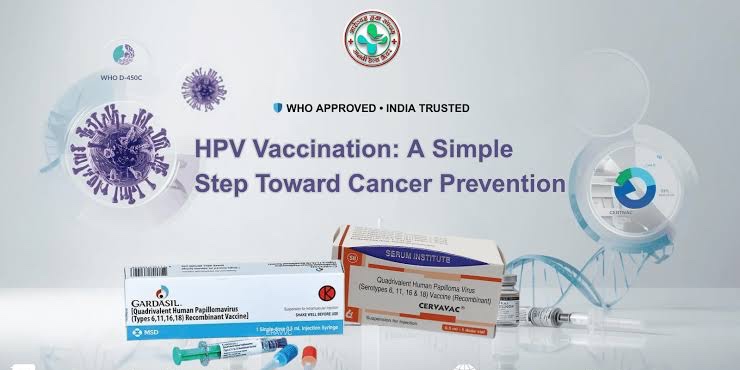
With the launch of India's first indigenously developed Human Papillomavirus (HPV) vaccine, Cervavac, alongside established options like Gardasil, Indian families now have accessible tools to protect the next generation. Understanding how the virus spreads, when to vaccinate, and which screening tests to take can drastically reduce the burden of this disease across urban and rural India.
Understanding Cervical Cancer and the HPV Connection
Cervical cancer develops in the cells of the cervix, the lower part of the uterus that connects to the vagina. Persistent infection with high-risk strains of Human Papillomavirus (HPV)—specifically types 16 and 18—is responsible for over 80 percent of cervical cancer cases in India.
HPV is an extremely common virus transmitted through close skin-to-skin contact, often during sexual activity. Most HPV infections clear up naturally within two years as the body's immune system fights them off. However, when a high-risk HPV strain persists over several years, it can cause cellular changes in the cervix that slowly turn into pre-cancerous lesions and eventually invasive cancer.
Because early-stage cervical cancer rarely presents obvious symptoms, regular screening and proactive vaccination before exposure to the virus are the most effective defenses.
HPV Vaccines in India: Cervavac vs. Gardasil
Vaccination against HPV offers powerful protection against the primary cancer-causing strains of the virus. In India, two main vaccine brands are widely discussed in clinical practice.
1. Cervavac (Serum Institute of India)
- Type: Quadrivalent vaccine (protects against HPV strains 6, 11, 16, and 18).
- Cost: Approximately ₹2,000 per dose, making it significantly more affordable than imported alternatives.
- Availability: Available across major private hospitals, pediatric clinics, and gynecological centers, with plans for integration into government health centers.
2. Gardasil and Gardasil 9 (MSD)
- Type: Gardasil 4 (quadrivalent) and Gardasil 9 (nonavalent, covering 9 HPV strains).
- Cost: Ranges between ₹3,500 and ₹10,000 per dose depending on the specific variant.
- Availability: Widely stocked across private healthcare facilities in metro cities like Mumbai, Bengaluru, and Delhi-NCR.
Recommended Dosage Schedule
- Girls and boys aged 9 to 14 years: 2 doses given 6 months apart. Vaccination at this age produces the strongest immune response.
- Individuals aged 15 to 26 years: 3 doses given over a 6-month period (0, 2, and 6 months).
- Adults aged 27 to 45 years: Vaccination can be considered after consultation with a physician, though efficacy is highest when administered before any HPV exposure.
Screening Guidelines for Indian Women
While vaccination prevents new infections, routine screening remains crucial for adult women who may already have been exposed to HPV. Screening identifies pre-cancerous changes early, when treatment is simple and highly effective.
1. Pap Smear (Cytology)
- Target Group: Women aged 21 to 65.
- Frequency: Every 3 years.
- Cost: ₹800 to ₹2,500 in private laboratories like Dr Lal PathLabs or Metropolis.
2. HPV DNA Test
- Target Group: Women aged 30 to 65.
- Frequency: Every 5 years (either alone or co-tested with a Pap smear).
- Cost: ₹1,500 to ₹3,500.
3. Visual Inspection with Acetic Acid (VIA)
- Target Group: Women in low-resource or rural settings.
- Frequency: Every 3 to 5 years.
- Cost: Free or minimal cost at government Primary Health Centres (PHCs) and Community Health Centres (CHCs).
During VIA, a trained health worker applies a mild dilute vinegar solution to the cervix. Any abnormal tissue turns white momentarily, allowing immediate visual detection and prompt referral for treatment.
Government Initiatives and Public Healthcare Integration
India's Ministry of Health and Family Welfare has taken deliberate steps to combat non-communicable diseases (NCDs), including cervical cancer, through public healthcare frameworks.
- Ayushman Arogya Mandirs: Formerly known as Health and Wellness Centres, these facilities offer community-level screening using VIA for women over the age of 30.
- Ayushman Bharat (PM-JAY): Low-income families enrolled in the PM-JAY scheme receive coverage for cervical cancer surgical treatments, chemotherapy, and radiation therapy at empanelled public and private hospitals.
- National NCD Screening Portal: Enables frontline health workers, such as Accredited Social Health Activists (ASHAs) and Auxiliary Nurse Midwives (ANMs), to track screening compliance in rural communities.
Actionable Steps for Indian Families
To actively safeguard family members against cervical cancer, consider the following practical steps:
- Vaccinate Adolescents: Consult a pediatrician or gynecologist to schedule HPV vaccination for daughters and sons between 9 and 14 years old.
- Prioritize Routine Screenings: Women over 30 should schedule a Pap smear or HPV DNA test every 3 to 5 years, even if no symptoms are present.
- Promote Awareness: Discuss reproductive health openly within families to break social stigmas around gynecological consultations.
- Utilize Local Health Facilities: Visit local Ayushman Arogya Mandirs or government civil hospitals for accessible screening programs.
Frequently Asked Questions
Is the HPV vaccine safe for young girls?
Yes, global health authorities, including the World Health Organization (WHO) and the Indian Academy of Pediatrics (IAP), confirm that HPV vaccines have an excellent safety profile. Common side effects are mild and temporary, such as soreness at the injection site or mild fever.
Can married or older women still get the HPV vaccine?
Women up to age 45 can receive the HPV vaccine after discussing it with their gynecologist. However, the vaccine does not treat existing HPV infections, which is why routine screening remains essential regardless of vaccination status.
Are cervical cancer screenings covered under government health schemes?
Yes, screening via Visual Inspection with Acetic Acid (VIA) is offered free of charge at government Primary Health Centres and Ayushman Arogya Mandirs across India. Diagnostic and treatment procedures are covered under the Ayushman Bharat PM-JAY card for eligible beneficiaries.
Conclusion
Eliminating cervical cancer in India is no longer an unrealistic ambition—it is an achievable public health goal. With affordable indigenous options like Cervavac, structured screening programs at primary health centers, and high-level policy backing, Indian women have greater access to preventative healthcare than ever before. Taking timely action today through vaccination and regular checks can protect generations of women across the nation.
Support creators
If you found this guide helpful, consider supporting independent healthcare journalism by tipping the author on ContentVerse India.
Was this helpful?
Your feedback helps us improve content for everyone.
Liked this piece?
Tip Dhananjay for the work
100% goes to the creator. Send a one-time tip in rupees and back the writing you love.
Dhananjay Singh
0 followers · 0 blogs
Creator on ContentVerse. Building, writing, and shipping in public.
0 followers

Discussion