
India e-Visa Expansion: 11 New Entry Ports Added for Travelers
The Ministry of Home Affairs has expanded India's digital immigration system by adding 11 new entry ports, bringing the total to 88 approved checkpoints. This update makes international travel to Tier-2 cities, regional pilgrimage centers, and commercial hubs seamless.
Reading this article: 0s
News in 60 words
~150-word AI digest in one read
Thesis, bullets, quote & takeaway — slogan stays "60 words"
2h ·5 min read· 0 · 0 · 0
Full story
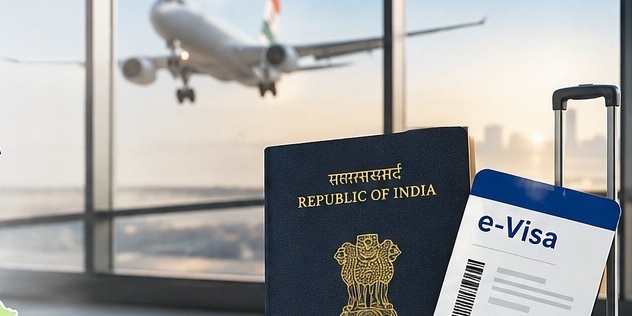
The Ministry of Home Affairs (MHA) recently expanded India's digital immigration footprint by authorizing 11 new entry ports for foreign passport holders traveling on an electronic visa (e-Visa). This strategic move elevates the total number of approved e-Visa entry points to 88 across the country, comprising major international airports, designated seaports, and land border checkpoints.
For foreign tourists, business delegates, wellness seekers, and Non-Resident Indians (NRIs) traveling with foreign passports, this expansion marks a major leap in accessibility. Instead of routing through congested metro hubs like Delhi (DEL) or Mumbai (BOM), international travelers can now fly directly or dock closer to their final regional destinations across India.
Understanding the 11 New Entry Ports
The addition of 11 new entry checkpoints reflects India's push to decentralize international tourism and boost regional economic corridors. The new ports strategically connect emerging economic hubs, spiritual circuits, and coastal gateways.
Key Regions Impacted by the Expansion
- Emerging Aviation Hubs: Newly added Tier-2 and Tier-3 airports now accept e-Visa holders, drastically cutting domestic transit time for incoming international visitors.
- Spiritual and Cultural Corridors: Direct entry points near key pilgrimage routes, such as the Buddhist Circuit in Uttar Pradesh and Bihar, allow seamless access for international pilgrims.
- Maritime and Cruise Terminals: Select seaports have upgraded their immigration infrastructure to accommodate the rising demand for international ocean liners and luxury river cruises entering Indian waters.
By spreading international arrivals across 88 entry ports, the government aims to reduce bottlenecking at primary gateways while giving regional hospitality sectors in states like Gujarat, Rajasthan, Kerala, and Tamil Nadu a direct boost.
Types of Indian e-Visas Covered
The expansion applies across all major categories of the Indian e-Visa facility, which must be obtained online prior to departure:
- e-Tourist Visa: Available for 30 days (double entry), 1 year (multiple entries), or 5 years (multiple entries) for sightseeing, casual family visits, and short-term yoga programs.
- e-Business Visa: Valid for 1 year with multiple entries, allowing business professionals to attend meetings, trade fairs, and commercial ventures (stay up to 180 days per visit).
- e-Conference Visa: Valid for 30 days with single entry, tailored for delegates attending government-sponsored workshops and global seminars.
- e-Medical & e-Medical Attendant Visa: Valid for 60 days with triple entry for foreign patients seeking treatments at accredited Indian hospitals, along with accompanying attendants.
How to Apply for an Indian e-Visa: A Step-by-Step Guide
Applying for an Indian e-Visa remains a seamless, paperless process administered entirely online by the Government of India.
1. Gather Required Documents
Ensure your passport has at least six months of validity from your planned date of arrival in India and contains at least two blank pages. You will need a digital color passport photo (JPEG) and a PDF scan of your passport's bio page. Business and medical visas require supporting letters or hospital invitations.
2. Submit Application on the Official Portal
Visit the official Government of India portal (indianvisaonline.gov.in). Be cautious of third-party scam websites charging exorbitant fees; the official site is the only legitimate authority for processing Indian e-Visas. Submit your application at least 4 to 120 days before your intended travel date.
3. Pay the Government Processing Fee
Visa fees vary based on nationality, visa duration, and season. For example, a 30-day e-Tourist visa for many countries costs between $10 and $25 (approx. ₹830 to ₹2,075) depending on peak or lean seasons, while 1-year and 5-year visas range from $40 to $80 (approx. ₹3,320 to ₹6,640).
4. Receive Electronic Travel Authorization (ETA)
Once approved (typically within 72 hours), you will receive an Electronic Travel Authorization (ETA) via email. Print a copy of this ETA to present at the departure airport and upon arrival in India.
Crucial Entry and Exit Rules for e-Visa Travelers
While entry rules have strict port restrictions, exit rules offer complete operational flexibility for travelers.
- Entry Specificity: You must enter India through one of the 88 designated e-Visa entry ports (airports, seaports, or land immigration posts). Attempting to enter through a non-designated port will lead to entry refusal.
- Exit Flexibility: Once you have cleared immigration, you can exit India from any authorized Immigration Check Post (ICP) in the country, even if it is not among the designated 88 entry ports.
- Biometric Enrollment: Upon arrival at the designated entry port, immigration authorities will capture your biometric details (fingerprints and facial scan) before stamping your passport.
Frequently Asked Questions (FAQs)
Can I exit India through a port that is not listed in the 88 e-Visa entry ports?
Yes. The designated list of 88 ports applies specifically to your entry into India. For your exit, you can leave through any designated Immigration Check Post (ICP) in India, including land borders and secondary seaports.
Do Overseas Citizen of India (OCI) cardholders need an e-Visa?
No. OCI cardholders do not require a visa or e-Visa to enter India. They enjoy lifelong multiple-entry travel privileges and can enter through any operational immigration port in India.
What should I do if my flight is diverted to a non-e-Visa airport?
In the rare event of an emergency landing or flight diversion to a non-designated airport, Indian immigration authorities will issue temporary landing permits (TLPs) to ensure passenger safety and processing.
Strategic Impact on Indian Travel Industry
This expansion of entry checkpoints directly benefits regional travel operators, boutique resort networks, and transportation apps like MakeMyTrip, Ola, and Uber operating in Tier-2 Indian cities. Travelers can now book direct international flights into secondary hubs, bypassing lengthy domestic connections and reducing total travel expenses. As India continues to modernise its border management infrastructure under the MHA's vision, international travel to the subcontinent has never been more straightforward.
Support creators
If you found this guide helpful, consider tipping the writer on ContentVerse India to support independent travel journalism!
Was this helpful?
Your feedback helps us improve content for everyone.
Liked this piece?
Tip Dhananjay for the work
100% goes to the creator. Send a one-time tip in rupees and back the writing you love.
Dhananjay Singh
0 followers · 0 blogs
Creator on ContentVerse. Building, writing, and shipping in public.
0 followers


Discussion