
Is AI Replacing Indian IT Jobs? How Techies Can AI-Proof Their Careers in 2026
As artificial intelligence reshapes software development, Indian tech professionals face an unprecedented industry transition. Learn how to upgrade your skill set and protect your career using actionable strategies tailored for India's evolving tech ecosystem.
Reading this article: 0s
News in 60 words
~150-word AI digest in one read
Thesis, bullets, quote & takeaway — slogan stays "60 words"
1h ·5 min read· 0 · 0 · 0
Full story
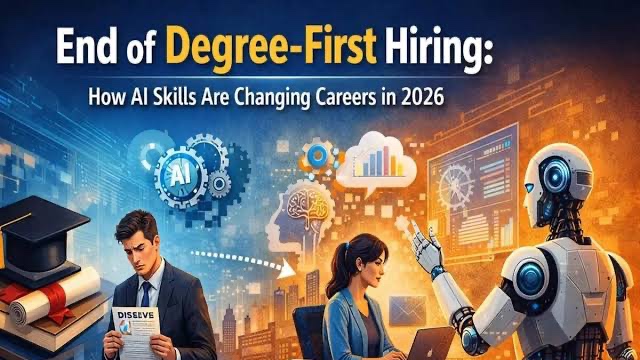
Recent global coverage from the Financial Times and intense panel discussions at the India AI Impact Summit have highlighted a growing anxiety across India's premier tech hubs. From Electronic City in Bengaluru to HITEC City in Hyderabad, software engineers and fresh engineering graduates are asking the same central question: Is generative artificial intelligence going to render traditional Indian IT roles obsolete by 2026?
While alarming headlines predict mass layoffs, the operational reality on the ground tells a far more nuanced story. AI is not wiping out tech careers outright; rather, it is executing a rapid, structural rewrite of what an IT professional does daily. Basic code writing, manual software testing, and routine L1/L2 technical support are being automated at scale. However, specialized system design, complex problem-solving, and AI integration are seeing unprecedented demand.
To thrive in this shifting landscape, Indian IT professionals must move away from defensive anxiety and transition toward proactive skill adaptation.
The Changing Landscape of Indian IT Services
For decades, India's tier-1 IT services giants—such as TCS, Infosys, Wipro, and HCLTech—built their revenue models on headcount-driven delivery. Global enterprises outsourced routine software maintenance, migration, and quality assurance to cost-effective teams across Indian cities.
Autonomous coding assistants, large language models (LLMs), and automated testing frameworks have radically altered this billable-hours paradigm. Automated tools now write baseline code, clean datasets, and draft unit tests in seconds. Consequently, entry-level roles focused solely on basic syntax coding or manual QA execution are shrinking dramatically.
Instead of hiring thousands of freshers to perform repetitive programming tasks, tech services companies are deploying smaller, highly skilled teams equipped with AI tools. The expectation now is that a single engineer, leveraging AI workflows, should match the productivity output of three junior developers from a few years ago.
High-Risk vs High-Demand IT Roles in 2026
Understanding where your current role sits on the risk spectrum is the critical first step toward career resilience.
Vulnerable Tech Roles
- Manual Software QA & Automation Testing: Script-writing and routine bug testing are increasingly managed by autonomous AI agents.
- Basic Full-Stack Maintenance: Writing boilerplate HTML/CSS/JavaScript or routine SQL queries without deep architecture knowledge.
- L1/L2 Support Desk: Routine ticket classification, script-based troubleshooting, and legacy system log analysis are now handled by fine-tuned enterprise bots.
Expanding High-Value Roles
- AI/ML Integration Engineers: Professionals who can fine-tune open-source models (like Llama or Mistral) and integrate them securely into corporate enterprise pipelines.
- Cloud & Infrastructure Architects: Experts proficient in managing hybrid cloud infrastructure on AWS, Azure, or GCP while controlling microservice latency and compute costs.
- MLOps and Data Engineers: Engineers capable of setting up robust data pipelines, model monitoring systems, and feature stores.
- Cyber Security & Compliance Specialists: As AI adoption expands corporate attack surfaces, securing LLMs against prompt injection and data leaks is a top priority.
Practical Steps to AI-Proof Your Career
Transitioning into a secure, high-value tech trajectory requires moving beyond basic syntax mastery toward domain-specific engineering depth.
1. Master AI-Assisted Workflows
Do not view AI tools as rivals; make them core components of your daily toolkit. Develop fluency in generative coding platforms like GitHub Copilot, Cursor, and enterprise LLM API workflows. Focus on becoming a high-level code reviewer and system designer who uses AI to produce high-quality output faster.
2. Pivot Toward MLOps and Data Systems
Writing machine learning models is only a fraction of the challenge. The real enterprise bottleneck lies in pipeline management. Learning MLOps—frameworks like MLflow, Kubeflow, vector databases (Pinecone, Qdrant), and orchestrators—places you directly in the high-pay, high-demand segment of tech employment.
3. Deepen Domain-Specific Expertise
Generic coding skill sets are easily replaceable. Deep domain expertise in sectors like Banking, Financial Services, and Insurance (BFSI), Healthcare tech, or Supply Chain logic is not. When you combine domain knowledge with AI capability, your value to global clients increases exponentially.
4. Upgrade System Design Capabilities
AI can generate individual functions effortlessly, but it struggles to conceptualize end-to-end, resilient system architecture. Investing time in advanced system design, database indexing, distributed ledger systems, and low-latency API development provides long-term career insulation.
Leveraging Indian Upskilling Ecosystems
Upgrading your skill set does not require taking a career break or spending tens of lakhs on international degrees. India's digital upskilling framework offers multiple structured learning pathways:
- NASSCOM FutureSkills Prime: An initiative backed by the Ministry of Electronics and IT (MeitY) offering subsidized, industry-recognized courses in Deep Learning, Cloud Architecture, and Cybersecurity.
- SWAYAM and NPTEL: Free academic courses offered directly by IIT professors covering fundamental data science, neural networks, and algorithm design.
- Practical Hands-On Building: Platforms like Hugging Face, GitHub, and Kaggle allow you to build verifiable, public portfolios of AI projects that carry far more weight with engineering managers than basic resume certifications.
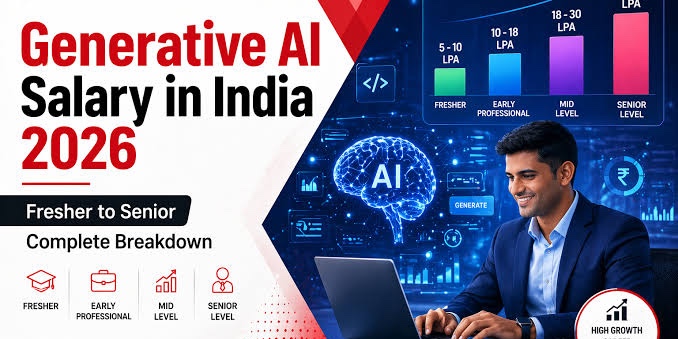
An early mid-level developer earning ₹8–12 LPA can reasonably aim for senior AI engineering or MLOps positions commanding ₹22–38 LPA by systematically building a public codebase and earning practical architecture credentials.
Frequently Asked Questions (FAQs)
Will freshers still get hired in the Indian IT sector?
Yes, but the hiring criteria have fundamentally changed. IT firms are seeking freshers who possess strong system design fundamentals, problem-solving skills, and familiarity with AI-assisted software development, rather than basic syntax memorization.
What tech skills offer the strongest salary growth in India?
Specialized capabilities in MLOps, LLM fine-tuning, vector database engineering, cloud security architecture, and distributed system design command the highest compensation premiums in hubs like Bengaluru, Hyderabad, and Pune.
How long does it take a traditional developer to transition into AI engineering?
With dedicated study of 10–12 hours a week, a software developer with solid Python or C++ fundamentals can transition into an entry-to-mid-level AI engineering or MLOps role in 6 to 9 months.
Conclusion
The narrative that AI will completely eliminate Indian IT is inaccurate. What AI will eliminate is stagnant engineering practice. Indian tech professionals who actively integrate AI capabilities into their daily workflows, deepen their core software architecture skills, and focus on solving real-world business problems will find 2026 to be an era of incredible opportunity and accelerated career growth.
Support creators
Enjoyed this deep dive? Support independent tech journalism on ContentVerse India by tipping our writers today.
Was this helpful?
Your feedback helps us improve content for everyone.
Liked this piece?
Tip Dhananjay for the work
100% goes to the creator. Send a one-time tip in rupees and back the writing you love.
Dhananjay Singh
0 followers · 0 blogs
Creator on ContentVerse. Building, writing, and shipping in public.
0 followers

Discussion