
Why Golang is Becoming the Go-To Language for AI Coding Tools
Google recently highlighted Go as the ideal language for building AI-assisted software development tools. Discover why Indian developers and startups are adopting Golang for next-generation AI infrastructure.
Reading this article: 0s
News in 60 words
~150-word AI digest in one read
Thesis, bullets, quote & takeaway — slogan stays "60 words"
2h ·5 min read· 0 · 0 · 0
Full story
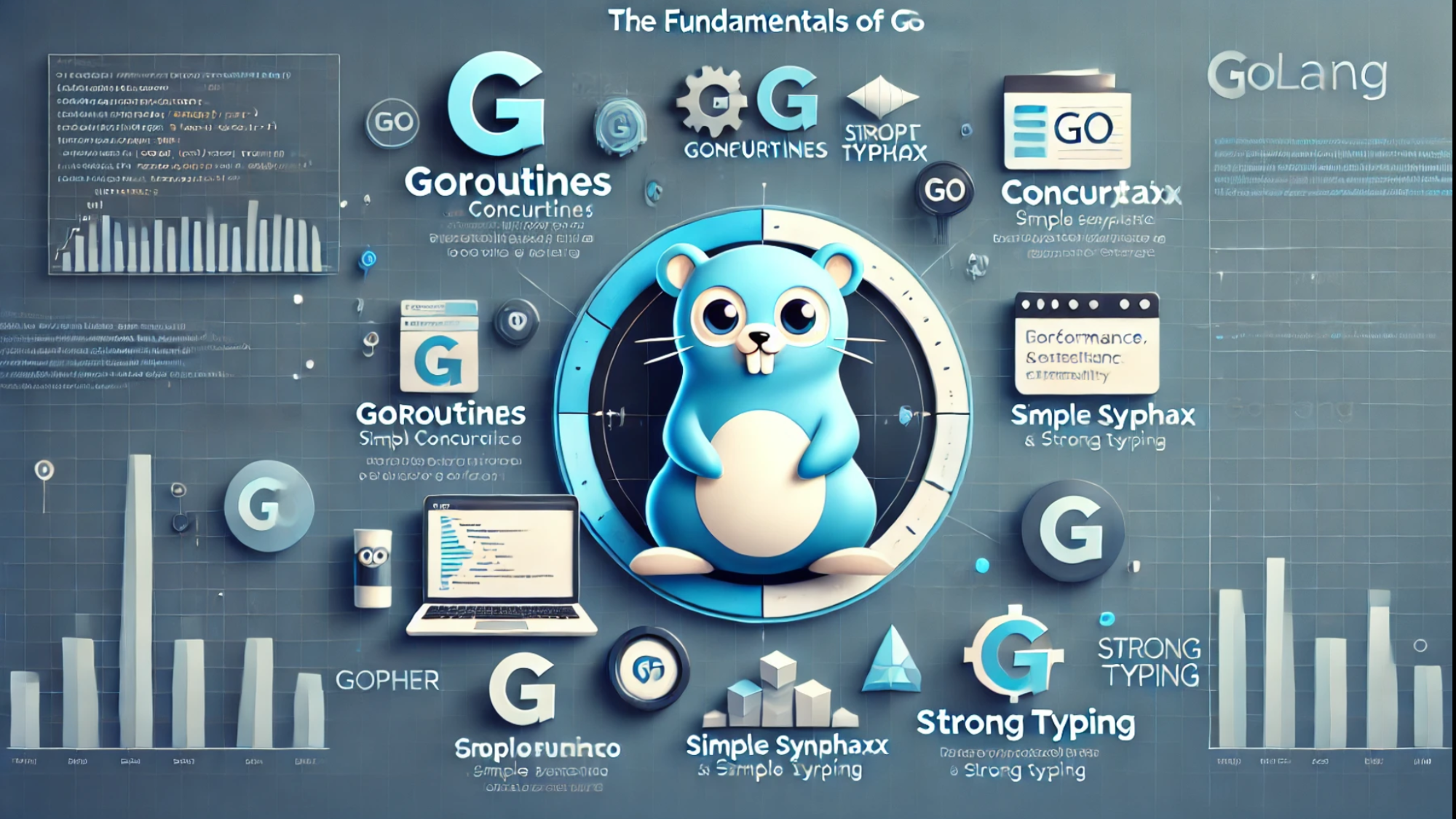
Google recently made waves across the global developer community by declaring Go (Golang) as the optimal programming language for building AI-assisted software engineering tools. While Python continues to dominate machine learning model training and research, the engineering layer that powers modern AI infrastructure—from coding assistants and context parsers to local LLM runners—is rapidly shifting toward Go.
For developers and engineering leads across Indian tech hubs like Bengaluru, Hyderabad, Pune, and Gurugram, this shift marks a pivotal turning point. Building scalable, low-latency developer tools requires performance, minimal memory footprints, and effortless concurrency. In this article, we analyze why Golang is emerging as the backbone of AI developer tooling and what this trend means for your tech career in India.
The Shift: Python for Training, Go for AI Infrastructure
To understand Go’s sudden rise in the AI landscape, it is crucial to separate AI research from AI tool engineering. Python remains unmatched for model training, data manipulation, and matrix operations thanks to deep-learning libraries like PyTorch and TensorFlow. However, once a model is trained, running it efficiently inside developer tools introduces an entirely different set of technical challenges.
AI coding assistants, CLI tools, and agentic workflows require fast startup times, single-binary distribution, and strict memory efficiency. Interpreted languages like Python often struggle with high memory overhead and slow cold-starts when integrated into lightweight developer environments.
Go bridges this gap seamlessly. Leading AI tooling projects such as Ollama (for running local LLMs), LocalAI, Docker AI extensions, and Kubernetes-native AI orchestrators are written entirely in Go. Go delivers compiled C-like execution speed while maintaining a clean, highly readable syntax.
Concurrency and Low Latency for Streaming AI Agents
Modern AI developer tools no longer just return a single text completion. Today’s AI agents perform complex multi-step reasoning, including simultaneous web searches, vector database lookups, abstract syntax tree (AST) code parsing, and real-time token streaming back to your IDE.
Executing these multi-step agentic workflows requires exceptional concurrent programming models. Go’s lightweight concurrency primitives—goroutines and channels—make managing thousands of parallel asynchronous tasks effortless without the thread context-switching overhead seen in traditional languages.
Why Go Outperforms Python in AI Tool Workflows
- Goroutines vs Asyncio: Goroutines consume as little as 2 KB of memory per routine, allowing AI tools to manage hundreds of concurrent agent loops on standard developer laptops.
- Zero External Runtime: Go compiles down to a single static binary. Users can run AI CLI utilities instantly without managing virtual environments or pip dependencies.
- Predictable Garbage Collection: Low-latency garbage collection ensures continuous token streaming to code editors without sudden micro-stutters.
- Low Cloud Infrastructure Costs: For Indian startups deploying AI middleware microservices on AWS or Google Cloud, Go services drastically reduce RAM usage, directly lowering cloud billings in ₹ lakhs every month.
Deterministic Parsing and LLM Code Generation Alignment
One underrated reason Google champions Go for AI coding tools is how well Go aligns with Large Language Models themselves. Go was engineered at Google with simplicity and minimalism as core principles. It features only 25 keywords, strict formatting standardisation through gofmt, and no complex macro metaprogramming.
Because Go's syntax is highly structured and deterministic, LLMs generate syntactically correct Go code with significantly lower hallucination rates compared to languages with complex meta-object protocols. Furthermore, Go’s standard library includes robust built-in packages for parsing, tokenizing, and evaluating code syntax trees (go/parser, go/ast).
When building an AI agent that needs to analyze a 100,000-line codebase, feed precise context windows into an LLM, and instantly verify generated code via native compilers, Go provides unmatched tooling out of the box.
What This Means for the Indian Tech Job Market
India’s software ecosystem is evolving from maintenance and outsourcing toward product-led AI platform engineering. SaaS companies in Bengaluru and NCR are actively looking for backend engineers who can build low-latency API gateways, agent orchestrators, and AI-powered dev-tools.
Engineers with strong Go expertise combined with foundational knowledge of LLM APIs, vector search, and Retrieval-Augmented Generation (RAG) are commanding strong salary premiums in India. Full-stack and backend Go engineers with 3–6 years of experience routinely see compensation packages ranging between ₹18 Lakhs to ₹40 Lakhs LPA in top-tier product firms.
Actionable Roadmap to Get Started
- Master Go Fundamentals: Focus heavily on pointer mechanics, struct interfaces, context management, and concurrency primitives (goroutines, channels, sync groups).
- Explore AI Go SDKs: Experiment with official Go SDKs for OpenAI, Anthropic, and Google GenAI, as well as community frameworks like LangChain-Go.
- Study Open-Source Infrastructure: Inspect open-source Go projects like
ollama/ollamaortmc/langchaingoon GitHub to understand production-grade AI system design. - Build a Local AI Tool: Create a lightweight CLI tool in Go that scans a git diff, runs static code analysis, and generates automated pull-request summaries using an LLM.
Frequently Asked Questions (FAQs)
Is Golang replacing Python for Artificial Intelligence?
No, Go is not replacing Python for model building, tensor calculations, or data science. Python remains the primary language for AI research and training. Go is becoming the dominant choice for the platform layer, AI server infrastructure, CLI tools, and agent execution engines.
Should engineering freshers in India learn Go or Python first?
Freshers interested in core Machine Learning research and data engineering should start with Python. However, students targeting backend development, cloud-native engineering, systems programming, and AI dev-tools will benefit greatly from learning Go alongside Python.
Which top tech companies use Go for AI and backend systems?
Global technology leaders including Google, Uber, Netflix, and Docker use Go extensively. In India, tech giants and unicorns like Swiggy, Zomato, Razorpay, PhonePe, and Flipkart rely heavily on Go for high-throughput, low-latency microservices.
Conclusion
As AI shifts from standalone chat interfaces into deeply integrated developer workflows, the demand for fast, lightweight, and concurrent infrastructure language has never been higher. Google's endorsement of Go for AI coding tools reflects a broader industry consensus: Python generates the intelligence, but Go delivers it to the developer.
By mastering Golang and understanding how to construct efficient AI middleware, Indian software engineers can position themselves at the forefront of the global AI engineering revolution.
Support creators
If you enjoyed this technical breakdown, consider tipping the author on ContentVerse India to support quality, independent tech journalism.
Was this helpful?
Your feedback helps us improve content for everyone.
Liked this piece?
Tip Dhananjay for the work
100% goes to the creator. Send a one-time tip in rupees and back the writing you love.
Dhananjay Singh
0 followers · 0 blogs
Creator on ContentVerse. Building, writing, and shipping in public.
0 followers

Discussion