
Is AI Threatening Indian IT Jobs? Key Tech Roles with Rising Salaries in 2026
The Indian IT ecosystem is undergoing a dramatic structural pivot as generative automation reshapes entry-level engineering requirements. While traditional software maintenance roles experience hiring contractions, specialized AI architects and data security experts are commanding record compensation packages across Indian tech hubs.
Reading this article: 0s
News in 60 words
~150-word AI digest in one read
Thesis, bullets, quote & takeaway — slogan stays "60 words"
2h ·5 min read· 0 · 0 · 0
Full story
India's $250-billion IT services and technology ecosystem is navigating its most significant structural evolution in two decades. From Manyata Tech Park in Bengaluru to HITEC City in Hyderabad, IT service majors and Global Capability Centers (GCCs) are rapidly integrating generative AI frameworks into software delivery cycles. For engineering graduates and seasoned IT professionals across India, this transition brings both understandable anxiety and unparalleled economic opportunity.
While sensationalist headlines warn of mass layoffs, market reality presents a far more nuanced picture. Traditional, repetitive entry-level coding and manual testing roles are indeed seeing hiring slowdowns. Simultaneously, compensation packages for specialized engineers capable of architecting, securing, and scaling AI infrastructure are hitting historical highs across major Indian metros.
The Entry-Level Shift: Why Campus Hiring Models Are Changing
For decades, top Indian IT service firms built their operating model on mass campus recruitment. Fresh engineering graduates were onboarded in large batches, trained in legacy programming stacks, and deployed onto maintenance contracts. Automated code generation tools and intelligent deployment pipelines have fundamentally altered this dynamic.
Today, AI coding assistants can generate boilerplate code, execute automated unit tests, and resolve simple technical tickets in seconds. Consequently, tier-1 IT services giants are hiring fewer freshers for generic maintenance roles, raising the technical baseline required for campus placements.
- Higher Skill Baselines: Freshers are now expected to possess foundational knowledge in cloud computing, API integration, and version control before day one.
- Reduction in Manual Quality Assurance: Manual testing roles are shrinking rapidly as autonomous testing agents handle regression and cross-platform verification.
- Focus on Immediate Productivity: Companies are prioritizing candidates who can write prompt pipelines, manage clean databases, and understand modern software architecture without requiring extended benchmark training.
High-Growth Tech Roles Command Top Salaries in 2026
While generic entry-level positions face headwinds, demand for specialized talent drastically outstrips supply across India. Corporate investment is flowing heavily into high-impact tech domains, driving lucrative salary growth for skilled engineers.
1. AI Systems & RAG Architects
Enterprise organizations are moving beyond basic API calls to construct customized Retrieval-Augmented Generation (RAG) platforms that tap into secure internal data. Engineers who can design high-throughput vector databases and optimize fine-tuned models are seeing extraordinary market demand.
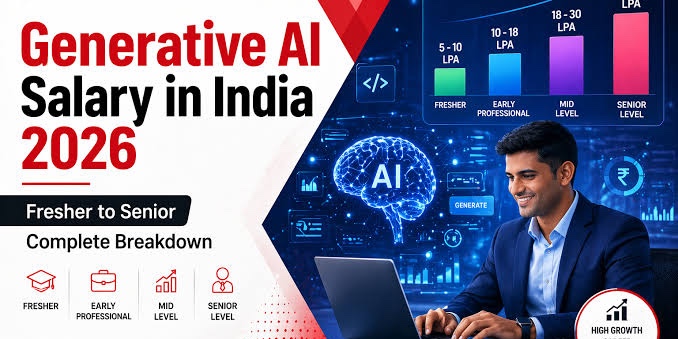
- Average Compensation: ₹25 LPA to ₹55 LPA for mid-to-senior levels in hubs like Bengaluru and Gurugram.
- Core Requirements: Vector databases (Pinecone, Qdrant), Python, LangChain, PyTorch, and distributed cloud computing.
2. Cybersecurity & AI Risk Governance Engineers
As companies deploy autonomous agents, vulnerabilities such as prompt injection, data poisoning, and unauthorized model extraction present major commercial threats. Organizations operating under stringent regulatory oversight are aggressively recruiting security specialists.
- Average Compensation: ₹18 LPA to ₹40 LPA in Pune, Hyderabad, and the NCR region.
- Core Requirements: Threat modeling, cloud security, network compliance, zero-trust architecture, and AI ethics frameworks.
3. MLOps & Distributed Infrastructure Engineers
Building a machine learning model in a sandbox is straightforward, but running that model reliably for millions of daily active users requires robust infrastructure. MLOps engineers bridge the gap between data science teams and continuous deployment pipelines.
- Average Compensation: ₹16 LPA to ₹35 LPA across major Tier-1 Indian tech cities.
- Core Requirements: Kubernetes, Docker, AWS/Azure/GCP MLOps pipelines, CI/CD, and real-time model drift monitoring.
4. Enterprise Data Engineers
AI capabilities are only as effective as the underlying data architecture. Large-scale data transformation, pipeline optimization, and data governance remain critical bottlenecks for enterprise digitalization projects across BFSI and healthcare sectors.
- Average Compensation: ₹14 LPA to ₹30 LPA.
- Core Requirements: Apache Spark, Snowflake, SQL, dbt, and modern data warehouse architectures.
Strategic Upskilling Roadmap for Indian Tech Professionals
Navigating this shifting market requires a deliberate upskilling strategy. Rather than attempting to learn every emerging tool, IT engineers should focus on building durable architectural skills complemented by practical AI implementation knowledge.
- Master the Fundamentals: Deepen your understanding of core data structures, system design, and database normalization before chasing niche frameworks.
- Leverage Indian Government & Open Initiatives: Platforms like NPTEL, Swayam, and NASSCOM FutureSkills Prime offer high-quality certification programs aligned with industry standards.
- Build Public Proof of Work: Theoretical knowledge carries little weight in modern technical interviews. Host working microservices, public GitHub repositories, and open-source contributions that demonstrate real-world integration skills.
- Understand Business Context: The highest-paid engineers in India are those who translate technical capabilities into tangible business efficiency, reduced operational costs, or new revenue channels.
The Expansion of GCCs in Tier-2 Indian Metros
Another significant development reshaping Indian tech employment is the rapid growth of Global Capability Centers (GCCs). Enterprise multinationals are expanding technical centers beyond traditional hubs into cities like Jaipur, Kochi, Ahmedabad, and Coimbatore.
These GCCs are actively recruiting local talent for specialized global software engineering initiatives. By offering competitive compensation alongside a lower cost of living, these regional centers provide a sustainable alternative to overcrowded primary metros, changing career trajectories for thousands of regional tech workers.
Frequently Asked Questions
Will AI replace software development engineers completely in India?
No. AI is automating repetitive coding tasks, documentation, and basic debugging, but it cannot replace complex system architecture, cross-team domain reasoning, and business logic execution. Engineers who adapt by learning to orchestrate AI tools will find themselves in higher demand.
What programming languages should freshers focus on in 2026?
Python remains essential for data engineering, backend APIs, and machine learning integration. TypeScript/JavaScript and Go are equally critical for scalable cloud-native architectures and modern web applications.
How can mid-level software testers transition into higher-paying roles?
QA engineers should transition from manual test execution toward automated test engineering, performance testing, and MLOps. Learning Python, API automation frameworks (like Playwright), and CI/CD pipelines provides a direct pathway into infrastructure management.
Unlocking Career Resilience in the AI Era
The Indian IT industry is not shrinking; it is maturing. While the era of securing a long-term engineering career solely on basic code syntax maintenance has passed, the financial and professional rewards for specialized technical problem-solvers have never been greater. By targeting domain expertise, embracing modern cloud architectures, and building verified project portfolios, Indian tech professionals can position themselves at the forefront of this technology boom.
Support creators
If you found this technical career guide valuable, consider tipping the author on ContentVerse India to support independent technology journalism.
Was this helpful?
Your feedback helps us improve content for everyone.
Liked this piece?
Tip Dhananjay for the work
100% goes to the creator. Send a one-time tip in rupees and back the writing you love.
Dhananjay Singh
0 followers · 0 blogs
Creator on ContentVerse. Building, writing, and shipping in public.
0 followers


Discussion