
Indian Software Jobs: Will AI Make Them Disappear by Year-End?
The rapid advancement of AI tools like Claude Code has sparked intense debate among India's vast developer workforce, fueling anxieties about job security. This article explores whether these fears are justified and how the Indian IT sector is truly poised to evolve.
Reading this article: 0s
News in 60 words
~150-word AI digest in one read
Thesis, bullets, quote & takeaway — slogan stays "60 words"
2d ·7 min read· 3 · 0 · 0
Full story
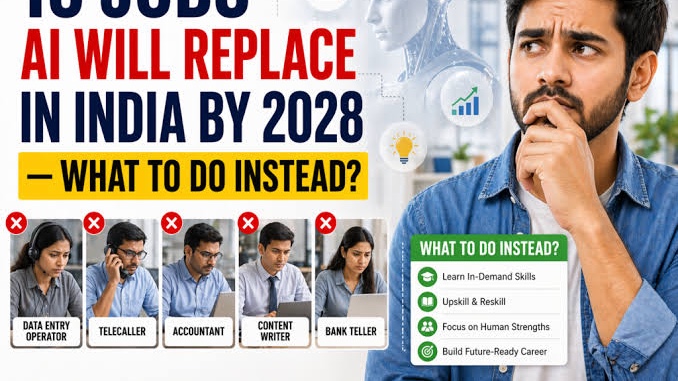
The hum of servers in Bengaluru, Hyderabad, and Pune is now accompanied by a different kind of buzz: the urgent whispers about AI's impact on software jobs. With tools like Claude Code and GitHub Copilot making headlines for their ability to write, debug, and refactor code, a palpable anxiety has settled over India's massive developer community. The question isn't just 'Will AI change our jobs?' but rather, 'Will AI make them disappear, possibly even by year-end?'
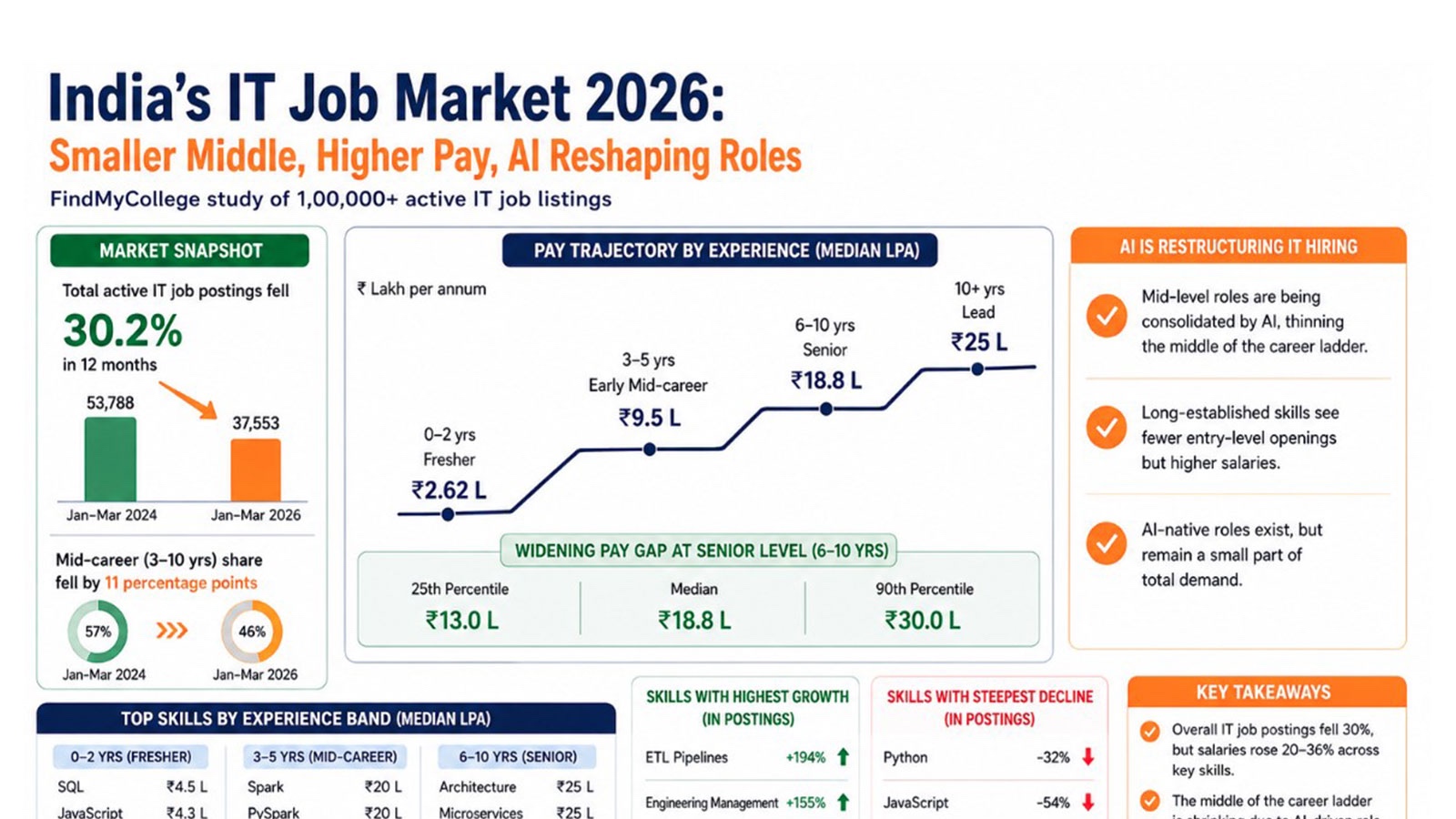
This isn't just idle speculation; it's a critical discussion for a nation that prides itself as a global IT powerhouse, employing millions in its software sector. While the 'disappearance by year-end' scenario is largely alarmist, the reality is that a significant transformation is already underway. Understanding this shift is crucial for every Indian developer looking to navigate the future.
The AI Tsunami: Understanding the Tools and Their Capabilities
Generative AI, particularly Large Language Models (LLMs) like Claude Code, OpenAI's ChatGPT, and Google's Gemini, has rapidly evolved beyond simple chatbots. When applied to software development, these tools demonstrate remarkable capabilities:
- Code Generation: From boilerplate functions to complex algorithms, AI can generate code snippets and even entire components based on natural language prompts. This significantly speeds up initial development phases.
- Debugging and Error Detection: AI can analyze codebases, identify potential bugs, suggest fixes, and even explain complex error messages, reducing the time developers spend on troubleshooting.
- Code Refactoring and Optimization: It can propose improvements to existing code for better readability, performance, and maintainability, adhering to best practices.
- Documentation and Testing: AI can automatically generate documentation for functions and APIs, and even write unit tests, freeing up developers from often tedious but essential tasks.
Consider a scenario where a junior developer in Chennai needs to set up a REST API endpoint. Instead of spending hours on syntax and framework specifics, an AI tool can scaffold the basic structure in minutes, allowing the developer to focus on the business logic. This isn't replacing the developer; it's augmenting their productivity and allowing them to tackle more complex problems sooner.
Beyond Code: What AI Can't (Easily) Do
While AI is impressive, it's crucial to understand its limitations. The fear of complete job displacement often stems from an incomplete understanding of what a software engineer truly does. AI currently struggles with:
- Complex Problem Solving and Architectural Design: Designing scalable, resilient, and secure systems requires deep understanding of business context, future growth, and trade-offs. AI can suggest patterns, but the strategic vision and critical decision-making remain human domains.
- Client Communication and Stakeholder Management: Translating vague business requirements into technical specifications, negotiating scope, and managing expectations are inherently human skills. AI lacks empathy, intuition, and the ability to build rapport.
- Ethical Considerations and Bias Mitigation: Ensuring software is fair, unbiased, and compliant with regulations (like India's upcoming data protection laws) requires human judgment and ethical reasoning. AI can perpetuate biases present in its training data.
- Innovation and Creativity: While AI can generate novel combinations, true innovation—identifying unmet needs, envisioning entirely new solutions, or creating groundbreaking user experiences—still largely originates from human creativity.
- Domain Expertise and Contextual Understanding: AI can process vast amounts of data, but it doesn't 'understand' the nuances of a specific industry or the unique challenges faced by users in, say, rural India, in the way a human expert does.
An experienced architect in Mumbai designing a new fintech platform isn't just writing code; they're integrating payment gateways, ensuring regulatory compliance, and anticipating user behaviour—tasks far beyond AI's current capabilities.
India's Unique Position: Scale, Talent, and Transformation
India's IT sector is unique due to its sheer scale and its role as a global outsourcing hub. Major Indian IT services companies like TCS, Infosys, Wipro, and HCLTech are already heavily investing in AI for internal efficiency and client solutions. This isn't about cutting jobs; it's about staying competitive globally.
- Upskilling Initiatives: Many Indian companies are actively reskilling their workforce in AI, machine learning, data science, and prompt engineering. The focus is shifting from being a 'code monkey' to an 'AI orchestrator' or 'AI-powered developer'.
- Emergence of New Roles: We're seeing the rise of roles like AI Ethicists, MLOps Engineers, AI Product Managers, and AI Integration Specialists. These are roles that leverage AI rather than being replaced by it.
- Leveraging the Talent Pool: India's vast pool of engineering graduates can be trained to harness AI tools, turning a potential threat into a massive opportunity to accelerate development cycles and deliver more value to global clients. The goal is to do more with the same or even fewer resources, not necessarily to reduce headcount drastically.
The Indian government, through initiatives like the National Strategy for Artificial Intelligence, also emphasizes responsible AI adoption and skill development, indicating a national commitment to leveraging AI for growth rather than fearing it.
Navigating the Shift: Strategies for Indian Developers
The notion of jobs disappearing by year-end is an exaggeration, but the need for adaptation is real and urgent. Here’s how Indian developers can thrive:
- Become an AI Power User: Learn to effectively use AI coding tools. Master prompt engineering to get the best output. Think of AI as your most powerful assistant.
- Focus on Higher-Order Thinking: Develop strong problem-solving skills, architectural design capabilities, and critical thinking. These are the aspects AI struggles with.
- Specialize in AI-Adjacent Fields: Explore MLOps, Data Engineering, AI security, or AI ethics. These roles are growing rapidly and require human oversight and expertise.
- Enhance Soft Skills: Communication, collaboration, leadership, and empathy are more valuable than ever. The ability to articulate complex technical concepts to non-technical stakeholders is irreplaceable.
- Embrace Lifelong Learning: The tech landscape is constantly evolving. Dedicate time to learning new frameworks, languages, and, most importantly, new AI paradigms.
For instance, a developer in Bengaluru who can not only write efficient code but also articulate its business value to a startup founder, and integrate AI-generated components seamlessly, will be far more valuable than one who only codes.
FAQ: Your Burning Questions Answered
Q1: Should I still pursue a B.Tech in Computer Science given these AI advancements?
Absolutely. A B.Tech in Computer Science provides a fundamental understanding of algorithms, data structures, operating systems, and computer architecture – knowledge that is foundational and transcends specific tools. AI tools are built upon these principles. Your degree will equip you with the critical thinking skills to understand how AI works and how to best leverage it, rather than just using it blindly.
Q2: What specific skills should I learn to stay relevant in the next 2-3 years?
Prioritize learning prompt engineering, understanding AI/ML fundamentals, cloud computing (AWS, Azure, GCP), data engineering, and MLOps. Beyond technical skills, hone your problem-solving, critical thinking, and communication abilities. These will allow you to work effectively with AI, not against it.
Q3: Are junior developer roles most at risk of being replaced by AI?
Junior roles might see the most immediate impact in terms of tasks being automated. AI can quickly generate boilerplate code or basic functions. However, this doesn't mean replacement. Instead, it means junior developers will need to quickly adapt to using AI tools to accelerate their learning and productivity. They will evolve into 'AI-augmented' junior developers, capable of contributing more complex solutions earlier in their careers, under the guidance of senior engineers.
Conclusion: Adapt, Don't Disappear
The idea that AI will make Indian software jobs disappear by year-end is a sensational headline, not a realistic prediction. What we are witnessing is an evolution, a profound shift in how software is developed. AI tools like Claude Code are not job killers; they are powerful accelerators that demand a new set of skills and a fresh perspective from developers.
India's IT sector has always thrived on adaptability and innovation. By embracing AI, upskilling continuously, and focusing on uniquely human capabilities, Indian developers can not only secure their future but also lead the global charge in the AI-powered era of software engineering. The future isn't about AI replacing humans; it's about humans empowered by AI.
Support creators
Was this helpful?
Your feedback helps us improve content for everyone.
Liked this piece?
Tip Dhananjay for the work
100% goes to the creator. Send a one-time tip in rupees and back the writing you love.
Dhananjay Chauhan
0 followers · 0 blogs
Creator on ContentVerse. Building, writing, and shipping in public.
0 followers

Discussion