
AI & Indian Software Jobs: Reality Check on 'Roles Disappearing by Year-End'
A prominent AI figure's alarming prediction about software engineering jobs vanishing by 2026 has sent ripples through India's tech community. This article provides a grounded perspective on how AI is truly reshaping, not eliminating, the Indian software development landscape.
Reading this article: 0s
News in 60 words
~150-word AI digest in one read
Thesis, bullets, quote & takeaway — slogan stays "60 words"
2d ·5 min read· 0 · 0 · 0
Full story
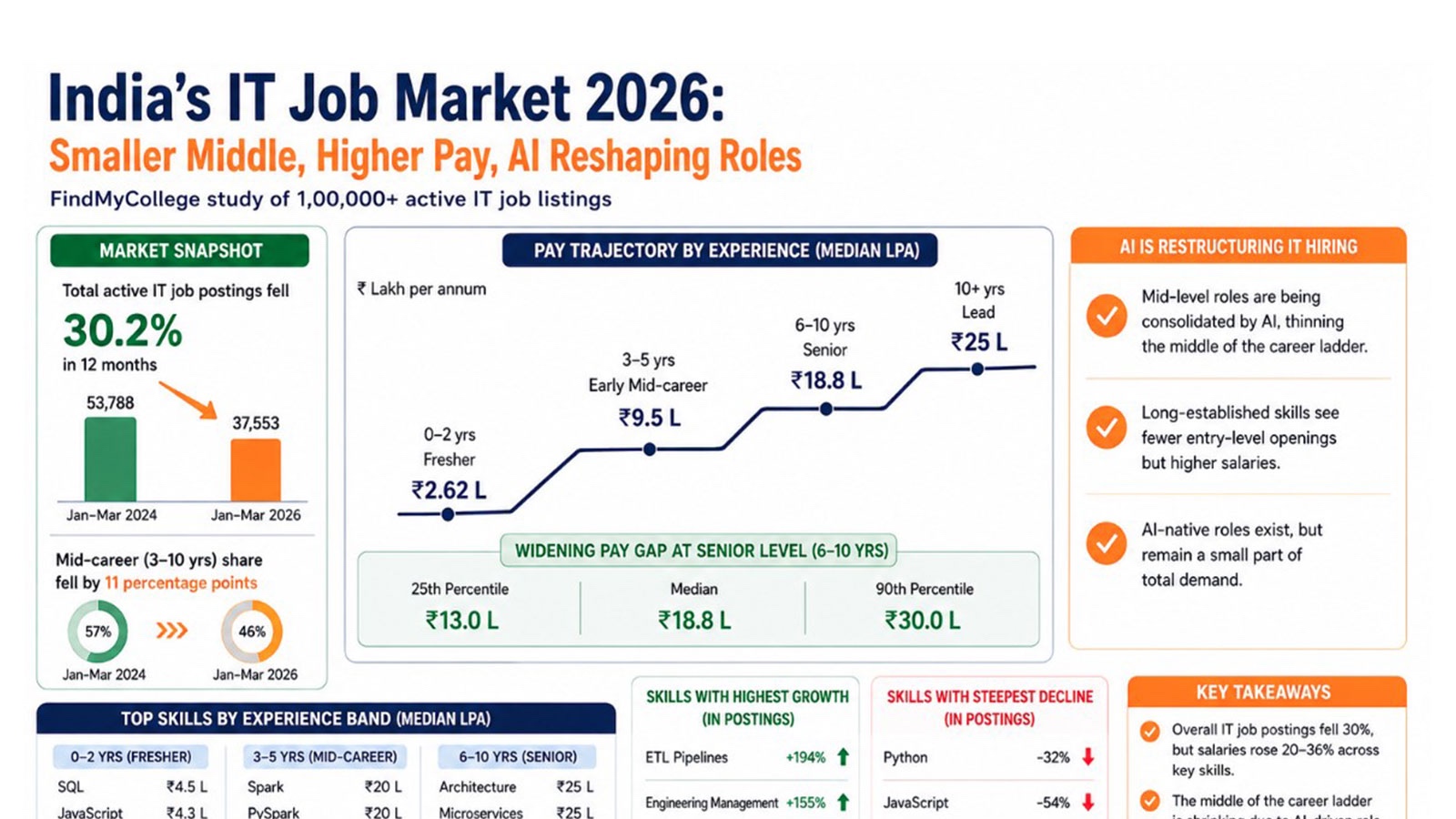
The Indian tech landscape is currently buzzing with discussions, and a palpable sense of anxiety, following a bold prediction from a prominent AI figure, known for creating Claude Code. The statement suggests that software engineering jobs could largely disappear by the end of 2026 due to rapid AI advancements. For a nation like India, where the IT sector employs millions and is a cornerstone of economic growth, such a forecast naturally sparks widespread concern among students aspiring for tech careers and seasoned professionals alike. It's crucial to sift through the hype and understand the actual implications for India's vibrant software industry.
The AI Tsunami: What's the Hype About?
Generative AI models, particularly large language models (LLMs), have made astonishing progress in recent years. Tools like GitHub Copilot, ChatGPT, and Claude can now write code, debug, generate test cases, and even refactor existing software with remarkable efficiency. These capabilities have led many to believe that AI could soon automate away a significant portion of a developer's daily tasks, thereby reducing the need for human engineers.
From generating boilerplate code to translating requirements into functional specifications, AI is undoubtedly transforming development workflows. It acts as a powerful co-pilot, accelerating development cycles and potentially increasing productivity. However, understanding complex system architecture, making strategic design decisions, and ensuring ethical considerations still largely remain within the human domain.
India's Unique Tech Landscape and AI Adoption
India's IT sector is vast and diverse, ranging from global IT service giants in Bengaluru, Hyderabad, and Pune to a thriving startup ecosystem in Delhi-NCR and Chennai. While Western markets might see AI as a direct replacement for certain roles, India's approach is often one of augmentation and efficiency. Indian companies are investing heavily in AI to streamline operations, enhance customer service, and develop innovative products for both domestic and international markets.
The sheer scale of India's engineering talent pool means that while some repetitive tasks might be automated, there's a continuous demand for engineers who can integrate, manage, and innovate with AI. Many Indian IT firms are already upskilling their workforce to leverage AI tools, viewing it as an opportunity to deliver more value and maintain their competitive edge globally. The focus is shifting from mere code writing to solution architecture, AI governance, and complex problem-solving.
Evolving Roles, Not Vanishing Ones
The narrative of jobs disappearing often overlooks the more nuanced reality of job evolution. Historically, technological advancements have always transformed job markets, creating new roles even as old ones become obsolete. AI is no different. The demand for skilled professionals who can work with AI, rather than against it, is set to soar.
Consider roles like AI prompt engineers, AI ethics specialists, MLOps engineers, and data scientists who can interpret and refine AI outputs. Furthermore, human oversight remains critical for ensuring AI-generated code is secure, efficient, and aligns with business objectives. The ability to understand domain-specific nuances, collaborate with non-technical stakeholders, and innovate beyond predefined patterns will be indispensable.
Strategies for Indian Developers: Skill Up to Thrive
The key to navigating this transformative period is proactive skill development. Indian developers have a reputation for adaptability and a strong foundation in problem-solving. By focusing on the right areas, they can not only future-proof their careers but also lead the charge in the AI era.
Here are actionable strategies:
- Master AI/ML Fundamentals: Understand core concepts of machine learning, deep learning, neural networks, and prompt engineering. Learning frameworks like TensorFlow or PyTorch can be highly beneficial.
- Become Proficient with AI Tools: Get hands-on experience with AI coding assistants like GitHub Copilot, Amazon CodeWhisperer, and other generative AI platforms. Learn how to effectively prompt and refine their outputs.
- Focus on Higher-Order Skills: Prioritize system design, architecture, cloud computing (AWS, Azure, GCP), cybersecurity, and complex problem-solving. These are areas where human intuition and expertise remain paramount.
- Cultivate Domain Expertise: Specializing in specific industries (e.g., FinTech, HealthTech, AgriTech) will allow you to apply AI solutions to real-world business challenges, making you invaluable.
- Enhance Soft Skills: Communication, collaboration, critical thinking, and ethical reasoning are more important than ever as developers increasingly work in interdisciplinary teams and manage AI systems.
Government Initiatives and Industry Support
The Indian government and industry bodies are actively recognizing the need for AI-driven skill development. Initiatives like the National Programme on Artificial Intelligence, various NASSCOM programs, and university collaborations are focusing on creating a workforce ready for the AI age. Many IT companies are also investing in internal training programs, certifications, and hackathons to empower their employees with AI competencies, ensuring India remains a global tech powerhouse.
FAQs on AI and Indian Software Jobs
Q1: Will freshers be most impacted by AI automation?
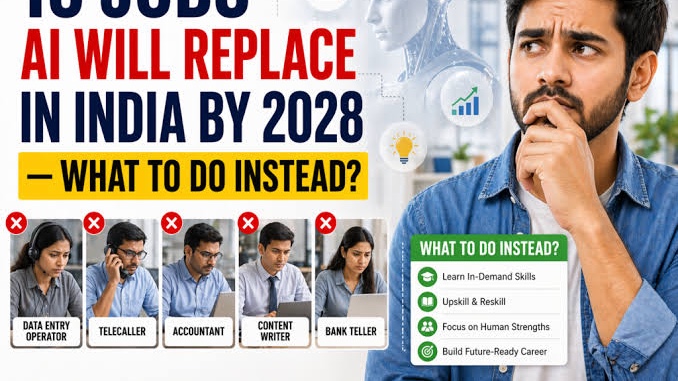
While entry-level tasks might see some automation, freshers who proactively learn AI tools and concepts will have a significant advantage. Companies will seek graduates who understand how to leverage AI to be more productive, rather than those who stick to traditional coding methods. Focus on projects that integrate AI and demonstrate problem-solving skills.
Q2: Is it too late to pivot into AI/ML if I'm a seasoned developer?
Absolutely not. Seasoned developers bring invaluable experience in system design, architecture, and understanding business logic. Combining this with new AI/ML skills makes them exceptionally valuable. Many online courses (e.g., from IITs, Coursera, Udemy) and bootcamps are tailored for experienced professionals looking to upskill in AI.
Q3: How much should I invest in AI education?
Investment can range from free online resources and open-source projects to paid certifications and master's programs. Start with free resources and MOOCs to build a foundation. As you gain clarity on your career path, consider more specialized and potentially paid courses. The return on investment in AI skills is expected to be high, making it a worthwhile endeavor.
Conclusion
The prediction of software engineering jobs disappearing by 2026 due to AI is a significant oversimplification of a complex transformation. For India, a country with a massive and dynamic tech talent pool, AI presents an unprecedented opportunity for growth and innovation. While the nature of work will undoubtedly change, the core demand for problem-solvers, innovators, and architects who can harness AI's power will only intensify. By embracing continuous learning and adapting to new tools and methodologies, Indian developers can not only survive but truly thrive in the AI-powered future, cementing India's position as a global leader in technology.
Support creators
Was this helpful?
Your feedback helps us improve content for everyone.
Liked this piece?
Tip Dhananjay for the work
100% goes to the creator. Send a one-time tip in rupees and back the writing you love.
Dhananjay Chauhan
0 followers · 0 blogs
Creator on ContentVerse. Building, writing, and shipping in public.
0 followers

Discussion