
AI's Impact on Indian Programming Careers: Future-Proofing Skills & Top Specialisations
The rise of AI is transforming India's vast IT sector, sparking both excitement and concern among programmers. This article explores how AI is reshaping programming roles and what skills and specialisations are crucial for career longevity and growth in India.
Reading this article: 0s
News in 60 words
~150-word AI digest in one read
Thesis, bullets, quote & takeaway — slogan stays "60 words"
2d ·6 min read· 0 · 0 · 0
Full story
The rapid advancement of Artificial Intelligence (AI) has sent ripples across industries globally, and India's massive IT sector is no exception. Headlines predicting the obsolescence of programming jobs often create apprehension, especially among students and professionals who form the backbone of India's tech workforce. However, rather than a threat, AI presents a profound opportunity for transformation, demanding a strategic shift in skills and specialisations.
For Indian programmers, understanding this evolving landscape is not just about staying relevant; it's about seizing new, high-paying opportunities. This article will guide you through the essential skills, emerging roles, and top specialisations that will not only future-proof your career but also position you at the forefront of India's AI-driven tech revolution.
The AI Tsunami and India's IT Landscape
India's IT sector, a global powerhouse exporting services worth over $170 billion annually, employs millions of software engineers. From the bustling tech parks of Bengaluru and Hyderabad to the burgeoning hubs in Pune and Chennai, the industry has historically thrived on its vast talent pool. Now, generative AI tools like GitHub Copilot and ChatGPT are automating repetitive coding tasks, debugging, and even generating entire code snippets.
This automation isn't necessarily about job replacement but job evolution. It frees up developers from mundane tasks, allowing them to focus on higher-order problem-solving, architectural design, and innovation. The demand isn't for coders who can merely write syntax, but for engineers who can leverage AI to build more complex, efficient, and intelligent systems.
Essential Skills for the AI Era
To navigate the AI-driven future, Indian programmers must cultivate a blend of technical prowess and critical soft skills. The focus is shifting from rote coding to intelligent application and strategic thinking.
Core Technical Skills
- Strong Fundamentals: A deep understanding of data structures, algorithms, operating systems, and networking remains paramount. AI tools are assistants, not replacements for foundational knowledge.
- Prompt Engineering: The ability to craft effective prompts for AI models to generate precise code, debug efficiently, or assist in design. This is becoming a crucial skill for interacting with AI copilots.
- Data Literacy: Understanding data types, databases (SQL/NoSQL), data cleaning, and basic statistical concepts. AI models are trained on data, and working with data effectively is key.
- Cloud Platforms: Proficiency in cloud services (AWS, Azure, GCP) is vital, as most AI models and applications are deployed and scaled in the cloud.
- Version Control & CI/CD: Mastery of Git and understanding Continuous Integration/Continuous Deployment pipelines ensures efficient collaboration and deployment in an AI-accelerated environment.
Indispensable Soft Skills
- Problem-Solving & Critical Thinking: AI can generate code, but it cannot define complex business problems or architect novel solutions without human guidance. This remains a core human strength.
- Adaptability & Lifelong Learning: The tech landscape is changing at an unprecedented pace. Programmers must be eager to learn new tools, languages, and paradigms continuously.
- Creativity & Innovation: Leveraging AI to build entirely new products, features, and user experiences requires a creative mindset.
- Communication & Collaboration: Working effectively in teams, explaining technical concepts to non-technical stakeholders, and collaborating with AI tools require strong communication skills.
Top Specialisations to Future-Proof Your Career
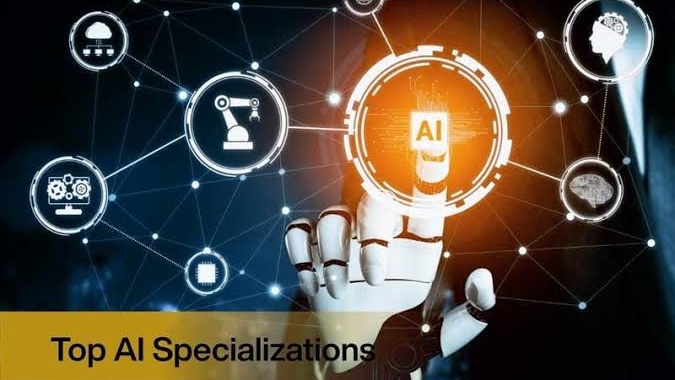
While general programming skills remain valuable, specialising in high-demand areas can significantly boost career prospects and earning potential in India. These fields are experiencing explosive growth and offer exciting opportunities.
1. AI/ML Engineering
This is perhaps the most direct path. AI/ML engineers design, build, and deploy machine learning models. They work with frameworks like TensorFlow, PyTorch, and scikit-learn to develop solutions for tasks like natural language processing, computer vision, and predictive analytics. Companies in Bengaluru and Hyderabad are aggressively hiring for these roles, with salaries often starting from ₹8-10 lakhs per annum for freshers and significantly higher for experienced professionals.
2. Data Science & Analytics
Data scientists extract insights from vast datasets, using statistical methods and machine learning to inform business decisions. With India's digital economy booming, from e-commerce giants to fintech startups, the demand for professionals who can make sense of data is immense. Strong skills in Python, R, SQL, and data visualisation tools are essential.
3. Cloud Computing & DevOps
As AI applications become more complex, their deployment and management in cloud environments are critical. Cloud engineers and DevOps specialists ensure scalability, reliability, and security of these systems. Their expertise in AWS, Azure, GCP, Kubernetes, and Docker is invaluable, supporting the AI infrastructure that underpins modern applications.
4. Cybersecurity
With increased digitalisation and AI integration, the threat landscape is evolving. Cybersecurity professionals are crucial for protecting data and systems from AI-powered attacks. Specialising in areas like AI-driven threat detection, secure AI model deployment, and ethical hacking will be highly sought after. India's push for digital payments and online services makes this a critical domain.
5. Full-Stack Development with AI Integration
Traditional full-stack development is evolving. Developers who can integrate AI functionalities into both front-end and back-end applications will be highly valued. This includes using AI APIs, embedding machine learning models, and designing user interfaces that leverage AI for enhanced experiences. Imagine building a customer service chatbot or an intelligent recommendation engine for an e-commerce platform like Flipkart or Amazon India.
Lifelong Learning and Adaptability
The most crucial skill in the AI era is the commitment to continuous learning. The technologies of tomorrow are being invented today. Online platforms like Coursera, edX, Udemy, and NPTEL offer excellent courses in AI, ML, Data Science, and cloud computing. Many Indian institutions are also launching specialised programs.
- Certifications: Pursue industry-recognised certifications from cloud providers (AWS Certified Machine Learning Specialist, Azure AI Engineer Associate) or AI/ML foundations.
- Open-Source Contributions: Engage with open-source projects to gain practical experience and showcase your skills.
- Networking: Participate in local tech meetups, conferences (like PyCon India, Data Science Congress), and online communities to stay updated and connect with peers and mentors.
Frequently Asked Questions
Will AI replace all programmers?
No, AI is a tool that augments human capabilities, not a complete replacement. While AI can automate routine coding tasks, it lacks the human capacity for complex problem-solving, creative innovation, ethical reasoning, and understanding nuanced business requirements. The nature of programming jobs will evolve, requiring programmers to work with AI rather than being replaced by it.
What's the average salary for AI specialists in India?
Salaries for AI specialists in India vary widely based on experience, location (e.g., Bengaluru, Hyderabad, Delhi NCR), and specific skills. For entry-level roles (0-2 years), salaries can range from ₹6-10 lakhs per annum. Mid-level professionals (3-7 years) can expect ₹12-25 lakhs, while senior AI/ML engineers and data scientists with extensive experience can command upwards of ₹30-50 lakhs or more annually.
How can freshers enter AI-driven roles in India?
Freshers should focus on building strong foundational programming skills (Python is highly recommended), understanding data structures and algorithms, and then delving into AI/ML concepts through online courses or specialised degrees. Work on personal projects, participate in hackathons, and seek internships that offer exposure to AI technologies. A strong portfolio demonstrating practical application of AI concepts is key.
Conclusion
The advent of AI is not the end of programming careers in India, but a significant inflection point. It demands that we re-evaluate our skill sets, embrace continuous learning, and strategically specialise in areas that leverage AI's power. By focusing on critical thinking, problem-solving, and adapting to new tools and methodologies, Indian programmers can transform this challenge into an unparalleled opportunity for growth, innovation, and leadership in the global tech arena.
Support creators
Was this helpful?
Your feedback helps us improve content for everyone.
Liked this piece?
Tip Dhananjay for the work
100% goes to the creator. Send a one-time tip in rupees and back the writing you love.
Dhananjay Chauhan
0 followers · 0 blogs
Creator on ContentVerse. Building, writing, and shipping in public.
0 followers

Discussion