
US Tariffs vs Russian Crude: How India's 48% Oil Import Peak Hits the Economy
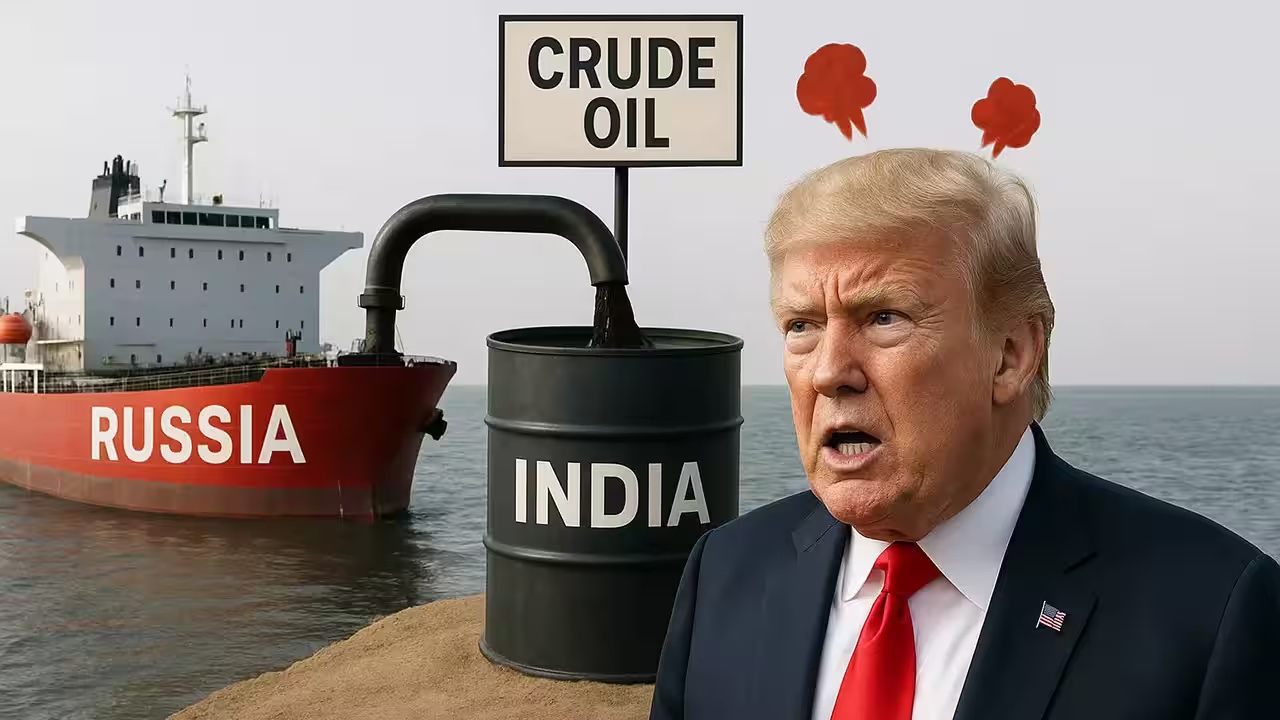
India's reliance on discounted Russian crude oil reached a record 48% peak, but mounting US tariff threats could alter the nation's economic balance. Here is a detailed breakdown of how geopolitical tensions affect domestic fuel prices, inflation, and the rupee.
Reading this article: 0s
News in 60 words
~150-word AI digest in one read
Thesis, bullets, quote & takeaway — slogan stays "60 words"
2h ·6 min read· 0 · 0 · 0
Full story
India's energy policy over the last two years has been defined by a pragmatic approach to securing affordable fuel for its 1.4 billion citizens. As Western nations turned away from Moscow following the 2022 Ukraine conflict, Indian oil refiners seized the opportunity to purchase discounted Urals crude. This strategy pushed Russia's share of India's total crude oil imports from less than 1% before 2022 to an unprecedented peak of nearly 48%.
However, this reliance on Russian barrels now faces unprecedented headwinds. With Washington threatening aggressive 100% tariffs and tighter secondary sanctions against trading partners maintaining high-volume trade with sanctioned nations, New Delhi finds itself at a delicate geopolitical crossroads. For the average Indian consumer and business owner, this macroeconomic standoff isn't just a matter of foreign policy—it directly affects the price of petrol at neighborhood pumps, local food inflation, and the value of the Indian Rupee (INR).
The Russian Crude Surge: From 1% to Energy Pillar
Prior to 2022, India relied overwhelmingly on Middle Eastern suppliers like Saudi Arabia, Iraq, and the UAE for its daily demand of roughly 5 million barrels of crude oil. Russian crude accounted for a negligible fraction of the overall import basket due to high freight costs from Baltic and Black Sea ports to Indian coastline refineries.
The economic calculus shifted dramatically when discounted Russian Urals crude became available at steep price markdowns—at times exceeding $20 to $30 per barrel below Brent crude benchmarks. Public sector undertakings like Indian Oil Corporation (IOCL), Bharat Petroleum (BPCL), and Hindustan Petroleum (HPCL), along with private refining giants like Reliance Industries in Jamnagar and Nayara Energy in Vadinar, reconfigured their processing facilities to handle heavier Russian grades.
This massive shift yielded substantial economic dividends:
- Import Bill Savings: Estimates suggest India saved over $5 billion to $10 billion annually on energy imports, helping narrow the Current Account Deficit (CAD).
- Refining Margins: Private and state refiners enjoyed robust Gross Refining Margins (GRMs), exporting processed fuels like diesel to European and Asian markets.
- Inflation Control: Lower input crude costs allowed state oil marketing companies (OMCs) to keep retail petrol and diesel prices relatively stable despite global energy volatility.
The Threat of US Secondary Tariffs and Sanctions
The geopolitical landscape is growing increasingly complex. Political leadership in Washington has floated broad economic countermeasures, including threats of 100% reciprocal tariffs and stricter secondary sanctions against nations facilitating trade that bypasses G7 price caps or Western banking channels.
For Indian refiners, secondary sanctions pose distinct structural risks:
- Financial Settlement Constraints: Processing transactions in US Dollars becomes nearly impossible if international banks face sanction threats, forcing reliance on alternative currency settlements like INR-Rouble or UAE Dirhams.
- Maritime Shipping & Insurance: Over 90% of global maritime insurance for oil tankers is underwritten by Western P&I (Protection and Indemnity) clubs. Tighter compliance requirements mean non-compliant tankers carrying Russian crude face restricted entry at major Indian ports.
- Export Market Penalties: Private refiners selling refined petroleum products to Western markets risk trade barriers if their input feedstocks are linked to Russian sources above official price caps.
Impact on Petrol Prices, Inflation, and the Indian Rupee
What happens if India is forced to scale back Russian crude imports from the 48% peak down to lower baseline levels? The domestic economic ripples would be immediate and tangible.
1. Fuel Prices at the Pump
Retail petrol in New Delhi currently hovers around ₹94.72 per litre, while in Mumbai it stands near ₹103.44 per litre. If Indian refiners are forced to replace discounted Russian barrels with pricier Middle Eastern or US West Texas Intermediate (WTI) crude, the landed cost per barrel could increase by $5 to $10. Oil marketing companies would eventually pass these higher costs to consumers, driving retail petrol and diesel prices up across Indian cities.
2. Wholesale and Consumer Inflation
In India, over 80% of freight transport relies on diesel-powered trucks. Higher diesel prices directly increase logistics costs for agricultural produce, FMCG goods, and manufacturing components. A sustained $10 rise in global crude prices typically adds 30 to 50 basis points to India's Consumer Price Index (CPI) inflation, complicating the Reserve Bank of India's (RBI) monetary policy goals.
3. Currency Volatility
A larger oil import bill directly increases demand for US Dollars in local foreign exchange markets. Increased crude expenditure places downward pressure on the Indian Rupee, pushing it toward lower levels against the USD. A weaker Rupee, in turn, makes imports of electronics, machinery, and fertilizer more expensive, creating a secondary inflationary loop.
India's Diversification Strategy: Looking Beyond the Peak
Recognizing these external risks, the Ministry of Petroleum and Natural Gas and Indian refiners are actively implementing risk-mitigation measures:
- Rebalancing Supply Contracts: Indian state refiners have renewed long-term supply agreements with Saudi Aramco, Iraq's SOMO, and West African producers like Nigeria.
- Increasing US Crude Offtake: India has gradually ramped up direct purchases of American crude varieties, creating a trade cushion against potential US trade friction.
- Domestic Clean Energy Transition: Accelerating ethanol blending targets (aiming for 20% E20 blending) and expanding EV infrastructure across metro cities like Bengaluru, Delhi-NCR, and Mumbai to curb long-term fossil fuel demand.
This is educational content, not financial advice.
Frequently Asked Questions
Why did India buy record amounts of Russian crude oil?
Following international sanctions on Russia in 2022, Moscow offered substantial price discounts on its Urals crude blend. Indian refineries capitalized on these discounts to lower overall national import bills and maintain stable domestic fuel prices during global energy shortages.
Will petrol and diesel prices increase in India due to US tariff threats?
If US secondary sanctions or tariffs force Indian refiners to reduce Russian oil purchases, India will need to buy more expensive crude from Middle Eastern or American suppliers. This increase in crude acquisition costs could translate into higher retail fuel prices at Indian petrol pumps.
How do secondary tariffs affect companies like Reliance and Nayara?
Secondary tariffs and sanctions target companies trading with sanctioned entities. Private refiners face compliance challenges, potential loss of Western export markets for refined fuels, and restricted access to global shipping insurance and banking networks.
Navigating the Energy Tightrope
India's record 48% reliance on Russian crude served as a powerful economic buffer during a period of global inflation. However, as trade tensions between global superpowers intensify and tariff threats loom large, India’s strategic pivot toward diversified supply channels is vital. Balancing affordable domestic energy with diplomatic flexibility will determine how smoothly the Indian economy navigates the next wave of global trade disruption.
Support creators
If you found this analysis helpful, consider tipping the writer on ContentVerse India to support independent, high-quality financial journalism.
Was this helpful?
Your feedback helps us improve content for everyone.
Liked this piece?
Tip Dhananjay for the work
100% goes to the creator. Send a one-time tip in rupees and back the writing you love.
Dhananjay Singh
0 followers · 0 blogs
Creator on ContentVerse. Building, writing, and shipping in public.
0 followers


Discussion