
Why FMCG Brands Are Choosing Marketers as CEOs
India's FMCG sector is undergoing a massive leadership shift, with six out of ten new consumer chiefs rising from marketing backgrounds. Discover why boardroom tables across Mumbai and Gurugram now favor brand builders over traditional finance heads.
Reading this article: 0s
News in 60 words
~150-word AI digest in one read
Thesis, bullets, quote & takeaway — slogan stays "60 words"
3h ·5 min read· 0 · 0 · 0
Full story
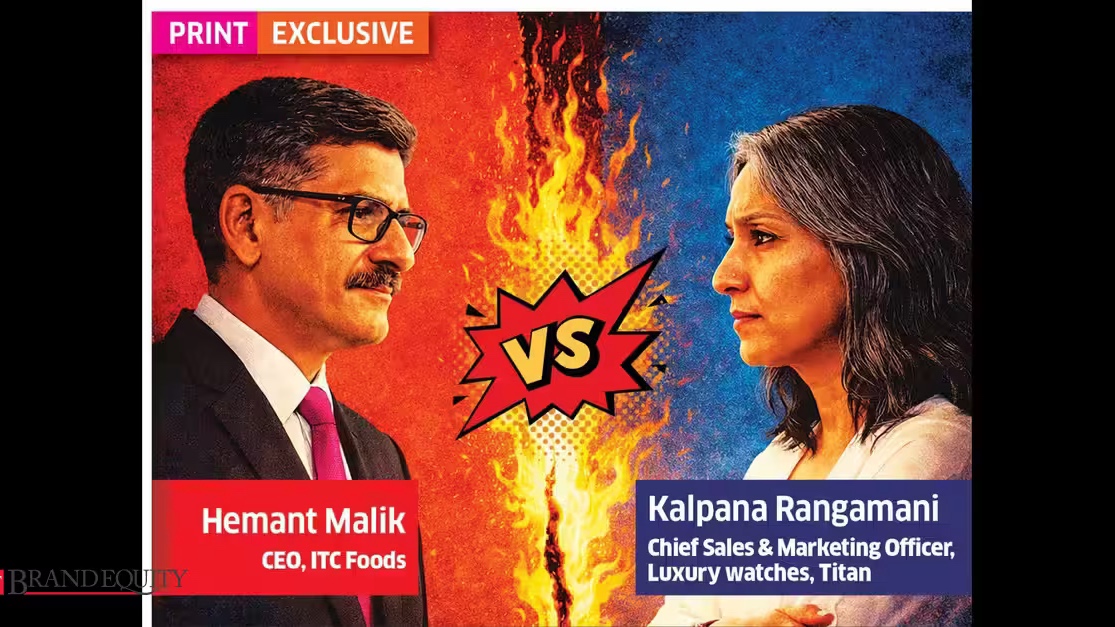
India's Fast-Moving Consumer Goods (FMCG) sector is undergoing a structural transformation. Recent industry data reveals a fascinating trend: six out of ten new consumer chiefs are coming directly from marketing backgrounds. Gone are the days when the corner office was exclusively reserved for chartered accountants or supply chain veterans. Today, boardroom tables across Mumbai, Gurugram, and Bengaluru are increasingly occupied by seasoned brand builders who understand the pulse of the Indian consumer.
This shift is not merely a corporate HR experiment. It is a calculated response to a radically changing marketplace driven by digital disruption, direct-to-consumer (D2C) brands, and evolving urban and rural shopping behaviors. Let us examine why modern FMCG giants are betting on marketers to steer their ships through turbulent waters.
The Death of the Traditional Playbook
For decades, Indian FMCG boardrooms prioritized cost optimization, distribution reach, and supply chain efficiencies. While these elements remain vital, they are no longer sufficient for growth. Traditional giants like Hindustan Unilever, ITC, and Nestlé India now face intense competition from agile D2C startups and regional brands that scale rapidly through social media and quick-commerce apps like Blinkit and Zepto.
When a legacy brand loses market share to an upstart that spends ₹5 crores on targeted influencer campaigns rather than traditional television ads, the leadership needs to pivot instantly. Marketers bring a deep-seated obsession with consumer psychology. They know how to decode a shifting demographic—such as Gen Z consumers in Tier-2 cities demanding premium, organic skincare products.
Key Triggers for the Leadership Shift
- Digital Acceleration: E-commerce and quick-commerce require real-time campaign adjustments and data-driven performance marketing.
- Shrinking Brand Loyalty: Consumers easily switch brands based on packaging, values, or digital visibility.
- Hyper-Localization: Crafting campaigns that resonate simultaneously in a bustling Mumbai high-rise and a semi-urban town in Uttar Pradesh demands nuanced cultural understanding.
Translating Consumer Data into Revenue
Finance leaders excel at managing balance sheets, but marketing leaders excel at top-line growth through brand equity. A modern CMO-turned-CEO views every product launch through the lens of customer lifetime value (LTV) rather than immediate quarterly margins. They understand how a packaging redesign or a sustainability initiative can shift public perception and justify a premium price point of ₹250 instead of ₹180.
Consider how brands navigate festive seasons like Diwali. A finance-led CEO might look strictly at promotional discounts and ad spends as sunk costs. A marketing-led CEO evaluates the cultural resonance, emotional connect, and long-term brand recall that turns seasonal buyers into loyal advocates.
Skills Marketers Bring to the Top Table
| Traditional CEO Focus | Modern Marketer-CEO Focus |
|---|---|
| Cost reduction & operational efficiency | Customer experience & lifetime value |
| Macro-economic forecasting | Real-time social listening & trend analysis |
| Long product development cycles | Agile prototyping & rapid consumer testing |
| Indirect channel management | Omnichannel ecosystem integration |
Navigating the Omnichannel Reality in India
India's retail landscape is uniquely fragmented. Modern trade supermarkets coexist with neighborhood kirana stores, while e-commerce platforms deliver groceries within ten minutes. A marketer understands that the customer journey is rarely linear. A shopper might discover a new shampoo brand via an Instagram reel, compare prices on Amazon, and eventually buy it from their local chemist.
Marketer-CEOs are uniquely equipped to orchestrate this complex omnichannel puzzle. They bridge the gap between creative storytelling and data analytics. By leveraging consumer data platforms, they track buying patterns across different pin codes, enabling hyper-targeted distribution strategies that minimize dead stock and maximize shelf impact.
Investor Confidence and Agility
Venture capitalists and institutional investors increasingly favor leaders who can tell a compelling growth story. In a market where valuations depend heavily on future potential, a CEO with a strong branding background can articulate a clear vision for product expansion and category disruption.
Furthermore, agility is the currency of modern business. While traditional hierarchical structures slow down decision-making, marketers are trained in iterative processes. They test, fail, learn, and scale rapidly—a crucial trait when dealing with fast-changing consumer preferences in the world's most populous nation.
Frequently Asked Questions
Do marketer-CEOs struggle with financial management?
While marketing is creative, modern marketing is deeply quantitative, relying on metrics like ROI, customer acquisition cost (CAC), and churn rates. Successful marketer-CEOs build strong finance teams to balance creative vision with rigorous fiscal discipline.
Is this trend visible only in large multinational corporations?
No, it is equally prominent in funded Indian startups and mid-sized enterprises. Companies looking to transition from regional players to national household names find marketing leadership indispensable.
What does this mean for aspiring professionals in India?
Young professionals entering the corporate world can no longer view marketing as just an execution department. Understanding P&L statements alongside consumer behavior is now the golden ticket to the C-suite.
Conclusion
The rise of marketers to the CEO chair in India's FMCG sector marks a maturing corporate mindset. Brands realize that in an era of infinite choice, the ultimate competitive advantage is the ability to connect deeply with the consumer's emotional and practical needs. As digital transformation accelerates, the brand builder has rightfully claimed the top spot in the modern Indian boardroom.
Support creators
If you enjoyed this analysis, consider supporting independent writers and researchers on ContentVerse India.
Was this helpful?
Your feedback helps us improve content for everyone.
Liked this piece?
Tip Dhananjay for the work
100% goes to the creator. Send a one-time tip in rupees and back the writing you love.
Dhananjay Singh
0 followers · 0 blogs
Creator on ContentVerse. Building, writing, and shipping in public.
0 followers

Discussion