
Will AI Really Threaten Indian Jobs? What the World Bank Report Reveals
A recent World Bank assessment sheds light on how artificial intelligence is transforming India's technology sector and service exports. As PM Modi highlighted at the India AI Impact Summit, understanding AI disruption is crucial for tech workers navigating the evolving job market.
Reading this article: 0s
News in 60 words
~150-word AI digest in one read
Thesis, bullets, quote & takeaway — slogan stays "60 words"
1h ·6 min read· 0 · 0 · 0
Full story
The Great Indian Tech Paradox
For decades, India's software and services industry has served as an economic engine, driving employment for millions of graduates across technology hubs like Bengaluru, Hyderabad, Pune, and Gurugram. However, rapid advances in generative artificial intelligence have raised sharp concerns among IT professionals and fresh graduates. Anxiety over automated coding, automated customer support, and shrinking entry-level hiring has led many to question whether India's outsourcing model is under structural threat.
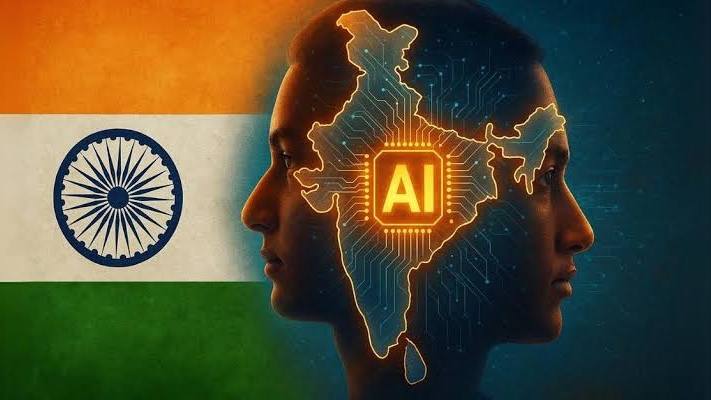
The debate recently reached a pivotal point following the publication of key World Bank findings on AI exposure in developing economies, coinciding with Prime Minister Narendra Modi's address at the India AI Impact Summit. While headline-grabbing predictions often paint a bleak picture of widespread job losses, a deeper look at the data reveals a far more nuanced reality. AI is undeniably reshaping Indian employment, but it is acting as a catalyst for restructuring rather than an immediate replacement for talent.
World Bank Findings: Exposure Versus Displacement
One of the central insights from the World Bank's economic analysis is the critical distinction between AI exposure and actual job displacement. A high exposure score means that a role involves tasks that AI models can augment or automate; it does not automatically mean the role will be eliminated.
According to global trade and employment data evaluated by international institutions, India's service-led growth model possesses unique flexibilities:
- Task Augmentation: In knowledge-intensive roles, AI tools increase individual worker productivity rather than substituting the worker entirely. Software developers using AI assistants write code faster, enabling IT firms to take on higher volume rather than cutting headcounts.
- Cost-Efficiency Advantage: India remains a cost-effective destination for complex digital transformations. Even as AI automates routine tasks, global enterprises rely on Indian talent to implement, fine-tune, and oversee AI integration.
- BPO Transition: While voice-based business process outsourcing (BPO) faces pressure, high-value Business Process Management (BPM) involving domain expertise in finance, legal, and healthcare is expanding.
While routine entry-level data processing and basic level-1 tech support roles (typically offering starting salaries around ₹20,000 to ₹30,000 per month) face significant headwinds, demand for skilled orchestrators of AI technology is surging.
IT Outsourcing: Threat or Strategic Opportunity?
India's massive $250+ billion IT services industry is built on adaptability. Major Indian tech companies and Global Capability Centers (GCCs) operating in cities like Chennai and Noida are aggressively pivoting their service delivery models.
Rather than billing clients purely on a time-and-materials basis driven by developer headcount, IT service exporters are shifting toward outcome-based pricing models powered by AI automation. Indian tech firms are embedding Generative AI into enterprise workflows for international clients in banking, retail, and manufacturing.
Furthermore, multinational corporations are rapidly expanding their in-house GCCs across India. These centers are evolving from back-office support units into primary innovation hubs. They require professionals who understand cloud architecture, data pipelines, and enterprise security—skills that complement AI deployments rather than competing with them.
Policy and National Initiatives: The IndiaAI Framework
Addressing the nation's tech transition, PM Modi emphasized during the India AI Impact Summit that technology must serve as an equalizer rather than a source of disruption. The Indian government has aligned national policy to support this transition through structured public investments.
Key pillars of India's national AI strategy include:
- The IndiaAI Mission: A budget allocation exceeding ₹10,000 crore dedicated to building public computing infrastructure, including supercomputing capability with over 10,000 GPUs.
- National AI Portals & Bhashini: Initiatives aimed at building language computing capabilities across Indian regional languages, creating specialized engineering opportunities in local-language AI modeling.
- Public-Private Upskilling: Strategic partnerships between the Ministry of Electronics and Information Technology (MeitY), academic institutes like the IITs, and industry bodies like NASSCOM to offer subsidized certifications in machine learning and data science.
These policy frameworks ensure that India does not merely consume foreign AI solutions, but actively develops indigenous models and skilled talent to maintain global competitiveness.
High-Risk vs. High-Growth Tech Roles in India
To navigate the changing landscape, tech workers must understand where demand is shifting within the domestic and export job markets.
Roles Facing Structural Decline
- Manual Software QA Testing: Script-based manual testing is increasingly handled by automated generative agents.
- Basic L1 Technical Support: Routine password resets, standard trouble-ticket logging, and basic scripts are largely automated by intelligent chatbots.
- Data Entry and Basic Transcription: Document processing tools can parse unstructured invoices and data at a fraction of manual costs.
High-Growth Emerging Roles
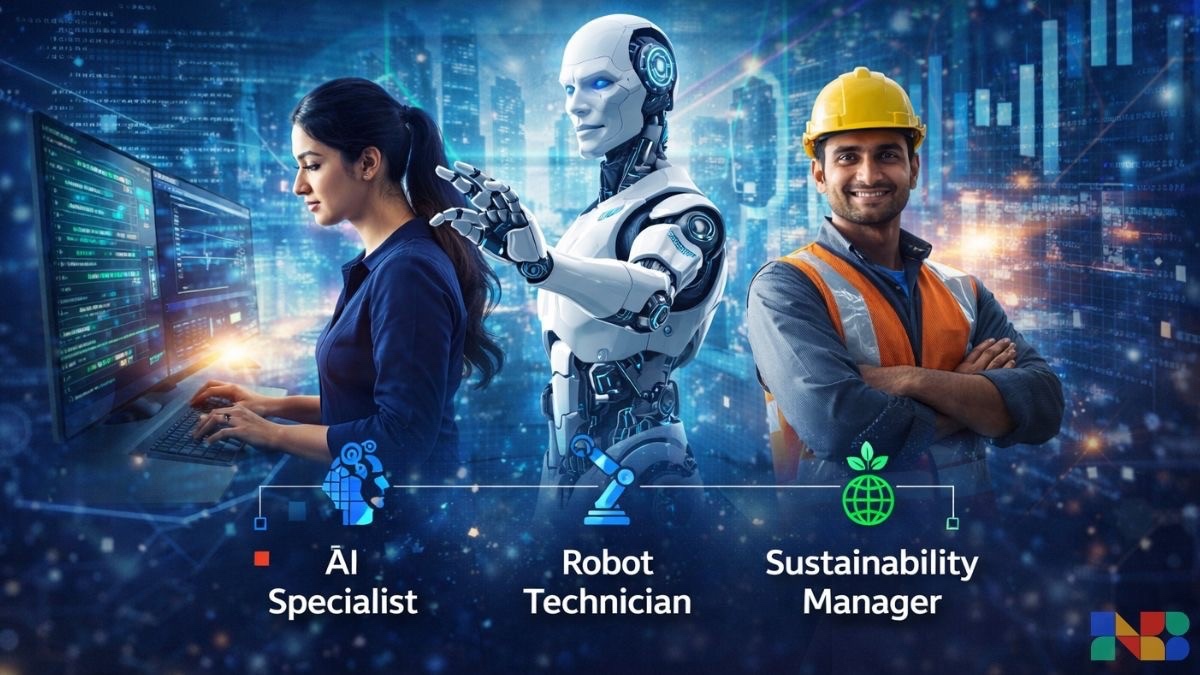
- AI/ML Integration Engineers: Specialists who fine-tune open-source models, build Retrieval-Augmented Generation (RAG) pipelines, and integrate LLMs into business software. Salaries for mid-level developers in this domain frequently range from ₹12 LPA to ₹28+ LPA.
- Data Engineers and Architects: Professionals capable of cleaning, structuring, and securing enterprise data for model training.
- Cybersecurity and Cloud Governance Experts: As AI expands attack surfaces, secure infrastructure management has become a top priority for corporate boards.
Practical Reskilling Roadmap for Indian Tech Workers
If you are currently working in the Indian IT or services sector, proactive skill management is essential. Here is a step-by-step approach to future-proofing your career:
- Master AI Tooling in Your Current Stack: If you are a developer, integrate tools like GitHub Copilot, Cursor, or ChatGPT into your daily coding workflow. Measure how much faster you complete tasks and focus on higher-level system architecture.
- Leverage Free and Subsidized Indian Learning Platforms: Utilize government-backed portals such as SWAYAM, NPTEL, and FutureSkills Prime to acquire foundational certification in machine learning and data engineering.
- Build Deep Domain Knowledge: AI struggles with complex, industry-specific business logic. Coupling coding skills with deep domain knowledge in Indian fintech, healthcare regulation, or supply chain logistics makes your role significantly harder to replace.
- Focus on Soft Skills and System Design: Complex client communication, requirements gathering, stakeholder management, and holistic software design remain human-centric domains.
Frequently Asked Questions
Will entry-level hiring stop completely in Indian IT firms?
Entry-level hiring is not stopping, but it is undergoing a fundamental transformation. Companies are hiring fewer generic coders and prioritizing freshers who possess foundational knowledge of cloud platforms, Python, data structures, and prompt engineering.
How does the World Bank view India's resilience compared to developed nations?
The World Bank notes that while developed nations face high displacement risks in cognitive white-collar jobs, India's cost advantage, massive young developer workforce, and rapidly growing domestic market give it a strong cushion to adapt through reskilling.
What government schemes support AI training for students and professionals?
The FutureSkills Prime initiative, jointly launched by MeitY and NASSCOM, offers subsidized and free training courses in emerging technologies like AI, Cloud Computing, and Big Data for Indian citizens.
Conclusion
The World Bank report and national leadership at the India AI Impact Summit present a clear message: AI is not an immediate death knells for Indian IT jobs, but a catalyst for rapid evolution. The traditional model of low-complexity, high-volume IT delivery is fading. By shifting focus toward AI integration, specialized domain expertise, and continuous upskilling, Indian tech workers can turn potential disruption into an unprecedented career opportunity.
Support creators
If you found this deep-dive insightful, consider tipping the writer on ContentVerse India to support independent tech journalism.
Was this helpful?
Your feedback helps us improve content for everyone.
Liked this piece?
Tip Dhananjay for the work
100% goes to the creator. Send a one-time tip in rupees and back the writing you love.
Dhananjay Singh
0 followers · 0 blogs
Creator on ContentVerse. Building, writing, and shipping in public.
0 followers
Discussion