
Google AI Coding Interviews: How Indian Developers Should Prepare
Google is rethinking traditional coding interviews by evaluating candidates on how effectively they use AI assistants like Gemini and GitHub Copilot. Here is how Indian software engineers in hubs like Bengaluru and Hyderabad can adapt their preparation to excel in this new era of tech recruitment.
Reading this article: 0s
News in 60 words
~150-word AI digest in one read
Thesis, bullets, quote & takeaway — slogan stays "60 words"
1h ·5 min read· 0 · 0 · 0

Full story
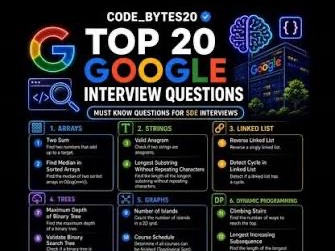
For over a decade, Indian software engineers preparing for tech giants like Google, Meta, and Amazon followed a predictable playbook: solve 500+ LeetCode problems, memorize complex Data Structures and Algorithms (DSA), and write syntax-perfect code on a whiteboard or Google Doc without external assistance. However, the tech recruitment landscape is undergoing a monumental shift. Google is actively evaluating policies to allow software engineering candidates to use AI tools during technical interviews. This change reflects the reality of modern software development, where developer tools like GitHub Copilot, Google Gemini, and ChatGPT are standard in everyday engineering workflows.
For Indian developers—from fresh graduates in Tier-2 colleges to experienced engineers in Bengaluru, Hyderabad, and Pune—this signals a major transition. The hiring focus is shifting away from syntax memorization toward higher-order architectural thinking, rapid code auditing, and AI-assisted problem-solving.
Why Tech Recruitment is Shifting Away from Rote DSA
In real-world production environments, manually implementing algorithms from memory is rarely required. Tech companies realize that testing candidates in an artificial, tool-restricted environment produces false positives and false negatives. Candidates who memorize company-specific question banks often struggle when faced with complex, multi-service production issues.
By allowing candidates to utilize AI assistants during technical screens, interviewers can evaluate how effectively a developer works in a realistic setting. Rather than checking if you remember the exact syntax for a graph traversal in C++ or Java, interviewers want to see how quickly you can formulate a problem, leverage AI to generate a baseline solution, verify its correctness, optimize time complexity, and handle boundary cases.
Core Skills Evaluated in AI-Assisted Interviews
When AI enters the coding interview, the bar does not lower; it shifts upward. Candidates are assessed on three critical competencies that go beyond basic syntax writing:
1. Problem Decomposition and Prompt Engineering
Candidates must translate ambiguous business requirements into clear, precise instructions for the AI assistant. If you enter a vague prompt, you receive generic, inefficient code. Top-tier candidates demonstrate domain mastery by structuring prompts with explicit memory constraints, input boundaries, and specific algorithm expectations.
2. Code Auditing and Security Verification
AI models frequently generate code containing subtle bugs, security vulnerabilities (such as SQL injection or memory leaks), or sub-optimal time complexities. Interviewers will closely observe whether you blindly trust the generated output or critically trace through the execution flow to catch defects before running the code.
3. Architectural and System Design Mastery
With boilerplate code generation handled in seconds, more interview time is dedicated to high-level system design. Candidates in tech hubs like Gurugram and Chennai will need to explain architectural trade-offs between microservices, database indexing strategies, distributed caching with Redis, and event queues using Apache Kafka.
Rebuilding Your Preparation Blueprint in India
If you are preparing for product engineering roles offering packages from ₹18 LPA to ₹45+ LPA, your daily preparation routine needs an immediate upgrade:
- Shift from Writing to Refactoring: Instead of writing every line from scratch, take AI-generated solutions and optimize them. Practice identifying off-by-one errors, resource leaks, and sub-optimal loops.
- Master Test-Driven Development (TDD): Learn to write comprehensive unit test suites using frameworks like PyTest, JUnit, or Jest before requesting logic from AI. Generating tests first allows you to immediately validate AI-assisted code.
- Deepen System Design Knowledge: Invest time in understanding distributed systems, rate limiters, API gateways, and cloud infrastructure on AWS or GCP.
- Practice Pair Programming with AI: Conduct mock interviews where you talk aloud while using tools like ChatGPT or GitHub Copilot. Practice explaining why you are accepting or modifying a specific AI suggestion to your interviewer.
Impact on Indian Tech Salaries and Hiring Trends
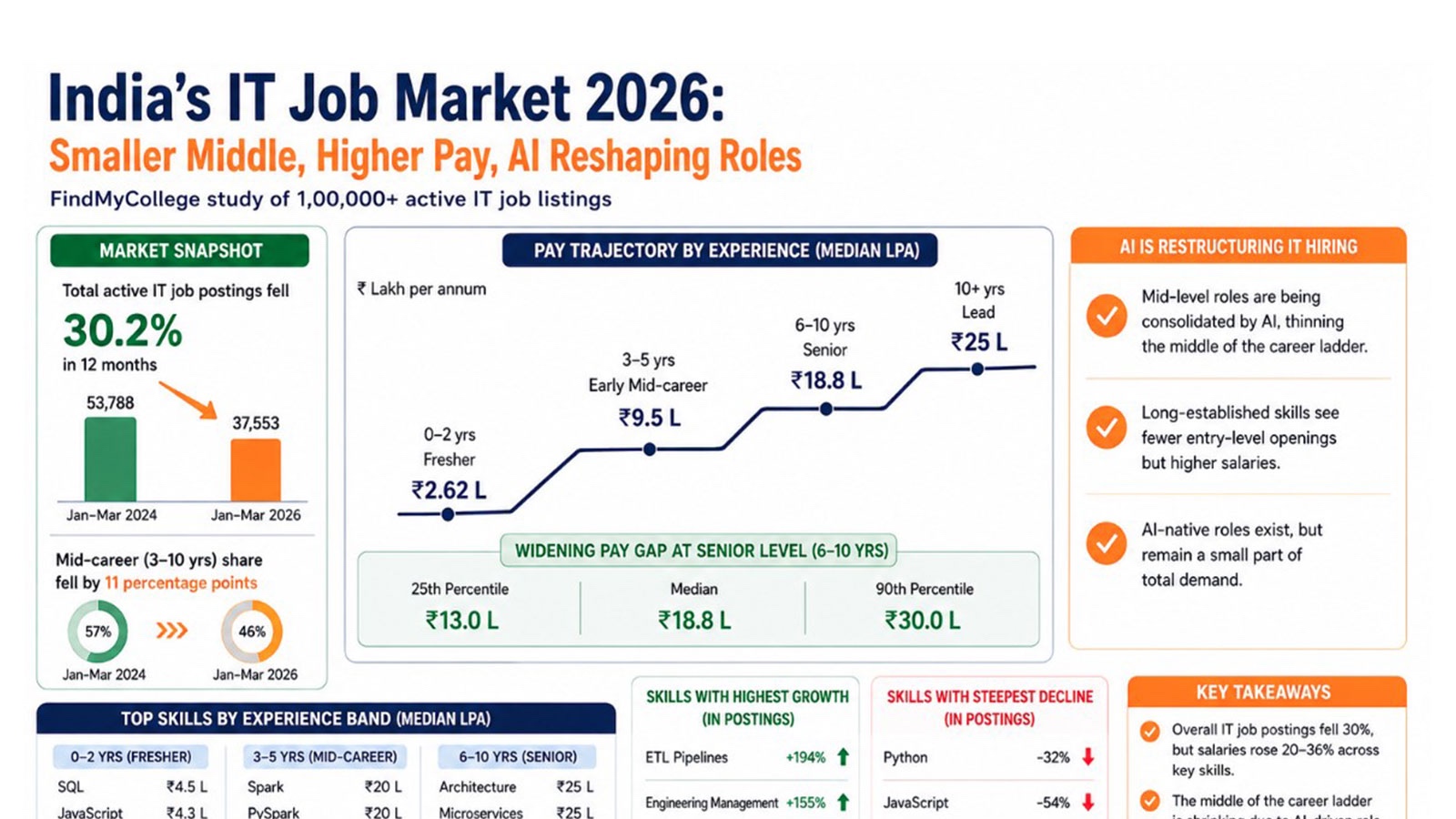
For Indian developers working in service-based firms (such as TCS, Infosys, or Wipro) aiming to transition to top product companies, this shift levels the playing field. Rote memorization previously gave an advantage to candidates who had months of free time to grind 800+ algorithmic questions. An AI-assisted interview format favors engineers with strong logical reasoning, practical project experience, and sound system design principles.
However, entry-level hiring will become significantly more competitive. Tier-3 college graduates who previously relied on memorizing standard aptitude and coding questions must build real-world, full-stack projects showcasing clean system architecture, API design, and automated testing.
Frequently Asked Questions
Will candidates be allowed to use any AI tool during Google interviews?
Google and other tech firms will likely provide a controlled environment with specific allowed AI assistants, such as Google Gemini integrated directly into their interview IDE, ensuring all candidates have equal tooling access.
Is Data Structures and Algorithms (DSA) obsolete now?
No, DSA is not obsolete. You still need strong DSA fundamentals to evaluate whether the AI-generated code is optimal, analyze time and space complexity, and guide the AI assistant toward the correct algorithmic strategy.
How does this affect campus placements in Indian engineering colleges?
Campus recruitment drives in IITs, NITs, and private universities will gradually shift focus from basic online coding tests to system design, live code reviews, and scenario-based debugging using modern developer tools.
Conclusion: Adapting to the Next Era of Engineering
The decision by tech leaders to incorporate AI into interviews marks the end of an era dominated by algorithmic memorization. For Indian developers, this transition offers an exciting opportunity to move up the value chain from syntax writers to system architects. By mastering AI tools, deepening your grasp of software architecture, and honing your code auditing skills, you can future-proof your engineering career in India's expanding tech ecosystem.
Support creators
If you found this guide valuable, support independent tech writers by tipping them on ContentVerse India.
Was this helpful?
Your feedback helps us improve content for everyone.
Liked this piece?
Tip Dhananjay for the work
100% goes to the creator. Send a one-time tip in rupees and back the writing you love.
Dhananjay Singh
0 followers · 0 blogs
Creator on ContentVerse. Building, writing, and shipping in public.
0 followers
Discussion