
Why RBI Wants Indian Banks to Accelerate AI Investments: Key Insights for the Future of Banking
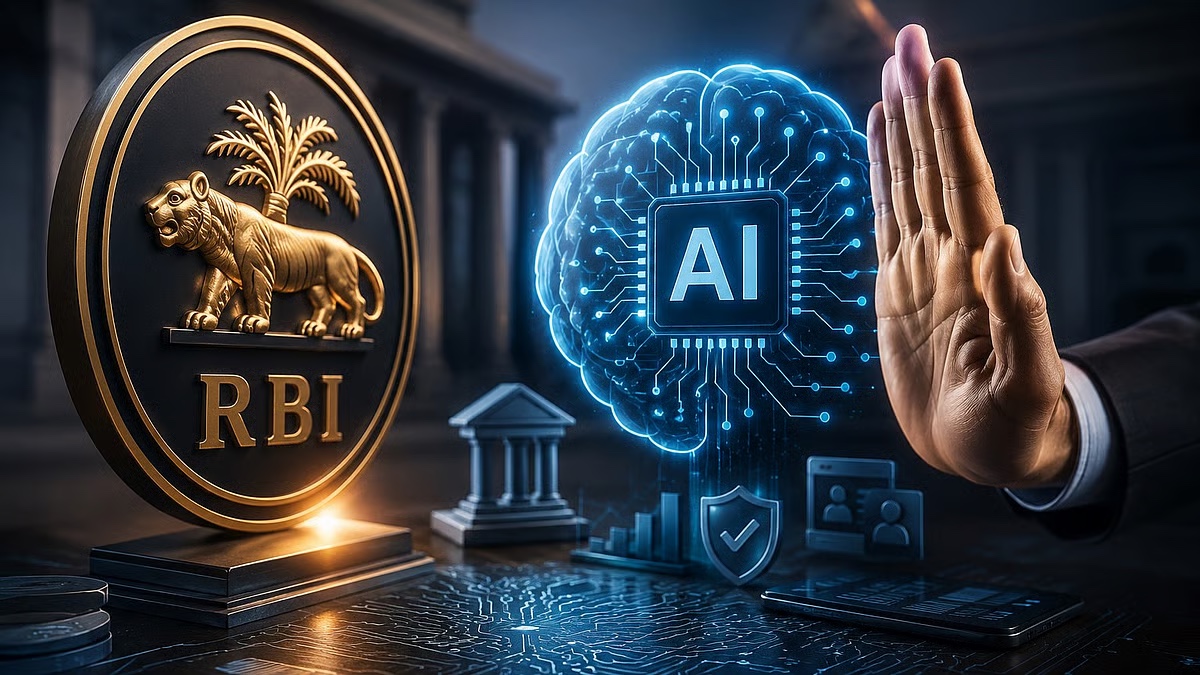
Reserve Bank of India Governor Sanjay Malhotra recently urged domestic lenders to aggressively step up their artificial intelligence investments. Discover how proactive AI adoption is transforming credit scoring, fraud prevention, and regional banking across India.
Reading this article: 0s
News in 60 words
~150-word AI digest in one read
Thesis, bullets, quote & takeaway — slogan stays "60 words"
1h ·5 min read· 0 · 0 · 0
Full story
This is educational content, not financial advice.
India’s banking sector has undergone an unprecedented digital revolution over the past decade. From processing over 13 billion Unified Payments Interface (UPI) transactions monthly to onboarding millions of citizens through Jan Dhan accounts, technology has become the central pillar of Indian finance. However, digital accessibility brings complex operational scale, heightening risks and demanding intelligent automation.
In a crucial address to financial leaders, Reserve Bank of India (RBI) Governor Sanjay Malhotra emphasized that Indian lenders must rapidly accelerate their investments in Artificial Intelligence (AI). His directive was clear: India must actively shape its financial AI ecosystem rather than becoming a passive consumer of imported, default technologies. For Indian banks, this call to action marks a transition from viewing AI as an experimental luxury to deploying it as essential infrastructure.
The RBI Mandate: Sovereign AI and Financial Autonomy
When global financial systems adopt off-the-shelf AI models, they often inherit localized biases and proprietary vulnerabilities developed in Western markets. RBI Governor Sanjay Malhotra highlighted that India’s financial landscape is unique in its scale, demographic diversity, and regulatory frameworks.
By building and fine-tuning custom AI models locally, Indian banks can safeguard national financial sovereignty. Localized machine learning systems understand indigenous financial behaviors—such as seasonal cash flow cycles in rural agricultural communities—much better than standardized global algorithms. Furthermore, local AI infrastructure ensures strict compliance with India's Digital Personal Data Protection (DPDP) Act of 2023, keeping sensitive customer data within domestic boundaries.
1. Next-Generation Credit Underwriting for Bharat
Traditional credit scoring models relying solely on CIBIL scores frequently exclude millions of small entrepreneurs, street vendors, and gig workers who lack formal credit histories. AI-powered underwriting is bridging this gap by analyzing alternative data streams.
Through the Account Aggregator (AA) framework, AI models process consents to analyze diverse financial footprints, including:
- Monthly utility and electricity bill payment histories
- Goods and Services Tax (GST) filing trends for MSMEs
- Micro-transaction patterns on merchant UPI apps like PhonePe and Google Pay
By evaluating these non-traditional data points, institutions like State Bank of India (SBI) and ICICI Bank can automatically disburse micro-loans starting from ₹10,000 to small business owners within minutes. This reduces non-performing assets (NPAs) while expanding financial inclusion to Tier-3 and Tier-4 cities.
2. Real-Time Fraud Detection and Cyber Resilience
As digital transaction volumes surge across platforms like Paytm, HDFC PayZapp, and BHIM, financial fraud has grown increasingly sophisticated. Traditional rule-based security protocols fail to stop novel phishing scams and cyberattacks in real time.
Modern AI models utilize anomaly detection to examine user behavior metrics dynamically. Algorithms evaluate transaction velocity, location data, device signatures, and typical spending patterns.
For instance, if a account registered in Pune suddenly attempts a high-value wire transfer from an unrecognized IP address in another country while simultaneously changing its linked phone number, AI security layers instantly pause the transaction. Advanced predictive tools also scan banking networks to detect 'mule accounts' used for money laundering, neutralizing cyber threats before systematic damage occurs.
3. Multilingual Voice Banking for Broader Inclusion
India is a nation of linguistic diversity, where millions of citizens are more comfortable conducting transactions in their native tongues rather than English or Hindi. To make banking truly inclusive, Indian lenders are deploying AI-driven voice bots powered by Natural Language Processing (NLP).
Integrating open-source initiatives like the Indian government's Bhashini platform allows conversational AI bots to interact in regional languages such as Tamil, Bengali, Marathi, and Telugu.
- Customers can check account balances, request cheque books, or transfer funds using simple voice commands on basic smartphones.
- AI-powered voice bots drastically cut down wait times at bank call centers.
- Rural customers can interact naturally with banking interfaces, overcoming literacy barriers.
4. Operational Efficiency and Regulatory Compliance (RegTech)
Indian banks face rigorous compliance monitoring from regulatory bodies like the RBI and SEBI. Manual audit processes are time-consuming, expensive, and susceptible to human oversight.
By leveraging Generative AI and automated document processing systems, banks can digest thousands of pages of circulars, loan documentation, and regulatory filings within seconds. Large language models (LLMs) help internal compliance teams spot policy discrepancies, generate automated risk reports, and ensure operational practices match updated RBI mandates continuously.
Key Challenges: Ethical AI, Bias, and Governance
While the push for accelerated AI adoption offers immense benefits, the central bank has warned against unbridled automation without human oversight. Financial institutions face several key governance challenges:
- Algorithmic Bias: Machine learning models trained on historical data might inadvertently discriminate against specific demographics or low-income loan applicants.
- Black Box Problem: Complex deep-learning models often lack explainability, making it difficult for regulators to understand how a loan rejection or risk assessment decision was calculated.
- Model Drift: Financial markets evolve rapidly; static AI algorithms can fail if they are not continuously retrained against real-market conditions.
To address these risks, the RBI advocates for robust AI governance frameworks, model risk audits, and a human-in-the-loop approach for high-stakes credit and risk decisions.
Frequently Asked Questions
Why is the RBI emphasizing AI adoption right now?
With rapid increases in digital payment volumes and evolving cyber threats, legacy banking systems need real-time, scalable intelligence. Governor Sanjay Malhotra noted that Indian financial institutions must proactively develop localized AI capabilities to maintain sovereign control over their core systems.
Will accelerated AI spending in Indian banks lead to job cuts?
Rather than replacing workforce personnel, AI in banking automates repetitive administrative tasks, such as manual data entry and basic document verification. This allows bank personnel to focus on complex advisory services, relationship management, and specialized financial planning.
How does AI protect everyday digital transactions like UPI?
AI models continuously analyze payment patterns across UPI networks. They can detect compromised accounts, block unauthorized payment requests, identify fraudulent QR codes, and halt suspicious transfers in milliseconds without delaying genuine user transactions.
Conclusion
RBI Governor Sanjay Malhotra’s call to accelerate AI spending serves as a strategic roadmap for the nation's financial ecosystem. By moving from passive adopters to proactive innovators, Indian banks can construct a secure, inclusive, and highly efficient banking framework tailored to the needs of 1.4 billion citizens. As banks increase their IT budgets toward machine learning and intelligent automation, India is poised to set a global benchmark for digital finance.
Support creators
If you found this article insightful, consider tipping the author on ContentVerse India to support independent technology journalism.
Was this helpful?
Your feedback helps us improve content for everyone.
Liked this piece?
Tip Dhananjay for the work
100% goes to the creator. Send a one-time tip in rupees and back the writing you love.
Dhananjay Singh
0 followers · 0 blogs
Creator on ContentVerse. Building, writing, and shipping in public.
0 followers


Discussion