
IT Job Market in India: Skills That Get You Hired at a Premium
Navigate the evolving Indian tech landscape by mastering the specific technical and domain skills that top-tier companies in Bengaluru, Hyderabad, and Pune are paying top rupee for. Discover how AI integration and cloud expertise are reshaping high-paying recruitment.
Reading this article: 0s
News in 60 words
~150-word AI digest in one read
Thesis, bullets, quote & takeaway — slogan stays "60 words"
2h ·4 min read· 0 · 0 · 0

Full story
The Indian IT job market has undergone a tectonic shift. Gone are the days when knowing a single programming language and basic database management guaranteed a 30% annual increment and multiple multinational job offers. Today, as global capability centres (GCCs) in Bengaluru, Hyderabad, and Pune mature, employers are no longer looking for cogs in a wheel. They are hunting for strategic problem-solvers.
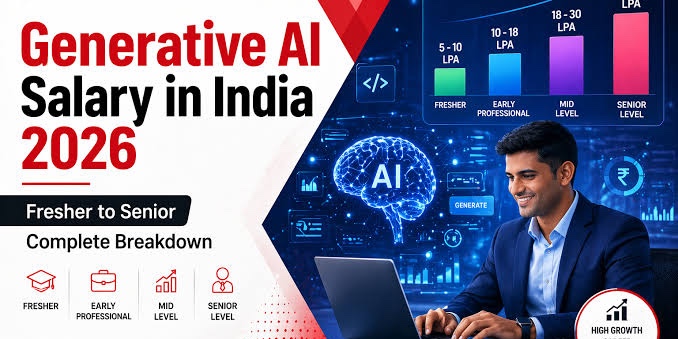
With generative AI automating routine coding tasks, freshers and mid-level professionals alike must pivot. Companies are willing to pay annual packages upwards of ₹25–40 LPA, but only for candidates who bridge the gap between traditional engineering and emerging digital paradigms. If you want to future-proof your career and command a premium, you need to understand which competencies actually move the needle in current Indian recruitment drives.
The AI and Machine Learning Integration Imperative
Artificial intelligence is no longer a futuristic buzzword confined to research labs; it is the core infrastructure of modern software development. Employers in India are actively seeking professionals who understand not just how to use AI, but how to integrate large language models (LLMs) and machine learning pipelines into legacy enterprise systems.
Developers who know how to fine-tune open-source models using PyTorch or TensorFlow are commanding exceptional salaries. It is no longer enough to build a standard web application. You must build an application infused with intelligent automation.
- Core Competency: Prompt engineering combined with API integration (OpenAI, Anthropic, or open-source equivalents).
- Data Fluency: Ability to clean, process, and secure large datasets complying with upcoming Indian data protection regulations.
- Practical Application: Automating code reviews and test generation to accelerate deployment cycles.
Cloud-Native Architecture and DevOps Mastery
As businesses migrate their infrastructure from physical data centres to cloud environments like AWS, Microsoft Azure, and Google Cloud Platform, cloud architects are in perpetual high demand. Companies want systems that scale seamlessly without inflating operational costs. A certified cloud professional with hands-on experience in Kubernetes, Docker, and Terraform can easily negotiate a 40% to 50% hike during job switches.
Furthermore, the convergence of development and operations—DevOps—has evolved into DevSecOps. Security cannot be an afterthought when handling sensitive financial data for global fintech clients based in Mumbai or Gurugram. Professionals who can bake automated security testing into continuous integration and continuous deployment (CI/CD) pipelines are worth their weight in gold.
Full-Stack Proficiency with Modern Frameworks
Specialisation is important, but versatility remains the hallmark of a high-value engineer. The modern full-stack developer in India must go beyond the traditional MERN or LAMP stacks. Companies working on high-frequency trading platforms or massive e-commerce ecosystems require developers who understand microservices architecture, event-driven design, and low-latency programming languages like Go or Rust.
When hiring managers evaluate full-stack candidates, they test for architectural foresight. Can your application handle sudden traffic surges during a Diwali festival sale on a major retail portal? Understanding how to optimise database queries, implement effective caching strategies using Redis, and manage asynchronous processing sets premium developers apart from the crowd.
Domain Expertise in FinTech, HealthTech, and SaaS
Technical prowess alone will only take you so far. The most lucrative roles in the Indian IT sector require a deep understanding of specific business domains. A developer who understands banking regulations, UPI integration nuances, and non-banking financial company (NBFC) workflows is infinitely more valuable to a digital bank than a generalist coder.
Similarly, the explosive growth of Indian SaaS (Software as a Service) companies targeting global markets has created a demand for engineers who understand multi-tenancy, subscription billing logic, and enterprise-grade data security.
- FinTech: Deep familiarity with payment gateways, KYC workflows, and fraud detection algorithms.
- SaaS: Building scalable, multi-tenant architectures with robust API rate-limiting.
- HealthTech: Ensuring HIPAA and local healthcare compliance in patient data handling.
Frequently Asked Questions
Are certifications like AWS or Kubernetes still valued by Indian tech recruiters?
Yes, certifications serve as a strong filter on resume portals, but they must be backed by demonstrable project experience. Recruiters in top product-based companies care more about how you solved a real-world infrastructure bottleneck than how many badges you hold on LinkedIn.
How is AI impacting entry-level IT jobs in India?
Entry-level roles focused solely on writing boilerplate code have decreased. However, entry-level opportunities for candidates who understand how to leverage AI coding assistants to write cleaner, faster code and solve complex logic problems have actually expanded.
What is the expected salary hike when switching jobs with these in-demand skills?
While average hikes hover around 15–25%, professionals possessing niche skills in AI engineering, cloud architecture, or robust DevSecOps frequently secure salary enhancements ranging from 35% to 60% when moving to product startups or GCCs.
Actionable Conclusion
The Indian IT job market rewards adaptability and depth. To secure a premium compensation package, stop chasing short-term certificate trends and focus on building end-to-end projects that solve genuine business problems. Audit your current skill set against cloud computing, AI integration, and architectural scalability today. Dedicate at least five hours a week to hands-on upskilling, contribute to open-source repositories, and position yourself not just as a coder, but as an indispensable technical consultant.
Support creators
If you found this guide valuable, consider leaving a tip for the author on ContentVerse India to support independent tech journalism.
Was this helpful?
Your feedback helps us improve content for everyone.
Liked this piece?
Tip Dhananjay for the work
100% goes to the creator. Send a one-time tip in rupees and back the writing you love.
Dhananjay Singh
0 followers · 0 blogs
Creator on ContentVerse. Building, writing, and shipping in public.
0 followers


Discussion