
Visa Layoffs and AI Push: What It Means for Indian Tech Professionals
Visa recent decision to eliminate 2,600 global jobs to fund its artificial intelligence pivot has sent ripples through Indian tech circles. Here is how Indian software engineers and fintech professionals can navigate this AI-driven workplace transformation.
Reading this article: 0s
News in 60 words
~150-word AI digest in one read
Thesis, bullets, quote & takeaway — slogan stays "60 words"
1h ·6 min read· 0 · 0 · 0
Full story
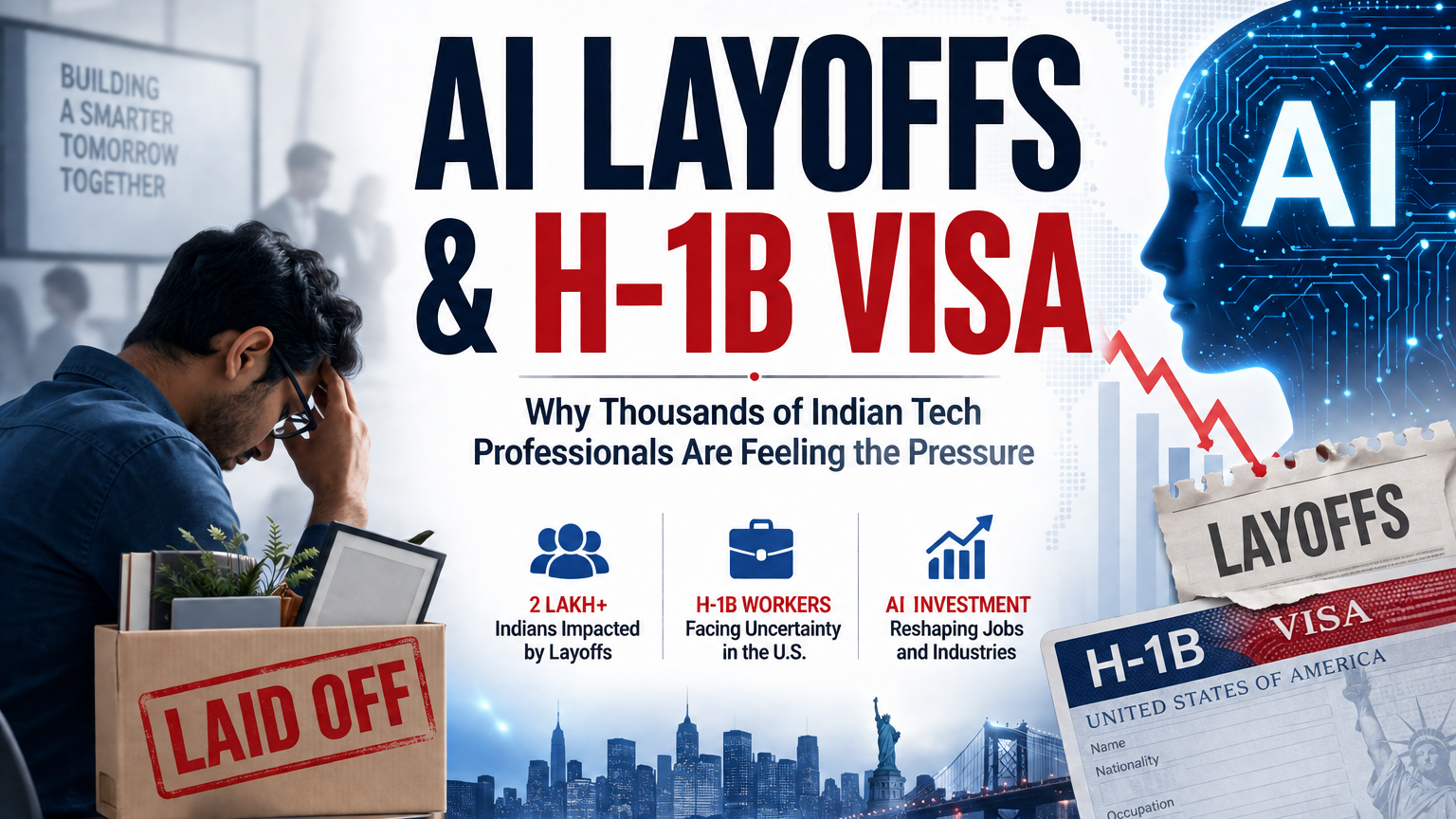
When global payment giant Visa announced plans to reduce its global workforce by approximately 2,600 positions to redirect resources toward an aggressive artificial intelligence (AI) strategy, it caught many industry observers off guard. While corporate restructuring is not new, the explicit framing of these cuts—reducing headcount in conventional tech and operational roles to finance AI innovation—marks a distinct shift in corporate strategy.
For technology professionals across India, particularly in hub cities like Bengaluru, Pune, Hyderabad, and Gurugram, this news carries profound implications. India hosts dozens of Global Capability Centers (GCCs) for global financial and technology firms, including major engineering facilities for payment processors and multinational banks. As global corporations reallocate capital from human-driven operations to machine-driven intelligence, Indian tech workers must understand the dynamics at play and adapt swiftly.
The Visa Restructuring Blueprint: Capital Reallocation in Action
Visa's workforce reduction targets roughly 1,400 technology and contractor positions alongside administrative and corporate sales roles globally. The goal is straightforward: trim operational overhead to fund high-priority technological infrastructure, primarily Generative AI, automated risk assessment algorithms, and real-time transaction intelligence.
This is not a story of a company in financial distress. Payments volume remains robust, and global digital transactions continue to climb. Instead, it reflects a calculated pivot toward capital efficiency. Companies are realizing that generative AI models can automate routine code generation, software testing, customer support triage, and preliminary fraud inspection.
In India, where tech GCCs often manage high-volume development, testing, and operational workflows, this shift is felt immediately. While GCC headcount in India continues to grow overall, the composition of those roles is altering rapidly.
The Ripple Effect Across Indian Tech and Fintech Ecosystems
Visa's move is part of a broader trend visible across major global corporations and domestic tech firms in India. Tech majors such as Tata Consultancy Services (TCS), Infosys, Wipro, and domestic fintech powerhouses are all restructuring their talent pipelines.
Instead of mass hiring mid-level software maintainers or quality assurance engineers, corporate budgets are aggressively shifting toward specialized AI units. The traditional hierarchy where large engineering teams were deployed to build and maintain monolithic payment rails is giving way to leaner, AI-augmented product teams.
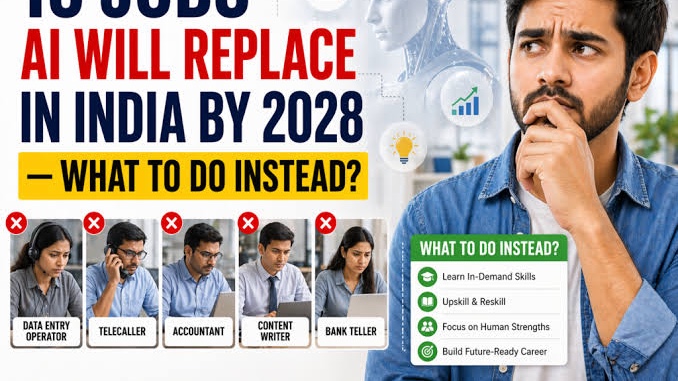
Roles Experiencing Downward Pressure
- Manual Quality Assurance (QA) and Testing: AI tools now routinely generate test scripts, execute edge-case testing, and identify bugs faster than manual teams.
- Level 1 and Level 2 IT Support: Automated ticketing agents driven by large language models (LLMs) are replacing primary helpdesks.
- Basic Code Maintenance & Migration: Automation tools handle database migrations, legacy code refactoring, and boilerplate API generation with minimal human oversight.
- Routine Fraud & Compliance Review: First-pass transaction verification and basic KYC compliance checks are increasingly delegated to neural network models.
Roles Seeing Unprecedented Demand
- MLOps Engineers: Professionals who can deploy, monitor, and maintain machine learning models in production environments.
- AI Security & Compliance Architects: Experts capable of ensuring AI models comply with the Reserve Bank of India (RBI) guidelines, data localization laws, and the Digital Personal Data Protection (DPDP) Act 2023.
- Data Pipeline Engineers: Engineers capable of structuring massive real-time data streams for AI model training.
- Domain-Specific Product Managers: Tech leaders who understand both payment architecture (e.g., UPI, credit networks) and LLM capabilities.
Actionable Strategies to Future-Proof Your Tech Career
If you are working in software engineering, systems architecture, or fintech operations in India, waiting for market conditions to stabilize is a risky strategy. Proactive career management is necessary.
1. Shift from Pure Execution to AI Orchestration
To stay valuable, move up the stack. If you write code, learn how to use AI-assisted coding tools (like GitHub Copilot or Cursor) to increase your output fivefold, while focusing your human effort on system architecture, security edge cases, and business logic.
2. Upskill via Recognized Indian and Global Frameworks
Take advantage of accessible learning pathways. The Indian government's NASSCOM FutureSkills Prime platform offers subsidized certification programs in artificial intelligence, cybersecurity, and cloud architecture. Additionally, specialized certifications in MLOps from platforms like Coursera or AWS/GCP are becoming standard requirements on tech resumes.
3. Master Domain Regulations
Technology alone is easily duplicated; deep regulatory understanding is not. Indian fintech engineers who combine AI technical skills with a thorough knowledge of RBI regulations, cross-border remittance frameworks, and NPCI protocols are highly defensible against automation.
4. Build in Public and Enhance Visibility
Maintain an active presence on GitHub and LinkedIn. Share insights on how you apply AI tools to solve real engineering problems. Networking within tech communities in Whitefield, Cyber City, or HITEC City remains one of the most reliable ways to uncover unadvertised opportunities.
Financial Preparedness for Indian Tech Professionals
Career transitions take time, and tech volatility requires sound personal financial management. The era of effortless 30–40% salary hikes during job hops has paused, making risk management essential.
- Maintain a 12-Month Emergency Fund: Keep 6 to 12 months of mandatory expenses (including EMIs, rent, and school fees) in liquid mutual funds or high-yield fixed deposits.
- Audit Your EMI Obligations: Keep total monthly debt payments below 30–35% of your net take-home salary.
- Diversify Skill Investment: Allocate a modest budget (₹20,000 to ₹50,000 annually) specifically for technical certifications and conference attendance.
This is educational content, not financial advice.
Frequently Asked Questions
1. Are Indian Global Capability Centers (GCCs) losing jobs due to Visa's announcement?
While specific GCC impact varies by team, global job cuts that target tech contractors and routine engineering roles inevitably impact Indian teams. However, many GCCs are simultaneously hiring for specialized AI and MLOps roles, shifting the total talent pool rather than purely shrinking it.
2. Which programming languages should Indian developers focus on for AI roles?
Python remains the primary language for AI/ML development, model training, and data manipulation. However, proficiency in C++ and Rust is increasingly valued for high-performance AI inference engineering, while TypeScript/JavaScript remains critical for building AI-integrated frontend interfaces.
3. How can mid-level software engineers pivot to AI without taking a salary cut?
Engineers should focus on practical AI application rather than core algorithm research. By learning to integrate existing LLMs and machine learning models into enterprise software pipelines (using frameworks like LangChain, LlamaIndex, and vector databases), mid-level developers can position themselves as high-value AI integration engineers.
Conclusion
Visa's global workforce restructuring serves as a clear indicator of where corporate tech is heading. AI is no longer just an R&D experiment—it is driving budget reallocations across global enterprise tech. For Indian tech professionals, this shift requires a deliberate change in mindset: transitioning from routine software execution to high-value system design, AI orchestration, and domain-specific problem solving.
Support creators
Enjoyed this deep dive? Support independent tech journalism by tipping the writer on ContentVerse India.
Was this helpful?
Your feedback helps us improve content for everyone.
Liked this piece?
Tip Dhananjay for the work
100% goes to the creator. Send a one-time tip in rupees and back the writing you love.
Dhananjay Singh
0 followers · 0 blogs
Creator on ContentVerse. Building, writing, and shipping in public.
0 followers
Discussion