
Why Bajaj Finance Share Crashed 6%: Key Factors Investors Must Know
Bajaj Finance experienced a sharp 6% single-day decline, alarming retail investors across India. This comprehensive breakdown explores the regulatory penalties, margin pressures, and unsecured credit risks driving the stock sell-off.
Reading this article: 0s
News in 60 words
~150-word AI digest in one read
Thesis, bullets, quote & takeaway — slogan stays "60 words"
2h ·5 min read· 1 · 0 · 0
Full story
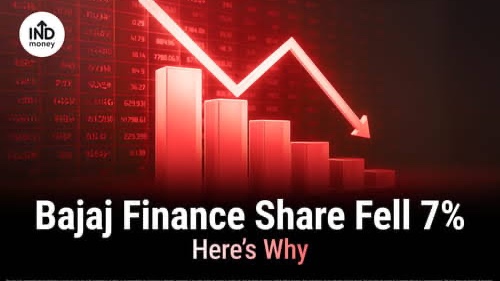
When Bajaj Finance—a prized market leader among Non-Banking Financial Companies (NBFCs) in India—experiences a sharp single-day plunge of 6%, retail portfolios across Dalal Street feel the tremor. For over a decade, Bajaj Finance has been regarded as a blue-chip compounder, delivering stellar returns on the back of massive consumer finance growth. However, market dynamics can shift rapidly when underlying financial headwinds collide with regulatory scrutiny.
Understanding the triggers behind a sudden sell-off is critical for individual investors holding or monitoring the stock. This article dives into the core reasons driving the 6% drop in Bajaj Finance shares, evaluating key fundamental metrics, regulatory developments, and market sentiment.
Disclaimer: This is educational content, not financial advice. Investing in equity markets involves risk of loss. Always consult a SEBI-registered financial advisor before making investment decisions.
1. Regulatory Crackdowns: The RBI Action on Digital Products
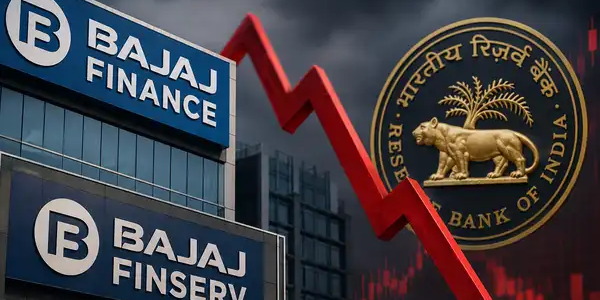
One of the primary catalysts behind investor anxiety stems from regulatory interventions by the Reserve Bank of India (RBI). In recent quarters, the central bank has tightened its grip on consumer lending practices across Indian banks and NBFCs to curb over-leveraging in unsecured personal loan segments.
The Impact of Business Restrictions
- Insta EMI Card and eCOM Sanctions: The RBI ordered Bajaj Finance to cease sanction and issuance of loans under its popular 'eCOM' and 'Insta EMI Card' products due to non-adherence to digital lending guidelines—specifically regarding key fact statements provided to borrowers.
- Operational Friction: While these restrictions were targeted, they disrupted the onboarding of new digital customers and generated negative news flow, shaking market confidence.
- Compliance Costs: Financial institutions face increased regulatory overhead as they re-engineer onboarding flows to meet stringent regulatory standards.
When retail investors sense regulatory friction on high-margin lending channels, stock valuations often undergo immediate repricing.
2. Net Interest Margin (NIM) Compression & Rising Cost of Funds
For any lending institution, the Net Interest Margin (NIM) reflects profitability—it is the difference between the interest income earned on loans and the interest paid to depositors or lenders.
Why Margins Came Under Pressure
- Higher Borrowing Costs: Following persistent interest rate hikes by the RBI to manage inflation, the cost of funds for NBFCs increased significantly. Commercial paper rates and bank borrowing yields rose across the board.
- Inability to Fully Pass on Costs: While Bajaj Finance raised interest rates on consumer loans, intense competition from private banks like HDFC Bank and ICICI Bank limited its ability to pass on the full burden to retail borrowers.
- Changing Product Mix: A slight shift toward lower-yielding secured loans (such as loan against property or mortgage products) to hedge credit risk further dragged down overall yield metrics.
As NIMs compressed by several basis points quarter-on-quarter, institutional analysts revised their earnings estimates downward, triggering institutional profit-booking.
3. Stress and Asset Quality Concerns in Unsecured Lending
India’s personal finance boom over the past three years led to rapid growth in small-ticket unsecured loans. Apps like Bajaj Finserv, PhonePe, and PayTM simplified digital credit, but this surge raised concerns about credit quality.
Key Financial Metrics Under Scrutiny:
--------------------------------------------------------------
Metric                     Expectation        Actual Impact
--------------------------------------------------------------
AUM Growth Target          28% - 30% YoY      Slight Moderation
Gross NPA (%)             < 1.0%             Marginal Uptick
Credit Cost Guidance       Low                Elevated in Unsecured
--------------------------------------------------------------
Rising Credit Costs
- Unsecured Borrower Stress: Repayment defaults in small-ticket loans (under ₹50,000) picked up across the industry. Retail borrowers taking multiple loans across fintech apps began experiencing debt servicing fatigue.
- Provisions Increase: Bajaj Finance had to step up its provisioning coverage for potential credit losses. Higher provisions directly lower net profit margins, disappointing street expectations.
4. Valuation Multiple Re-rating and Guidance Slowdown
Historically, Bajaj Finance has traded at premium valuation multiples compared to its peers. With Price-to-Book (P/B) ratios often hovering around 6x to 8x, the market priced in near-flawless execution and aggressive Assets Under Management (AUM) growth.
When a high-valuation growth stock reports even a minor slowdown in AUM expansion or margin compression, the market reaction is sharply amplified:
- Guidance Moderation: Management's conservative commentary regarding credit growth expectations in upcoming quarters led brokerage houses to trim target prices.
- Institutional Portfolio Rebalancing: Foreign Institutional Investors (FIIs) frequently trim exposure in premium-valued financial stocks during periods of elevated interest rates globally, transferring funds into defensive sectors or high-yielding bonds.
What Should Retail Investors Do Now?
A 6% single-day decline can be intimidating, but long-term wealth creation requires systematic analysis rather than knee-jerk reactions.
Actionable Checklist for Investors:
- Assess Portfolio Allocation: Avoid over-concentrating your portfolio in a single NBFC stock. Maintain a balanced allocation across banking, IT, and consumer goods.
- Monitor RBI Clearance: Track official announcements regarding the restoration of Bajaj Finance's restricted digital credit products. Resolution of regulatory matters often serves as a positive re-rating trigger.
- Focus on Long-Term Franchise Value: Despite short-term hurdles, Bajaj Finance maintains a robust omnichannel network, strong capital adequacy ratios (CAR above 20%), and millions of active cross-sell customers across tier-2 and tier-3 Indian cities.
- Consider SIP Route over Lumpsum: If you maintain long-term conviction in the company’s business model, accumulating shares gradually through systematic investment plans (SIP) helps average out volatility.
Frequently Asked Questions (FAQs)
Q1. Why did Bajaj Finance share price fall by 6% in a single day?
The primary triggers were margin compression due to rising funding costs, regulatory penalties imposed by the RBI on digital lending products, and fears of rising bad loans in the unsecured retail segment.
Q2. Is Bajaj Finance still a good long-term stock for retail investors?
Bajaj Finance remains a leading consumer finance player in India with strong capital buffers. However, investors must evaluate their risk tolerance, valuation metrics, and portfolio allocation before buying the dip.
Q3. How do RBI policy rate changes affect NBFCs like Bajaj Finance?
When the RBI raises policy repo rates, borrowing costs for NBFCs increase. If NBFCs cannot pass these higher costs entirely onto borrowers due to competition, their Net Interest Margins (NIMs) shrink, impacting profitability.
Conclusion
The 6% pullback in Bajaj Finance shares serves as a reminder that even high-performing blue-chip stocks face macroeconomic cycles and regulatory oversight. While short-term volatility creates noise on stock tickers across NSE and BSE, long-term investors should evaluate fundamental health, asset quality, and management execution before making portfolio decisions.
Support creators
If you found this financial analysis insightful, consider tipping the author on ContentVerse India to support independent, research-driven journalism.
Was this helpful?
Your feedback helps us improve content for everyone.
Liked this piece?
Tip Dhananjay for the work
100% goes to the creator. Send a one-time tip in rupees and back the writing you love.
Dhananjay Chauhan
0 followers · 0 blogs
Creator on ContentVerse. Building, writing, and shipping in public.
0 followers

Discussion