
Why Did Bajaj Finance Shares Crash 5%? Key Reasons & Strategy for Investors
Shares of Bajaj Finance recently dropped nearly 5% in a sharp single-day sell-off, raising concerns among Indian retail investors. This deep dive breaks down the core reasons behind the dip and outlines a clear strategic playbook for long-term holders.
Reading this article: 0s
News in 60 words
~150-word AI digest in one read
Thesis, bullets, quote & takeaway — slogan stays "60 words"
1h ·4 min read· 0 · 0 · 0
Full story
Disclaimer: This is educational content, not financial advice.
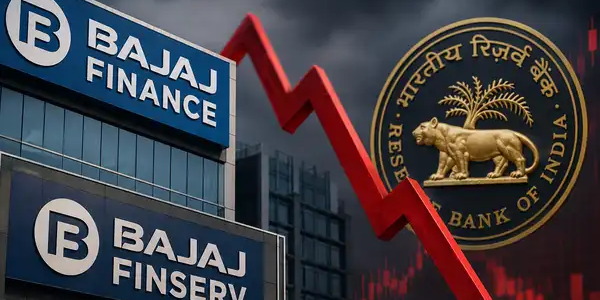
Bajaj Finance has long been considered the crown jewel of Non-Banking Financial Companies (NBFCs) in India. With a stellar history of compounding wealth over the past decade, any sudden drop in its stock price creates immediate waves across Dalal Street. Recently, Bajaj Finance shares experienced a sharp 5% single-day intraday crash, catching many retail investors off guard.
While market dips are a routine part of equity investing, understanding the specific catalysts behind a premier Nifty 50 stock's decline is crucial before making any portfolio adjustments. Here is an in-depth breakdown of why Bajaj Finance tumbled and how investors should evaluate their next move.
1. Regulatory Scrutiny on Digital Lending Products
One of the primary catalysts triggering negative sentiment was regulatory action from the Reserve Bank of India (RBI). The RBI has increasingly focused on consumer protection and transparency within digital lending and buy-now-pay-later (BNPL) segments across India.
- Restrictions on Key Digital Products: Past directives temporarily barring the company from issuing new 'Insta EMI Cards' highlighted regulatory hurdles. Such restrictions hit customer acquisition velocity in high-margin digital financing channels.
- Increased Risk Weights on Consumer Loans: The RBI increased risk weights on unsecured consumer loans for banks and NBFCs from 100% to 125%. This policy forces lenders like Bajaj Finance to hold higher regulatory capital against personal loans, slightly reducing capital efficiency.
2. Net Interest Margin (NIM) Compression
Despite robust Assets Under Management (AUM) growth, profitability metrics faced temporary headwinds due to rising borrowing costs.
- Higher Cost of Funds: With the RBI maintaining elevated benchmark repo rates over recent quarters, NBFCs faced higher interest rates on bank borrowings and corporate bonds. Passing on these higher costs to retail borrowers without affecting loan demand remains a delicate balance.
- Product Mix Shift: A strategic shift toward more secured loans—such as Loan Against Property (LAP), mortgage finance, and gold loans—helps lower credit default risks but yields lower interest margins compared to pure unsecured consumer durable loans.
3. Rising Credit Costs in Unsecured Segments
Asset quality metrics remain healthy relative to historical industry averages, but incremental slippages in personal loans and rural B2C segments raised mild red flags during recent quarterly earnings calls.
- Elevated Provisions: Management increased credit loss provisions to cushion against potential defaults in small-ticket unsecured loans. Elevated provisioning directly impacts quarterly net profit margins.
- Rural Unsecured Stress: Slower recovery in certain rural and semi-urban pockets led to marginal upticks in Gross Non-Performing Assets (GNPA) in specific micro-lending buckets.
4. Premium Valuations Leave No Room for Errors
Bajaj Finance has historically traded at a premium valuation relative to its peers like Chola Investment, L&T Finance, or Mahindra Finance. It often trades at Price-to-Earnings (P/E) multiples above 25x-30x and Price-to-Book (P/B) ratios above 5x.
When a stock carries premium valuations, even minor operational misses, lower-than-expected guidance, or short-term regulatory bumps trigger aggressive profit-taking by institutional investors (FIIs and DIIs).
Investor Playbook: What Should You Do Now?
Navigating sudden corrections in high-quality market leaders requires patience and clarity rather than panic selling. Here is how different investor profiles can approach the stock:
For Long-Term Investors (3–5+ Year Horizon)
- Core Thesis Intact: Bajaj Finance continues to demonstrate superior execution, expanding its digital ecosystem via the Bajaj Pay super-app, and targeting consistent 25%+ AUM growth.
- Accumulate Gradually: Market corrections offer reasonable entry points to accumulate shares in small tranches rather than deploying lump sums at once.
For Short-Term Traders
- Respect Technical Support Levels: Traders should monitor key technical support zones around major moving averages (such as the 200-day EMA). Strict stop-loss management is essential until clear bullish reversal signals form.
Recommended Allocation Strategy
- Use Systematic Purchases: Utilize Rupee Cost Averaging via monthly Stock SIPs available on platforms like Zerodha, Groww, or Angel One.
- Maintain Portfolio Balance: Keep overall exposure to a single NBFC stock capped at 5–8% of your overall equity portfolio to manage sector concentration risk.
Frequently Asked Questions (FAQs)
Is Bajaj Finance still a strong long-term stock?
Yes. Bajaj Finance retains a dominant market share in consumer durable financing, a massive customer franchise, and strong balance sheet metrics. Short-term headwinds have not damaged its long-term moat.
What caused the recent 5% fall in Bajaj Finance shares?
The drop was primarily driven by concerns over regulatory risk-weight increases on consumer credit, margin compression due to higher borrowing costs, and profit-booking at elevated valuation levels.
Should I sell my shares after a 5% drop?
Panicking during short-term dips often leads to poor investment outcomes. If your investment horizon is multi-year and your portfolio allocation is balanced, holding or systematically adding during corrections is generally preferred over panic selling.
Conclusion
The 5% drop in Bajaj Finance is a classic example of market expectations colliding with short-term operational and regulatory realities. While margin pressures and regulatory oversight present temporary hurdles, the company's core distribution network, technology stack, and capital strength remain best-in-class across the Indian financial landscape.
Support creators
If you enjoyed this market deep-dive, consider tipping the author on ContentVerse India to support independent, research-driven financial journalism.
Was this helpful?
Your feedback helps us improve content for everyone.
Liked this piece?
Tip Dhananjay for the work
100% goes to the creator. Send a one-time tip in rupees and back the writing you love.
Dhananjay Chauhan
0 followers · 0 blogs
Creator on ContentVerse. Building, writing, and shipping in public.
0 followers

Discussion